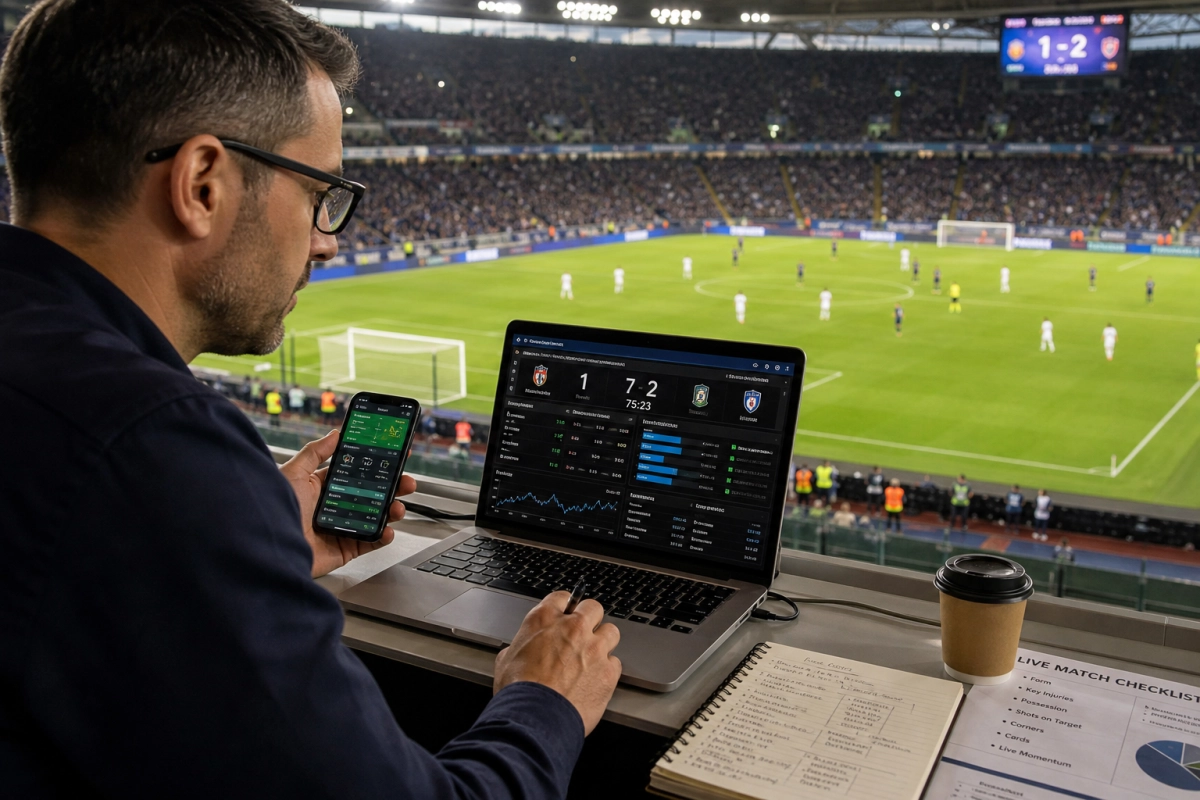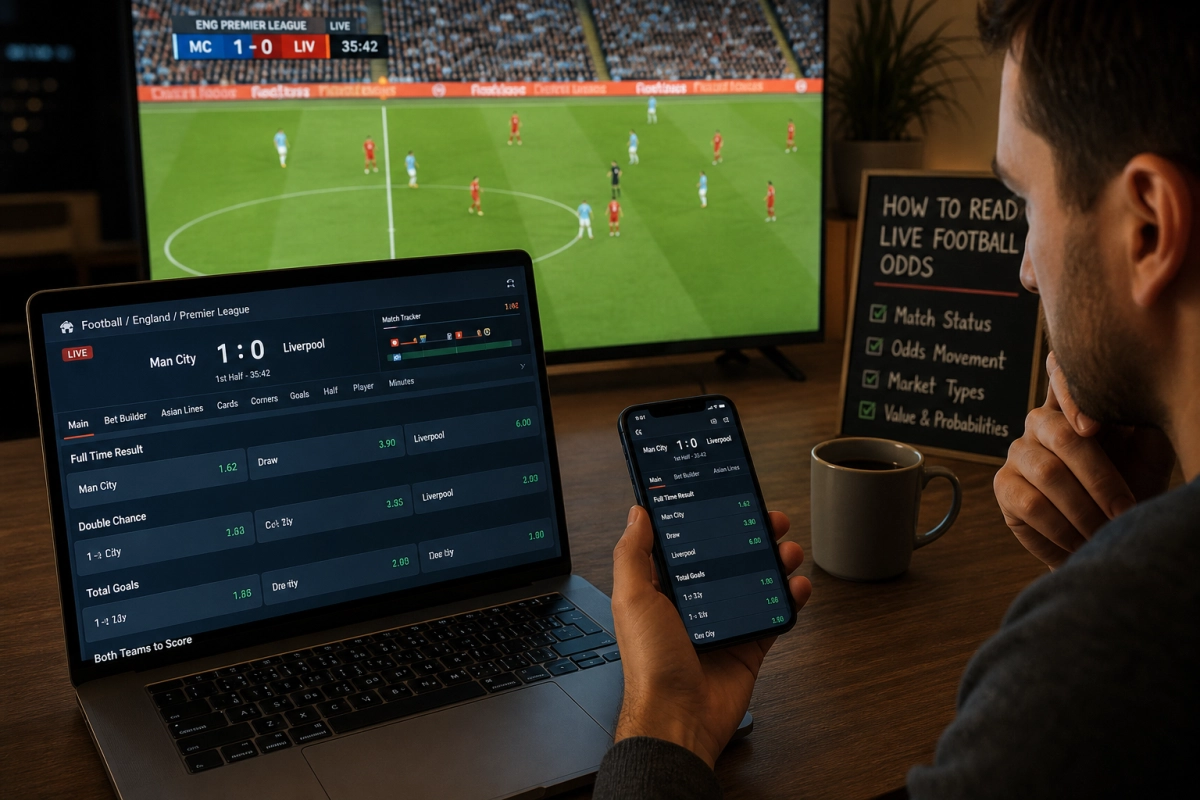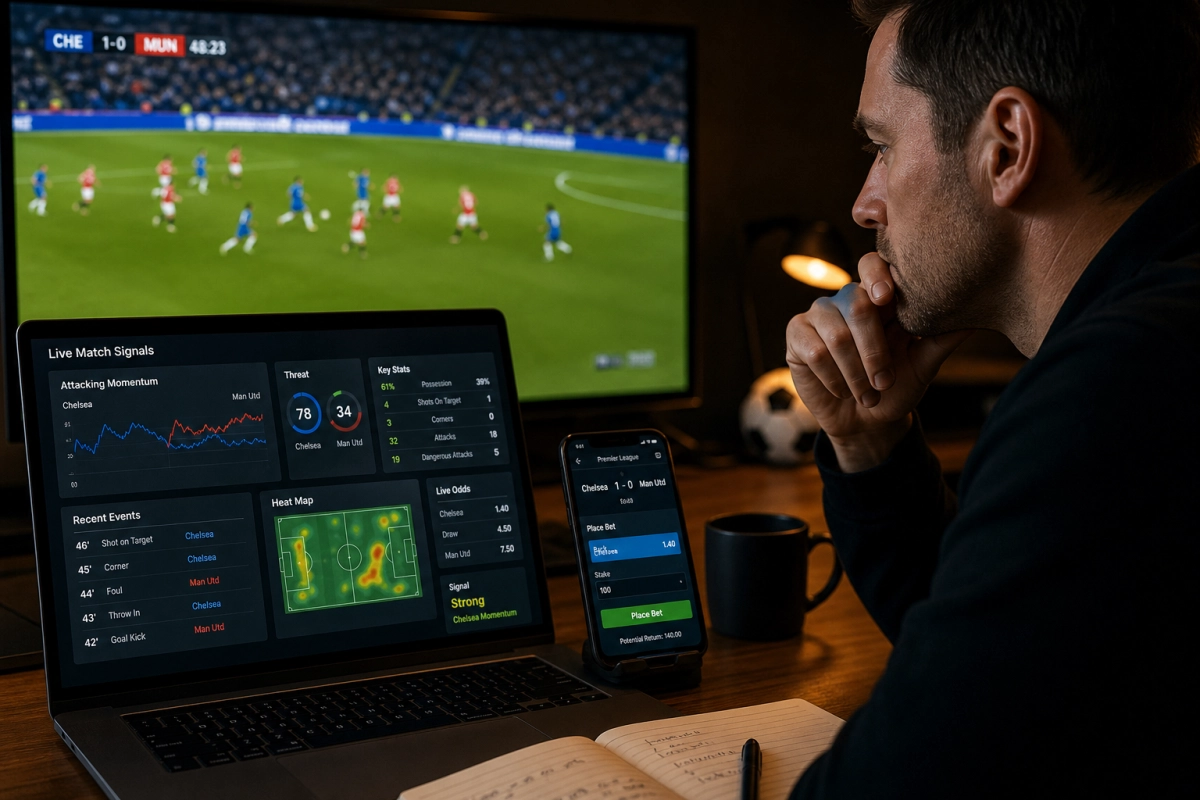
Why Live Match Signals Matter More Than Pre-Match Assumptions
A team’s pre-match reputation, league position or recent form only tells part of the story. Once the whistle blows, football becomes a living, shifting contest — and live betting on Premier League matches demands attention to what is actually unfolding on the pitch rather than what was expected before kick-off.
In-play markets respond to match events in real time. Odds move as goals are scored, red cards are shown, substitutions are made and tactical patterns emerge. Bookmakers adjust their pricing continuously based on match data and probability models. That means the bettor who reads the game carefully has access to something genuinely useful: observable evidence that the odds may not yet fully reflect.
What live match signals can do is provide a more grounded basis for decision-making — one rooted in what is happening rather than what was assumed. Losses remain a very real outcome, and no signal can guarantee a result.
Possession Shifts and What They Reveal About Momentum
Raw possession percentages can be misleading. A team sitting deep may show lower figures while remaining well-organised and dangerous on the counter. What matters more is whether possession has shifted significantly from one period to another, and why.
If a side that dominated the first half suddenly finds itself chasing the ball after conceding, that shift often signals a psychological and tactical change worth noting. In Premier League matches, high-tempo sides frequently press higher when chasing a goal — which opens space for opponents comfortable defending on the break.
When evaluating possession shifts, it helps to ask:
- Has the team in possession created meaningful chances, or are they simply recycling the ball safely?
- Is the defending side in a compact shape, or being stretched out of position?
- Has possession shifted because of a substitution, red card or change in game state?
These distinctions matter because markets such as next goal, total goals and match result all shift in response to genuine attacking threat — not just the appearance of pressure.
Pressing Intensity as an Indicator of Tactical Intent
Pressing intensity is harder to quantify than possession, but it is one of the most telling signals in a Premier League match. A team pressing aggressively high up the pitch is looking to win the ball in dangerous areas and force mistakes. When that approach is working, turnovers increase and dangerous attacks often follow.
Sustained high pressing that creates half-chances — even without goals — can indicate where the next goal might come from. Equally, when a pressing side drops off in the second half through fatigue or tactical shift, that change in intensity can alter the flow of a match considerably.
Watching how the defending team responds to pressure is just as instructive. A backline struggling with long balls or conceding corners in quick succession tells a different story than one clearing its lines comfortably. Both pictures carry implications for markets like over/under total goals, both teams to score and Asian handicap live betting.
Reading Substitutions as Tactical Declarations
A substitution is rarely just a personnel change. Every change off the bench carries a signal about how the coaching staff is reading the game. For live bettors, substitutions are among the clearest real-time indicators of a team’s intent for the remainder of the match.
The nature of the substitution matters as much as its timing. A manager bringing on a second striker when trailing by one goal with twenty minutes remaining is declaring an intention to commit more bodies forward. That increases the probability of further goals on either side and can shift markets like total goals and both teams to score meaningfully. Conversely, a team protecting a lead who introduces a defensive midfielder is signalling an intention to absorb pressure and see out the result.
Timing adds further nuance. An enforced first-half substitution through injury can disrupt a team’s shape before they have settled, particularly if the outgoing player was central to the press. A half-time change is typically deliberate and pre-planned, meaning the replacement arrives with a specific purpose.
When assessing substitutions, consider:
- Is the change reactive — responding to injury or poor performance — or proactive and planned?
- Does the incoming player change the team’s shape, or is it a like-for-like replacement?
- Has the opposing manager responded with a counter-substitution, suggesting adjustments on both sides?
In Premier League matches, where squad depth and tactical sophistication are high, the substitution board going up can shift momentum sharply. Live odds often move in anticipation, so reading the situation quickly gives a bettor a narrow but real window before the market fully adjusts.
How Card Situations Reshape the Betting Landscape
Disciplinary events are among the most dramatic real-time signals in live betting, yet they are frequently misread. The instinct when a red card is shown is to assume the match is effectively decided — but Premier League history repeatedly demonstrates this is too simplistic.
Circumstances matter enormously. A dismissal in the final fifteen minutes with the score level carries very different implications than one in the thirtieth minute. In the latter case, a full hour with numerical imbalance creates a genuinely unpredictable contest. The ten-man side may adopt a deeply compact defensive shape that proves difficult to break down, while the side with the numerical advantage can become increasingly frustrated and exposed.
Yellow cards carry subtler signals. When a key player picks up a booking in the first half, the manager faces a difficult choice — substitute them early to avoid a red card, or leave them on and risk escalation. That uncertainty often affects pressing intensity and defensive aggression in ways visible to an attentive viewer before they appear in data feeds.
The Cumulative Effect of Disciplinary Pressure
A match with multiple bookings in the opening thirty minutes tends to develop a nervous, fractured rhythm — fouls interrupt transitions, set pieces accumulate and the probability of further disciplinary action increases. These conditions often suit more direct or physically dominant sides and can push total goals markets in either direction.
The most useful discipline-related signals are often the ones that precede a card rather than the card itself. A full-back repeatedly lunging into challenges, a striker making late contact with the goalkeeper, a midfielder cynically blocking counter-attacks — each observable pattern carries a probability signal before the referee reaches for his pocket. Identifying that pattern early, rather than reacting after the fact, is where considered live betting decisions are genuinely sharpened.
Bringing the Signals Together Across Ninety Minutes
No single signal tells the whole story on its own. The real discipline in live betting lies in reading these signals in combination as they accumulate and interact. A possession shift becomes more meaningful when it coincides with a tactical substitution. A yellow card becomes more significant when it belongs to a player already being targeted by a high press. Disciplinary pressure becomes actionable when it sits alongside visible fatigue and a team running short of defensive cover.
Developing that layered awareness takes time and genuine attention to the game. It requires watching matches rather than monitoring score updates, and a willingness to hold back when signals are ambiguous rather than forcing a decision because markets are moving. Some of the most important live betting decisions are the ones not made — bets not placed when the picture on the pitch is too unclear to act on with confidence.
Bookmakers build sophisticated models that process match data at speed. The bettor’s edge, if one exists, is not in outrunning those models but in observing things data feeds can be slow to capture — a visible limp that precedes a substitution, a goalkeeper’s positioning becoming erratic under pressure, a captain’s body language suggesting the tactical plan has broken down.
It is equally important to approach in-play betting with clear pre-set limits. Even well-read signals produce losing outcomes regularly. The volatility of live markets, the speed at which odds move and the sheer unpredictability of football mean that sound process does not guarantee sound results in the short term. Responsible bankroll management and a realistic expectation of variance remain the foundations on which any in-play approach must be built.
What live match signals offer, ultimately, is not certainty — football rarely offers that. What they offer is a more honest and grounded basis for making decisions: one informed by what is actually happening on the pitch, rather than what seemed likely before the game began.