What Live Soccer Betting Actually Asks of You
Live soccer betting is not simply a faster version of placing a pre-match wager. It is a different discipline altogether — one that rewards observation, patience and the ability to separate what is actually happening in a match from what was expected before kick-off. For beginners, understanding that distinction is the most useful place to start.
When a match is underway, bookmakers offer constantly updated markets that reflect the current state of play. Odds shift with every meaningful event — a goal, a red card, a string of dangerous attacks, a goalkeeper injury. The market is live, reactive and unforgiving of slow decisions. That pace can feel overwhelming, which is why the foundation of better in-play decisions is not speed but clarity: knowing what to watch, what it means and how it connects to the available markets.
How to Follow a Match with Live Betting in Mind
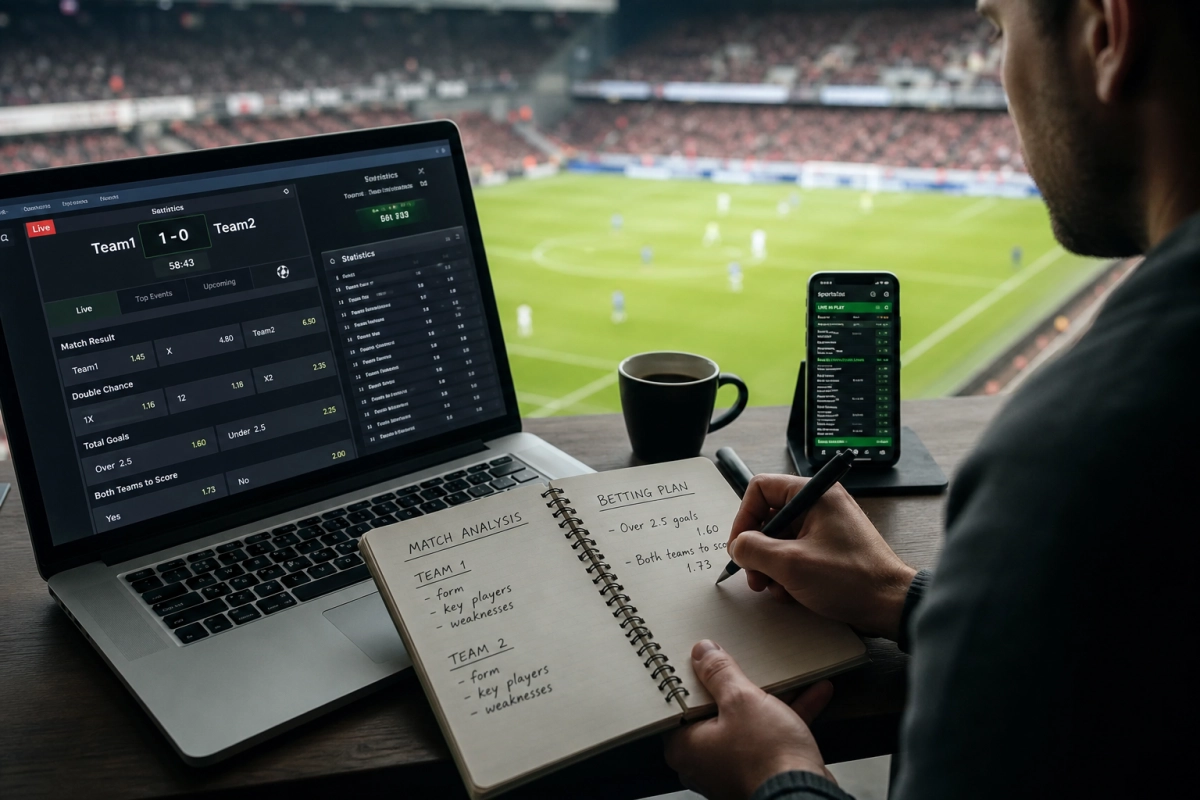
Watching football as a bettor requires a different kind of attention than watching as a fan. Emotional investment in one side is natural, but it distorts judgement. The goal during live betting is to observe as objectively as possible — treating the match like a tactical analyst rather than a supporter.
Several observable factors carry real significance when evaluating what might happen next.
- Possession and territory: A team that consistently wins the ball back and pins the opposition in their own half is exerting genuine pressure, regardless of the scoreline.
- Shot quality: Shots from inside the penalty area following coordinated attacks are far more meaningful than speculative efforts from distance.
- Dangerous attacks: These are moves that reach advanced positions with genuine goal-scoring potential and often predict momentum shifts before they appear in the score.
- Substitutions and tactical changes: A manager bringing on an additional striker signals intent to chase a goal. Defensive substitutions indicate a team managing a result. Both carry direct implications for live markets.
- Cards and dismissals: A red card fundamentally alters a match. Odds on result, total goals and next goal markets all adjust sharply, and the adjustment is not always immediate.
- Match tempo and fatigue: As a game enters the final twenty minutes, tired legs and stretched defensive lines create more open play — a period that often sees more goals, particularly when one side is chasing the game.
None of these factors offer certainty. Even the most dominant team can concede against the run of play. The purpose of tracking these signals is to build a more accurate picture of what is unfolding — not to predict outcomes with confidence, but to make more considered assessments when evaluating a market.
Reading the Pitch Before Reading the Odds
A common mistake among newer bettors is to react primarily to odds movements rather than match events. If a price shortens sharply, there is a temptation to interpret that as a signal to follow. In reality, odds change for multiple reasons — market activity, bookmaker risk management, automated algorithms — and do not always reflect a clear, observable development on the pitch.
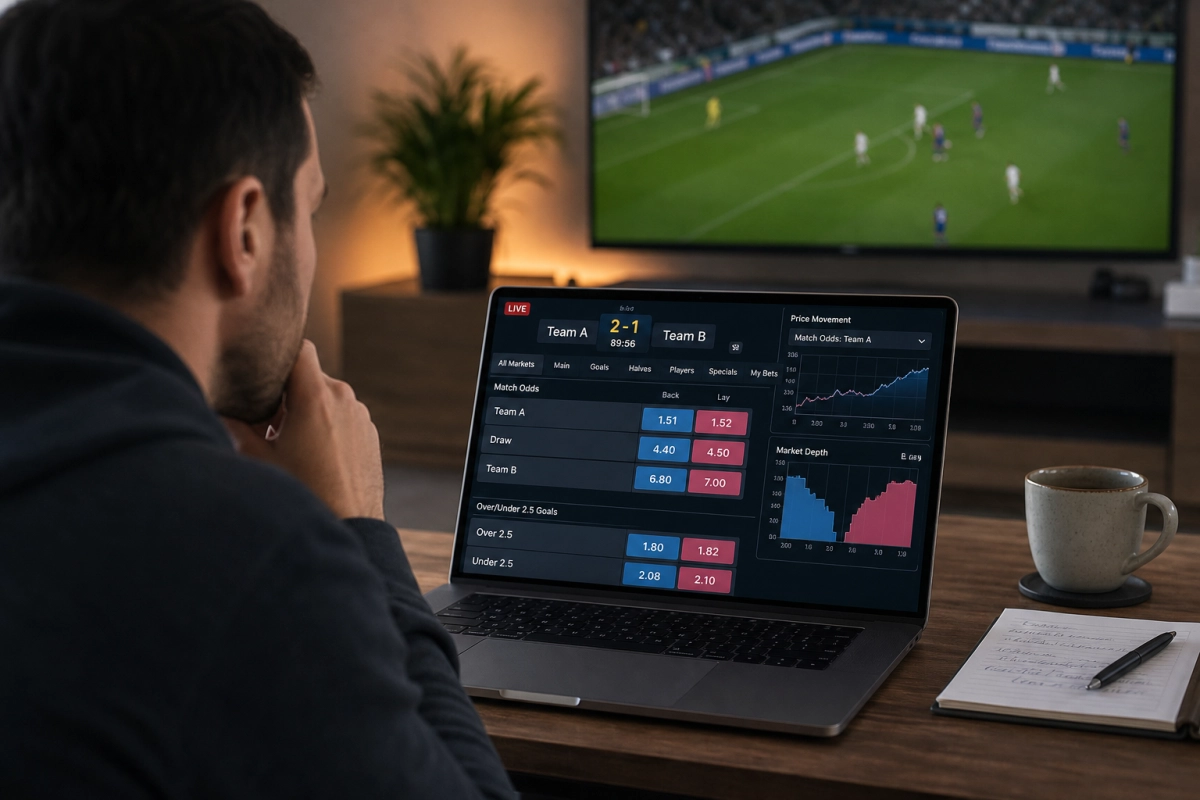
The more reliable approach is to watch the match first and consult the odds second. When a bettor can see that one team is clearly on top — sustaining pressure, winning second balls, forcing repeated saves — and then finds the market has not yet fully reflected that shift, there may be genuine value in a relevant market. That process requires honest assessment and an acceptance that well-reasoned in-play bets do not always win.
It is also worth knowing that bookmakers suspend markets during critical moments — goals, red cards, penalty decisions. Being positioned before a major event, based on careful match reading, is generally more useful than attempting to react in its immediate aftermath.
The Live Markets Worth Understanding First
Most sportsbooks offer a substantial menu of in-play markets, and for a beginner the variety can feel like an obstacle. The practical solution is to focus on a small number of markets directly connected to observable events and build familiarity from there.
Match Result and Next Goal
The match result market remains the most straightforward entry point for live betting. Its odds shift in response to goals and momentum, making it intuitive to interpret against what you are seeing on the pitch. The next goal market operates differently — it asks which team will score next, and it rewards bettors who can identify periods of one-sided pressure before they produce a goal. When a team has been camped in the opposition half, winning corners and forcing saves, the next goal market may still offer reasonable odds on that team scoring, particularly if the scoreline does not yet reflect the imbalance.
Total Goals and Over/Under Markets
Over/under markets are especially responsive to observable match tempo. A high-intensity, end-to-end game in the first thirty minutes can create legitimate grounds to consider an over market, while a tightly contested, low-tempo match with both defences compact may make an under worth examining. What matters is grounding that assessment in what you are actually watching. A cautious first half can give way to an open second — particularly after substitutions or a goal that forces one side to attack.
Asian Handicaps in Play
Asian handicap markets can appear complicated, but their in-play application is worth understanding because they often offer better value than the straight match result during certain phases of a game. When a strong team goes a goal behind against weaker opposition, the handicap market may still price them as capable of covering a two-goal deficit — reflecting underlying quality that the scoreline temporarily obscures. The basic principle: handicap markets account for the expected difference in quality between two sides and adjust dynamically as that gap is confirmed or contradicted by events on the pitch.
Managing Pace and Avoiding Reactive Decisions
One of the most consistent difficulties in live betting is the pressure of pace. Events happen quickly, odds update constantly and the instinct to act before a window closes can override careful observation. For beginners especially, this pressure produces impulsive decisions dressed up as informed ones.
A useful discipline is to pause briefly before placing any in-play wager and ask a simple question: is this decision based on something I have genuinely observed, or am I reacting to odds movement or a sudden goal? Reacting to a goal by immediately backing the trailing team — without assessing whether they are capable of recovering — is not a strategic bet. It is an emotional one.
- Set a clear stake limit before the match begins: Knowing in advance how much you are prepared to commit removes one pressure point from real-time decision-making.
- Limit yourself to one or two markets per match: Spreading attention across multiple markets increases cognitive load and reduces the quality of observation in each.
- Accept that not every match offers a worthwhile opportunity: Some games simply do not present a clear signal. Choosing not to bet is a decision in itself — and often the correct one.
Building the Habit That Makes Live Betting Worthwhile
Every skill in live soccer betting traces back to the same underlying habit: watching the match with genuine attention and making decisions that reflect what you have actually seen. The difficulty is sustaining that discipline across the noise of live odds and the natural desire to act when a market is open and a match is unfolding in front of you.
For beginners, the most productive approach is to treat the first several matches as exercises in observation rather than opportunities for profit. Watch how tempo changes after a goal. Notice how a defensive substitution shifts a team’s shape. Pay attention to which side is pressing high and dictating where the ball is played. These details separate a considered in-play decision from a reactive one, and they only become visible when you are focused on the match rather than the betting interface.
Over time, patterns become familiar. You develop a feel for matches that tend to produce late goals, for teams that habitually push forward after conceding and for the phases of play that signal a momentum shift before the scoreline reflects it. That accumulated familiarity does not eliminate uncertainty — nothing does in football — but it gives your decisions a grounding that instinct alone cannot provide.
Live soccer betting at its best is an exercise in honest, attentive observation applied to a market that rewards those qualities. The beginner who starts there, rather than chasing odds or reacting to events, gives themselves the soundest possible foundation to build on. The pitch tells the story first. The odds come second. That order of priority is worth holding onto throughout every match you follow.