Why Reading the Match Matters More Than Reading the Odds
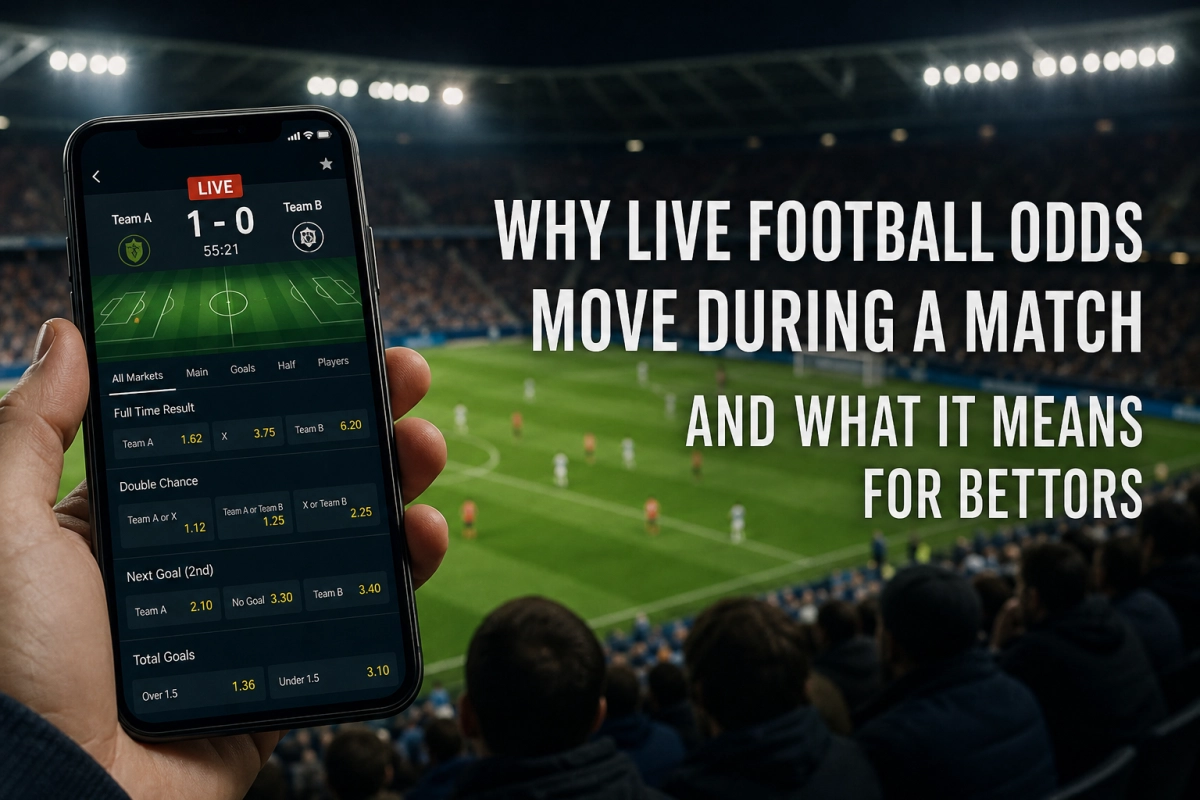
Live betting on Premier League football moves fast. Odds shift within seconds of a goal, a red card or a tactical substitution, and bettors who react purely to price movements — without understanding what is happening on the pitch — are navigating in the dark. The foundation of any thoughtful in-play approach is not finding the best odds first. It is understanding the match well enough to recognise when the odds reflect reality and when they do not.
This article explores how to read live match conditions, identify genuine momentum shifts and interpret tactical patterns as they develop. The goal is to help football fans make more considered decisions when engaging with in-play markets — not to suggest that analysis removes risk, because it never does. Betting always carries financial risk, and losses are a consistent part of that reality.
What sharper analysis can do is help a bettor ask better questions. Is the team dominating possession actually creating danger, or circulating the ball harmlessly? Is the scoreline reflecting the run of play, or has one side been fortunate? These distinctions matter when evaluating live markets such as next goal, match result, over/under total goals or Asian handicap.
Understanding Momentum Shifts and What Actually Drives Them
Momentum in football is real, but frequently misread. A team can enjoy ten minutes of sustained pressure without generating a single meaningful shot on target. Conversely, a side pinned back for long stretches can shift the dynamic entirely with one well-timed substitution or a change in defensive shape. Learning to distinguish between surface-level pressure and genuine attacking threat is one of the most practical skills a live bettor can develop.
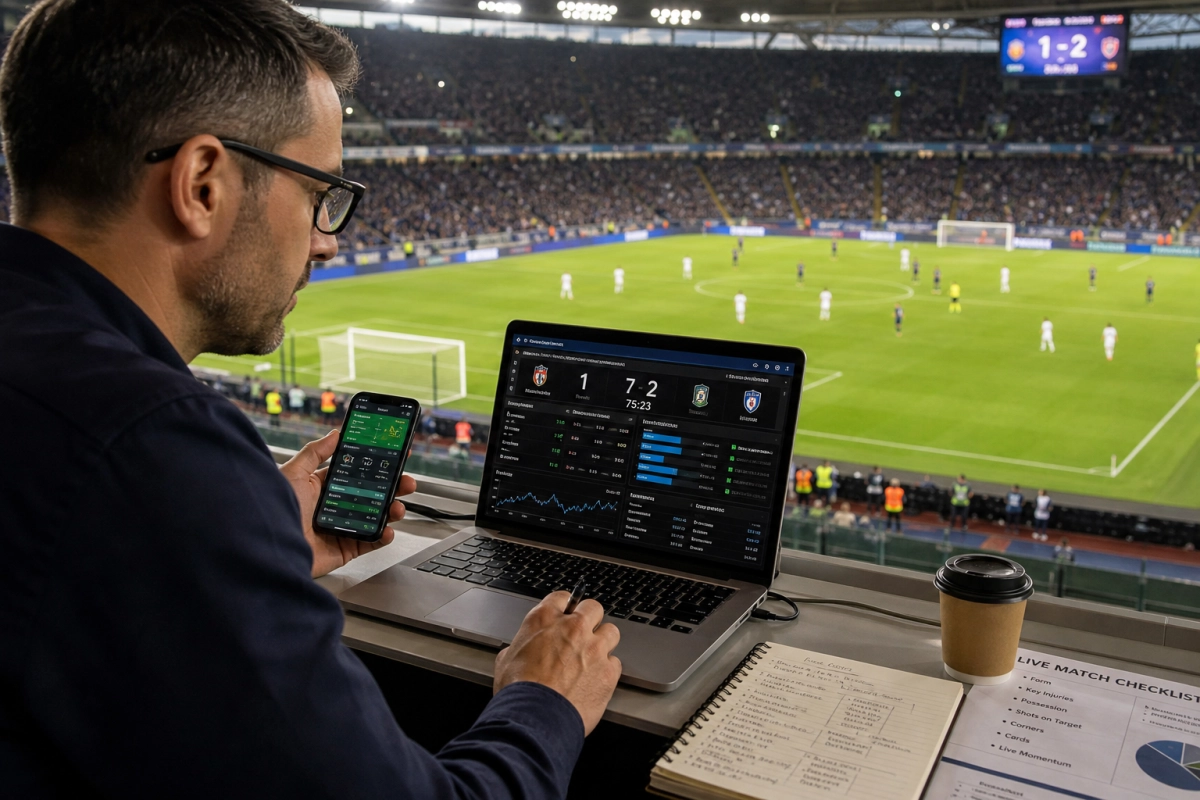
When monitoring a match in real time, the following factors are worth tracking closely:
- Shots on target versus total shots — three shots on target from five attempts signals far more meaningful pressure than eight shots that never trouble the goalkeeper.
- Dangerous attacks — this metric reflects entries into the final third with genuine goal-scoring intent, offering more context than raw possession figures.
- Defensive shape and compactness — a team sitting in a deep block may concede possession willingly while remaining difficult to break down. High opposition possession does not automatically translate into scoring probability.
- Substitutions and their timing — a manager bringing on an additional striker at 0-0 in the 65th minute signals intent and can influence markets such as next goal or total goals.
- Set-piece frequency — teams that win corners and free kicks in dangerous areas create recurring scoring opportunities regardless of their open-play performance.
Live odds respond to events, but also to market activity and the passage of time. A scoreline of 0-0 at the 70-minute mark will push over 2.5 goals odds shorter not because attacking play has improved, but because remaining time compresses probability. Understanding the difference between genuine match developments and mechanical odds movement helps a bettor evaluate whether a price reflects the match or simply the clock.
Tactical Patterns That Signal a Shift in Match Control
Premier League managers rarely make significant tactical changes without reason. Watching how a team sets up — and how that setup evolves — provides context that live statistics alone cannot fully capture.
A team gradually pushing its full-backs higher is likely growing in confidence. A side moving from a high press to a more conservative shape after conceding is prioritising defensive stability. These adjustments are visible to anyone watching closely and frequently precede momentum shifts that affect markets such as both teams to score or second-half total goals.
Injuries and cards add further tactical disruption. Losing a central midfielder to a yellow card can force a manager to withdraw an aggressive presser and replace them with a more disciplined holder, fundamentally altering the team’s ability to win the ball back. A defensive injury requiring a positional reshuffle can expose a structural vulnerability the opposition is well-placed to exploit.
Weather conditions are also worth considering, particularly during winter fixtures. A heavy pitch or persistent rain tends to slow the game, reduce passing quality and increase the likelihood of set-piece-driven goals. These conditions add texture to any assessment of how a match is likely to develop.
Matching the Right Market to the Right Match Situation
Not every live market suits every match situation. A common error among in-play bettors is forcing an opinion into a market that does not cleanly reflect it. If a bettor identifies sustained, credible attacking pressure after a tactical reshuffle, the most direct expression of that read might not be the match result market — particularly if the scoreline is tight and odds are heavily compressed. A more precise vehicle might be next goal, corners in the next ten minutes, or a player shot attempt proposition.
Thinking carefully about market fit sharpens decision-making in several ways:
- Next goal markets respond most directly to short-term attacking dominance and are useful when a momentum shift is clear but the wider match outcome remains genuinely uncertain.
- Asian handicap markets allow a bettor to back a stronger team without needing them to win outright — valuable when tactical evidence points to sustained dominance rather than a definitive result.
- Total goals markets suit situations where match tempo is the clearest signal — an open, high-intensity game with both defences exposed is a different proposition from a cagey stalemate drifting into the final third.
- Both teams to score becomes relevant when both sides have shown genuine attacking threat, rather than simply because the scoreline is 0-0 late in the game.
The bettor’s market selection should be as specific as their analysis allows. A vague sense that one team is playing better rarely justifies a substantial in-play position. A concrete observation — a defensive midfielder is missing, the right channel is being repeatedly exposed, the attacking winger has already beaten his man three times — provides a far more grounded basis for action.
Using Live Broadcast and Data Together Without Overloading
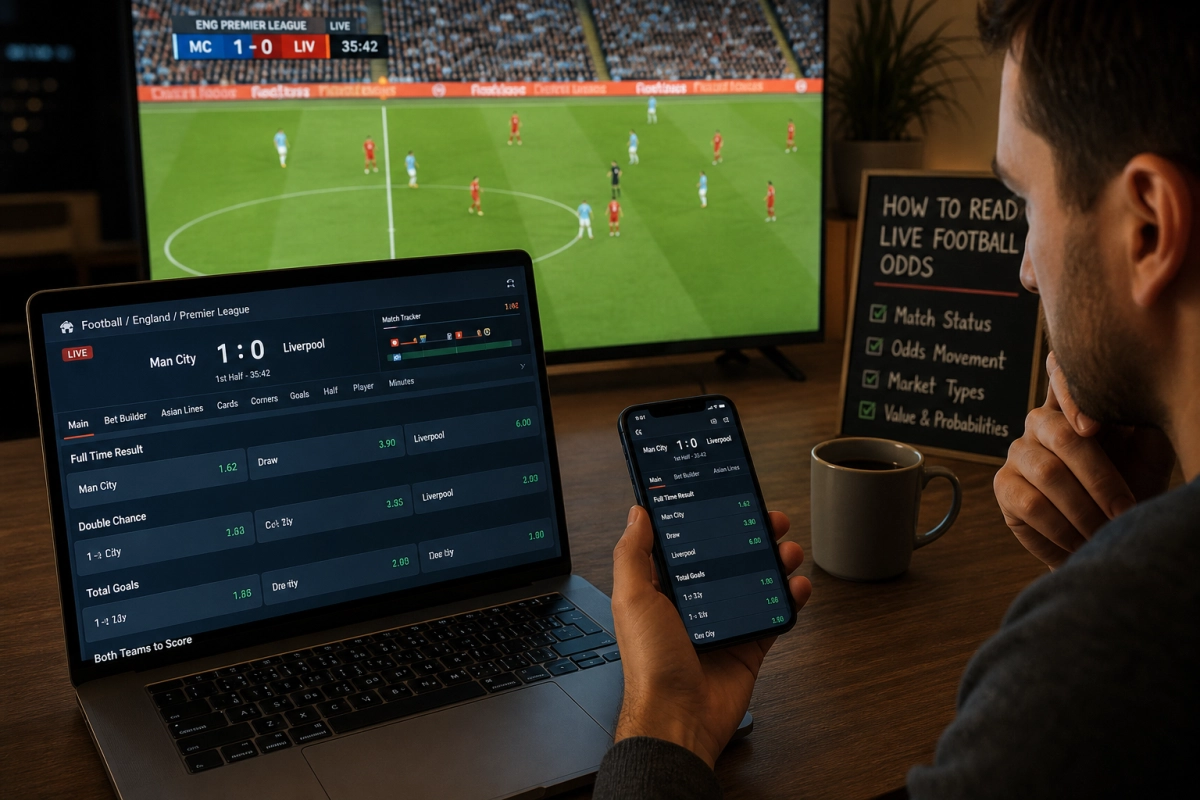
Bettors watching Premier League fixtures in-play typically have access to multiple information streams simultaneously: live broadcast, a statistics platform, a betting interface and sometimes social media commentary. The challenge is not access to information — it is filtering it effectively under time pressure.
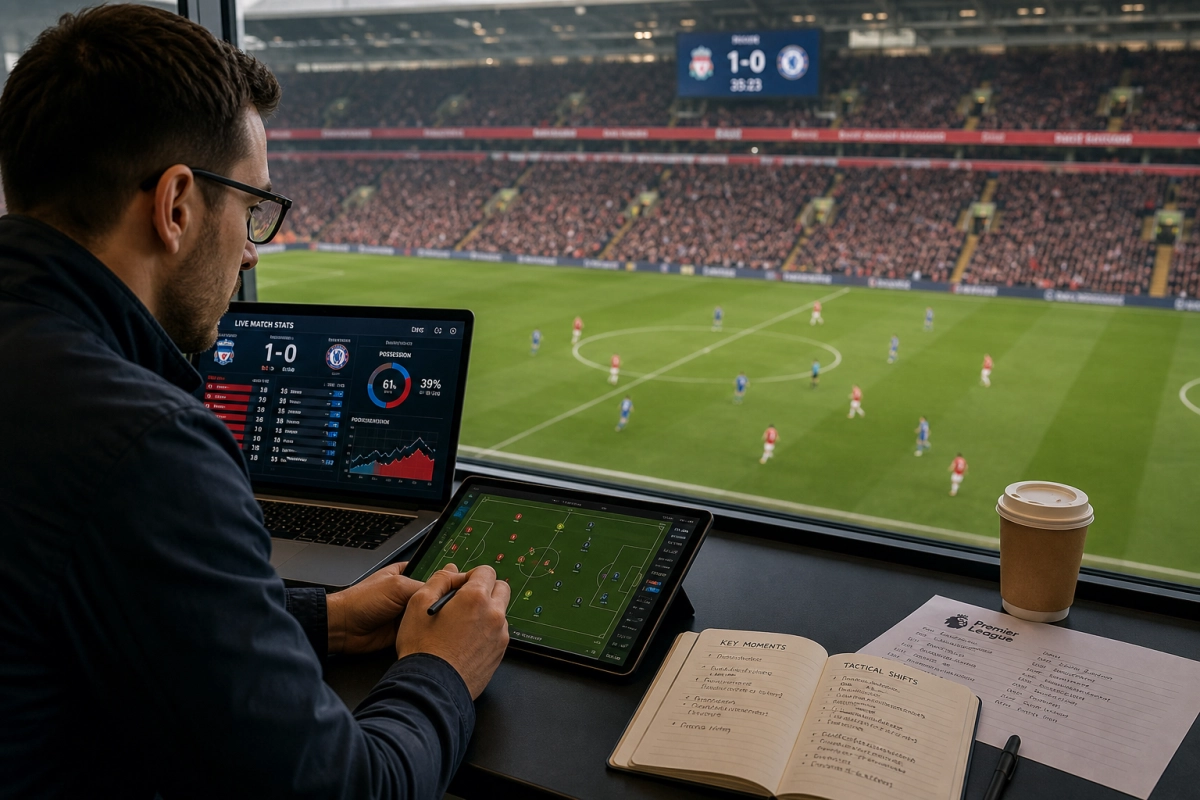
The most productive approach is to establish a clear hierarchy before the match begins. The broadcast should carry the most weight, because no data platform captures the texture of a game — the nervousness of a defence under pressure, a striker’s body language when isolated, a goalkeeper’s hesitancy at crosses — with the same fidelity as watching directly. Statistics platforms are best used to confirm or challenge what the eye is already suggesting, not to replace that primary observation.
A useful discipline is to identify one or two specific things to monitor going into each half, rather than trying to process everything at once. That kind of structured observation is far more actionable than a scattered scan of multiple metrics with no clear interpretive frame.
When to Act and When to Wait
Timing within in-play markets is often underappreciated. Odds move fastest immediately after a major event, and that initial movement frequently overshoots before settling. Bettors with a clear pre-formed view can sometimes find better value by waiting for the immediate overreaction to pass rather than chasing the first available price.
A goal that confirms the run of play may cause the trailing team’s odds to lengthen sharply. If a bettor’s analysis already identified that the trailing side was the better team, those briefly extended odds may reflect the match more accurately than the market is currently pricing. Patience in these moments — and the discipline to act on analysis rather than instinct — tends to separate considered in-play approaches from reactive ones.
Analysis as a Practice, Not a Formula
There is no system that reliably converts match observation into profitable in-play betting outcomes. A team can dominate every measurable dimension of a match and still lose to a late deflection. These are not edge cases — they are recurring features of the sport, and precisely why financial risk remains constant regardless of how carefully a bettor has done their homework.
What structured analysis offers is a more honest relationship with the decisions being made. When a bettor understands why they are placing a particular in-play position — because the defensive shape has been compromised, because a key presser is now absent, because the tempo has demonstrably shifted — they are making a considered judgement rather than responding to a flashing price. That clarity does not guarantee a better outcome on any individual bet, but it tends to produce more coherent decision-making and fewer impulsive positions entered for no stronger reason than that the odds looked appealing.
Developing that analytical habit takes sustained attention across many matches. The first time a bettor notices a team’s high press has dropped off in the second half, it is interesting. The tenth time they observe the same pattern from the same manager, it becomes genuinely useful context. Premier League football is rich with repeating tactical signatures — managers who reliably adjust at 65 minutes, sides that routinely concede from set pieces despite controlling open play, attackers who produce most of their output in the final twenty minutes. These patterns are visible to anyone willing to watch closely and note what they see consistently.
The most practical step any bettor can take is to treat each match as an opportunity to sharpen observation, whether or not they are placing anything on it. That discipline — knowing when not to bet — is as important as anything else in this article. In-play markets present a constant stream of opportunities, and the tempo of live betting creates its own pressure to engage. Resisting that pressure when the match picture is unclear or the odds do not reflect genuine value is a skill in itself.
Read the match first. Let the odds come second. And treat every decision, including the decision to wait, as an active choice rather than an absence of one.