Why Live Football Betting Markets Reward Match Awareness
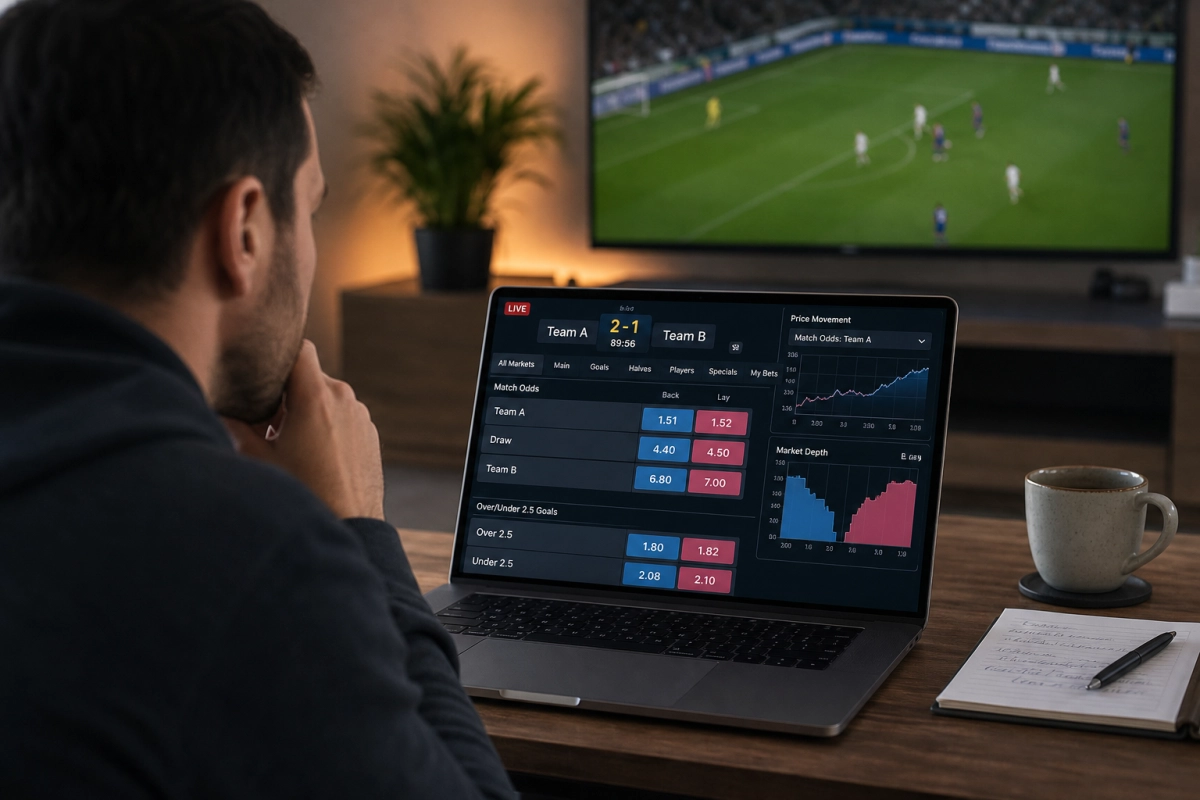
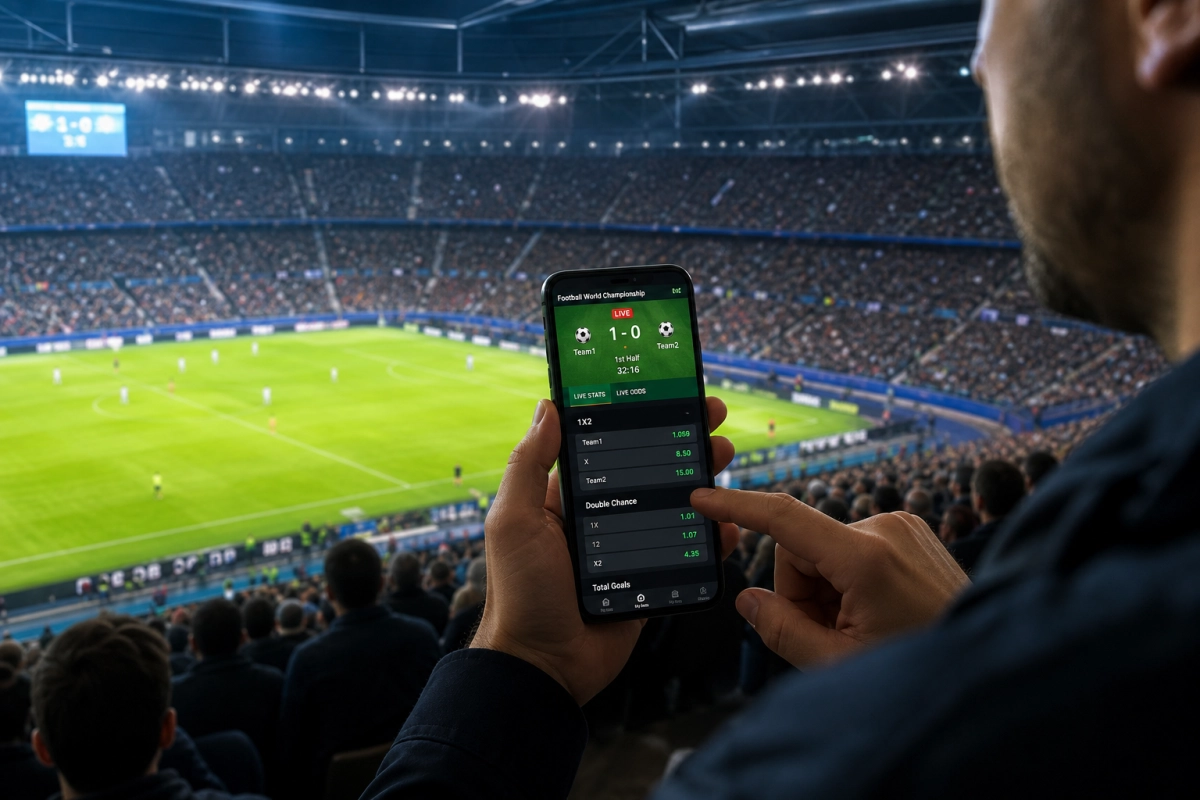
Live football betting operates on a simple but demanding principle: the match itself is the source of information. Unlike pre-match wagering, in-play betting asks bettors to read what is actually happening on the pitch and respond with discipline and clarity. Odds shift constantly, opportunities open and close within minutes, and available markets change depending on the scoreline, time elapsed and tactical development.
Understanding the main live football betting markets is not about finding shortcuts. It is about knowing what each market measures, when it becomes meaningful and what observable factors make it worth considering. That distinction — between reacting blindly to odds movements and reading a game with purpose — separates informed betting from impulsive decisions.
How Live Odds Reflect the Match in Real Time
Live football odds are recalculated continuously based on three broad factors: match events such as goals, red cards and injuries; the current scoreline and time remaining; and overall market activity across the platform.
A goal does not just change the match result market — it ripples across every available market simultaneously. Over/under lines shift, next goal odds reset entirely and Asian handicap lines adjust. This is why watching the match closely — tracking possession, shot counts, dangerous attacks and personnel changes — gives a more grounded perspective than simply monitoring the odds screen.
Bookmakers also suspend markets briefly during high-intensity moments such as penalty kicks, VAR reviews and goals. Timing matters considerably in live betting. An opportunity visible at the 60th minute may not be available seconds later.
The Role of Match Context in Every Live Decision
Every in-play market becomes more or less relevant depending on what the match situation actually looks like. A team pressing aggressively to equalise creates very different conditions than a side defending a lead with structured discipline. Substitutions shift tempo. Yellow card accumulation may prompt a team to drop deeper. Heavy rain can suppress goal probability.
None of these factors produce certain outcomes — they adjust probabilities, which is precisely what live odds attempt to reflect. The bettor’s job is not to predict the future but to assess whether current odds offer a fair representation of what the match is showing.
The Next Goal Market and Live Match Result: Reading Momentum Before It Settles
The next goal market is arguably the most reactive in live football betting. It asks which team will score next — or whether neither will — and prices change almost minute by minute. It rewards bettors watching the match closely rather than those interpreting odds movements in isolation.
What makes this market useful is that it captures momentum before it resolves into a scoreline. If one team is sustaining extended pressure — forcing corners, generating shots on target, winning second balls in the attacking third — that pattern tends to precede goals more reliably than any single statistic. The odds may not yet fully reflect that pressure, creating moments where the market lags fractionally behind what the match is demonstrating.
The live match result market operates on a longer timescale but responds to the same inputs. A side conceding early and then spending thirty minutes in sustained but disorganised attack may see its odds shorten without those efforts genuinely reflecting improved goal threat. Quality of chances matters more than quantity of attacks — a distinction a watching bettor can assess when the odds screen alone cannot.
When the Match Result Market Creates Live Value
The match result market becomes particularly interesting when the scoreline does not reflect the run of play. A team conceding against the balance of the game — from a set piece, counter-attack or individual error — may still hold structural superiority. Bookmakers update odds to reflect the new scoreline immediately, but underlying match dynamics may not have shifted as significantly as the price change implies.
A red card in the second half creates one of the more complex live scenarios. The numerical advantage is obvious, but its impact depends on which team has the card, the current scoreline and time remaining. A team reduced to ten men while leading by a goal in the 75th minute will often sit deeper and defend effectively. The odds may overreact to the red card and underestimate the disciplined side’s capacity to hold on.
Over/Under Totals: Using Game Tempo to Assess Goal Probability Live
The over/under totals market measures combined goals against a fixed line — most commonly 2.5, though live betting frequently offers 1.5, 3.5 and occasionally 4.5. A goalless opening period in a game expected to be high-scoring will see over 2.5 odds shorten as time passes, because the same number of goals now need to arrive in fewer remaining minutes. This mechanical effect can mean the market is pricing time scarcity rather than genuine match tempo.
The practical approach is to assess tempo from what is actually visible: how quickly the game transitions between defence and attack, whether goalkeepers are being genuinely tested and whether both teams’ shapes are compact or stretched. A match with high defensive organisation from both sides — low lines, disciplined midfield structures, limited space in behind — is likely to remain low-scoring regardless of pre-match expectations. When that pattern is clear by the 35th minute and over 2.5 odds have shortened due to time pressure, the under can represent a position grounded in observable evidence.
How Live Totals Shift After Goals Are Scored
A goal resets the totals market in ways that require careful recalibration. Once a game moves to 1-0, the relevant threshold often shifts — the question becomes whether conditions support two more goals, not whether the original 2.5 total is achievable. Bettors anchoring to the pre-match line rather than reassessing the live line tend to misread what the market is actually measuring.
The following factors are worth tracking when assessing live totals:
- Shot volume and location — central positions carry more weight than wide attempts or long-range efforts
- Pressing intensity — high pressing generates more transition moments and increases tempo
- Tactical response to the scoreline — a chasing team often opens space for opposition counters
- Time remaining relative to current score — a 0-0 at half-time carries different implications than a 0-0 at the 65th minute
- Substitution patterns — attacking reinforcements early in the second half signal genuine intent
Both Teams to Score, Asian Handicap and Second Half Betting: Markets That Reward Patience
Both teams to score — BTTS — asks whether each side will find the net at least once. In live betting, it becomes most meaningful past the 30-minute mark without a goal from one or both sides. Where it generates genuine in-play interest is in matches where one team scored early but the other demonstrates consistent attacking threat without converting. If the goalless side is creating genuine quality — through balls behind a high line, dangerous corners, strikers isolating defenders — the BTTS yes position carries more substance than the raw scoreline implies.
Asian handicap eliminates the draw by applying a goal handicap to the favoured side. In live betting, lines shift fluidly as the scoreline changes, and fractional handicaps allow more precise positioning than standard match result markets. A trailing team pressing with intent may offer value on the Asian handicap not because a comeback is certain, but because the line may overestimate the comfort of the leading side’s advantage relative to how the match is unfolding.
Second half betting consolidates several markets into a fresh frame. When second half lines open at the interval, they represent a reset based on everything observed in the first 45 minutes — shape, pressing intensity, goal threat, referee tendencies and tactical adjustments. For bettors who have watched the first half closely, this is often the most grounded moment in a live betting session. The sample size is meaningful, both managers have shown their hand and the lines are set before second-half substitutions have occurred.
When Asian Handicap Lines Reflect Scoreline More Than Match Quality
One consistent pattern in live Asian handicap markets is that lines respond to goals more aggressively than to sustained dominance without a goal. A team controlling possession and limiting opposition chances may not see the handicap move significantly if the score remains level. Once they score, the line shifts sharply — creating a brief window between clear match dominance and the scoreline catching up, during which the handicap may still underestimate the controlling side.
Second half Asian handicap lines carry the same logic with the additional benefit of first-half evidence. A side that dominated territorially but scored only once, against opponents offering little in attack, may face a second half line that still assigns meaningful probability to the opposition responding — probability that the first half may not have justified.
Reading the Match Remains the Sharpest Tool in Live Betting
Each market covered here — next goal, match result, over/under totals, both teams to score, Asian handicap and second half betting — is ultimately a mechanism for translating match events into probability. None of them is consistently useful without the judgment that comes from watching what is actually happening on the pitch.
The live odds screen is a representation of a match, not the match itself. It compresses a complex, fluid contest into shifting numbers that will always lag fractionally behind observable reality. The bettor who understands what each market measures, recognises when odds reflect genuine probability versus mechanical adjustment to time or score, and applies that understanding with discipline is working from a materially stronger position than one simply reacting to price movements.
Practical live betting discipline also means accepting that not every match presents a clear opportunity. Some games unfold exactly as the odds anticipate. Some become too chaotic — rapid goals, red cards, sustained VAR delays — for any single market reading to hold firm. Recognising when conditions for a considered decision do not exist is as important as knowing how to act when they do.
The markets exist to serve the match, not the other way around. Keeping that orientation — match first, market second — is what makes live football betting a discipline built on genuine match awareness rather than an exercise in reacting to numbers on a screen.