What Live Soccer Betting Actually Involves
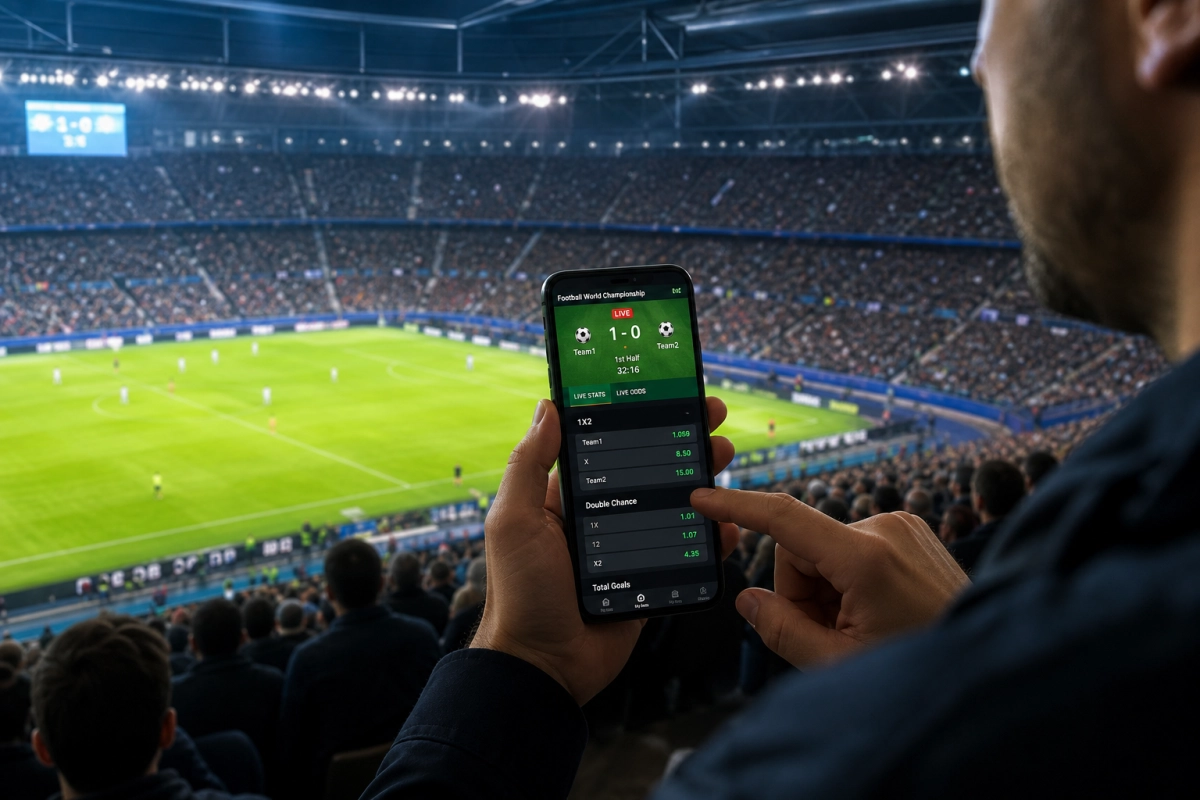
Live soccer betting — often called in-play betting — allows bettors to place wagers on a match while it is actively being played. Unlike pre-match betting, where all decisions are made before kick-off, in-play betting responds to what is happening on the pitch in real time. The score changes, a player picks up a yellow card, a team pushes forward in search of an equaliser — and the odds shift to reflect every development.
For beginners, that constant movement can feel overwhelming. But once the underlying logic becomes clear, live soccer betting starts to make sense. Odds move because match conditions change, and understanding those conditions is precisely what gives an informed bettor a foundation to work from.
This guide explains the core mechanics of in-play betting — how to follow a match effectively, what changing odds are actually telling you, and how to identify moments when a bet represents genuine value rather than an impulsive reaction to what just happened on screen.
How to Follow a Match in Real Time
Effective live betting starts with effective match-watching. Placing a bet based on the scoreline alone is one of the most common beginner mistakes. A team leading 1–0 might be completely dominant, or they might be holding on desperately against a side creating chance after chance. The scoreline looks identical; the reality is entirely different.
When following a match for live betting purposes, these factors carry genuine significance:
- Possession and territory: Which team is spending most of its time in the opposition half? Sustained territorial pressure often precedes goals.
- Shots and dangerous attacks: Raw shot counts are useful, but quality and location matter more. Shots on target from central positions indicate a more serious threat.
- Tactical shape and pressing intensity: Is one team pressing high and winning the ball back quickly? Has a manager switched formation after going behind?
- Substitutions: An attacking substitute introduced early in the second half often signals a team is chasing the game or trying to unlock a defensive opponent.
- Disciplinary situation: A team reduced to ten men faces a fundamentally different tactical challenge, and odds across multiple markets reflect that almost immediately.
- Match tempo: Some games settle into a cautious, low-tempo pattern. Others are end-to-end from the first whistle. Recognising the rhythm helps judge which outcomes are realistically available.
If watching directly is not possible, live statistics feeds provided by most bookmakers offer possession percentages, shot counts, corners and dangerous attacks updated in close to real time — a workable picture of what is unfolding.
Why Live Odds Change — and What Those Changes Mean
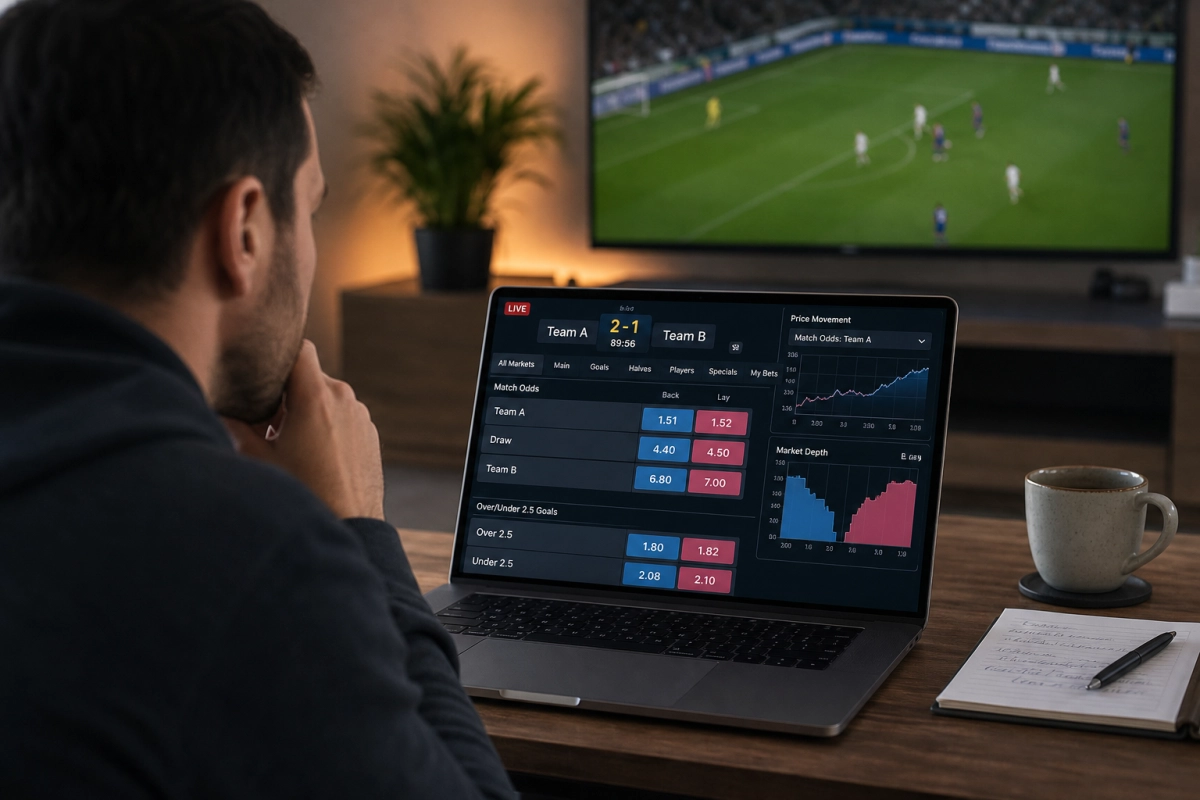
Odds in a live market respond to three interconnected factors: match events, the volume and direction of bets being placed, and the time remaining in the game.
A goal immediately reshapes every available market. Match result odds recalibrate around the new scoreline, total goals markets adjust, and next goal prices shift depending on which team now needs to respond. A red card creates a similar cascade. Even a goalkeeper substitution or a string of corners in dangerous positions can prompt a bookmaker’s algorithm to reprice within seconds.
Time is the other constant pressure. A team chasing an equaliser with twenty minutes remaining has a meaningfully different probability of scoring than one with five minutes left. As the clock runs down, odds on lower-probability outcomes can become poor value even when the match picture seems to support them.
Understanding this interaction between events, money and time prevents one of the most common errors in live betting: acting on odds that have already priced in the very development that prompted the bet. If a team scores and a bettor immediately backs them to win, the market has almost certainly already absorbed that goal. The value existed in the moments before the net rippled.
The Main In-Play Markets and How They Behave
Live soccer betting is a collection of distinct markets, each with its own logic and sensitivity to match events. Knowing which market suits the moment is just as important as reading the game correctly.
The match result market (1X2) offers three outcomes — home win, draw or away win — and reprices continuously as goals go in and time passes. Because it is the most liquid market, odds movements here tend to be the most dramatic and immediate after a significant event.
The Asian handicap distributes a virtual goal advantage to one side, eliminating the draw as a possible outcome. This market is particularly useful when one team is clearly dominant despite a scoreline that does not yet reflect that dominance, often offering more competitive returns than the straight match result.
Total goals markets — over or under a specified number of goals — respond heavily to time. An over 2.5 goals market in a 0–0 game at half-time prices very differently from the same market at the seventy-fifth minute, even if nothing else has changed. Later-stage over bets carry real risk unless both sides show genuine attacking intent.
The next goal market can move sharply with the flow of play. When one side mounts sustained pressure and forces several corners in succession, odds on them scoring next may shorten rapidly. However, this market resets completely with every goal, carrying a natural element of unpredictability regardless of how well the match picture has been read.
Identifying the Right Moment to Place an In-Play Bet
The challenge is not simply identifying a likely outcome — it is finding the moment when the available price still reflects genuine value relative to what the match is actually showing. Several situations tend to create windows where odds have not yet caught up with reality:
- Immediately after a goal by the underdog: Markets often overreact to surprise scorelines. If the favourite was the better team before the goal and remains so after it, value may exist in backing them to recover.
- When markets reopen after a suspension: After major events such as red cards or goals, bookmakers suspend markets briefly to reprice. The moments immediately after reopening can occasionally offer sharper prices before heavy betting volume pushes them in one direction.
- When a tactical change has not yet been reflected: A manager shifting to a more attack-minded formation may take a minute or two before any data feed captures it. A bettor watching live will notice the shift first.
- In the final twenty minutes of a tight game: Teams protecting a narrow lead often drop into a lower defensive block, inviting pressure from the chasing side. If the chasing team has the quality to create chances, draw or equaliser odds may still carry value if the defending side looks stretched.
Managing Impulse in a Fast-Moving Market
One of the most underappreciated skills in live betting has nothing to do with tactics or statistics. It is the discipline to do nothing when no clear opportunity exists. The constant movement of live odds creates a psychological pull — the feeling that something is always happening and a decision must be made. That instinct encourages reactive, poorly-timed bets.
A more useful approach is to enter a live match with a pre-formed view of what would need to happen for a bet to make sense. Rather than scanning for any opportunity under the pressure of a moving clock, the bettor waits for a specific set of conditions to materialise — or acknowledges calmly that those conditions never arrived and no bet was warranted. This structured patience is one of the clearest distinctions between in-play bettors who build sustainable habits and those who find that live betting consistently accelerates their losses.
Building a Live Betting Approach That Holds Up Over Time
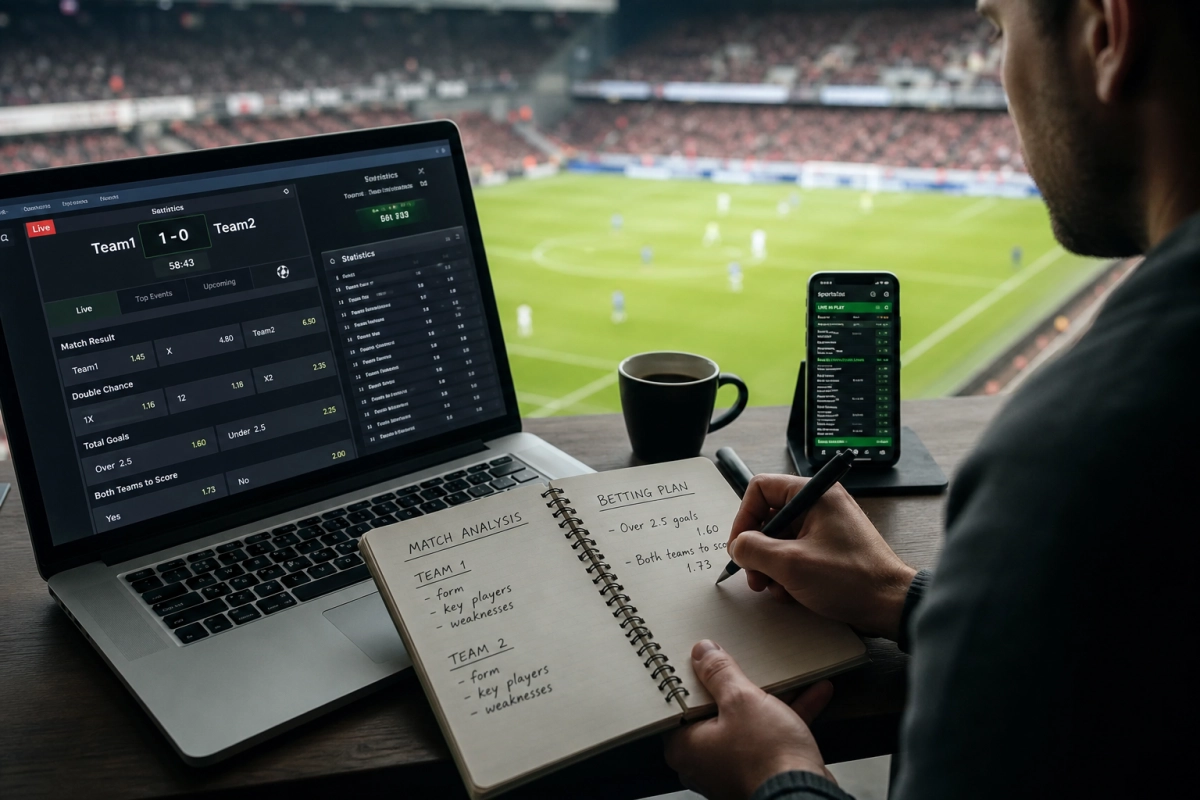
Live soccer betting rewards preparation more than instinct. That framework starts before kick-off. Understanding both teams’ recent form, typical tactical setups, how they perform when chasing a game or defending a lead, and which players carry the majority of their attacking threat — all of this shapes how a match can be read once it begins. Live betting without that foundation is little more than responding to events with no basis for judging whether available odds are fair.
Bankroll discipline deserves the same attention as match reading. Because live markets move quickly and the temptation to place multiple bets across a single game is real, it is straightforward to commit far more to one match than intended. Setting a clear limit per match — and treating it as a fixed ceiling rather than a guideline — prevents one absorbing game from distorting an entire betting record.
Keeping a simple record of in-play bets placed, the reasoning behind each one and the outcome over time is also worth doing from the start. Patterns become visible quickly. If a bettor consistently places bets in the first fifteen minutes and those bets consistently underperform, that is not bad luck — it is information. Adjusting based on that evidence is how a casual interest in live betting develops into something more considered and, over time, more rewarding.
The live market will always move faster than any individual bettor. The goal is not to outpace it — it is to be selective enough, and patient enough, to engage with it only when conditions genuinely justify doing so. That discipline, applied consistently, is the closest thing there is to a sustainable edge in in-play soccer betting.