Why Premier League Matches Reward Attentive Live Bettors
Few football competitions offer as much in-play betting activity as the Premier League. The pace is relentless, momentum shifts are frequent, and tactical changes can completely reshape a match within minutes. Understanding how to read those shifts — and which markets respond most usefully to them — is far more valuable than simply reacting to the scoreline.
This guide focuses on the in-play markets that matter most during a Premier League match: next goal, match result, over/under totals and Asian handicap. It also explains how substitutions, red cards and tactical changes should influence thinking across each market. The emphasis throughout is on observation, patience and disciplined decision-making rather than impulse.
Live odds move quickly. Bookmakers adjust prices in response to match events, time elapsed and overall market activity. A price that looks attractive in the 55th minute may disappear by the 57th. That volatility is part of what makes in-play betting genuinely challenging — and why a clear framework matters so much.
Understanding How Live Odds Shift During a Match
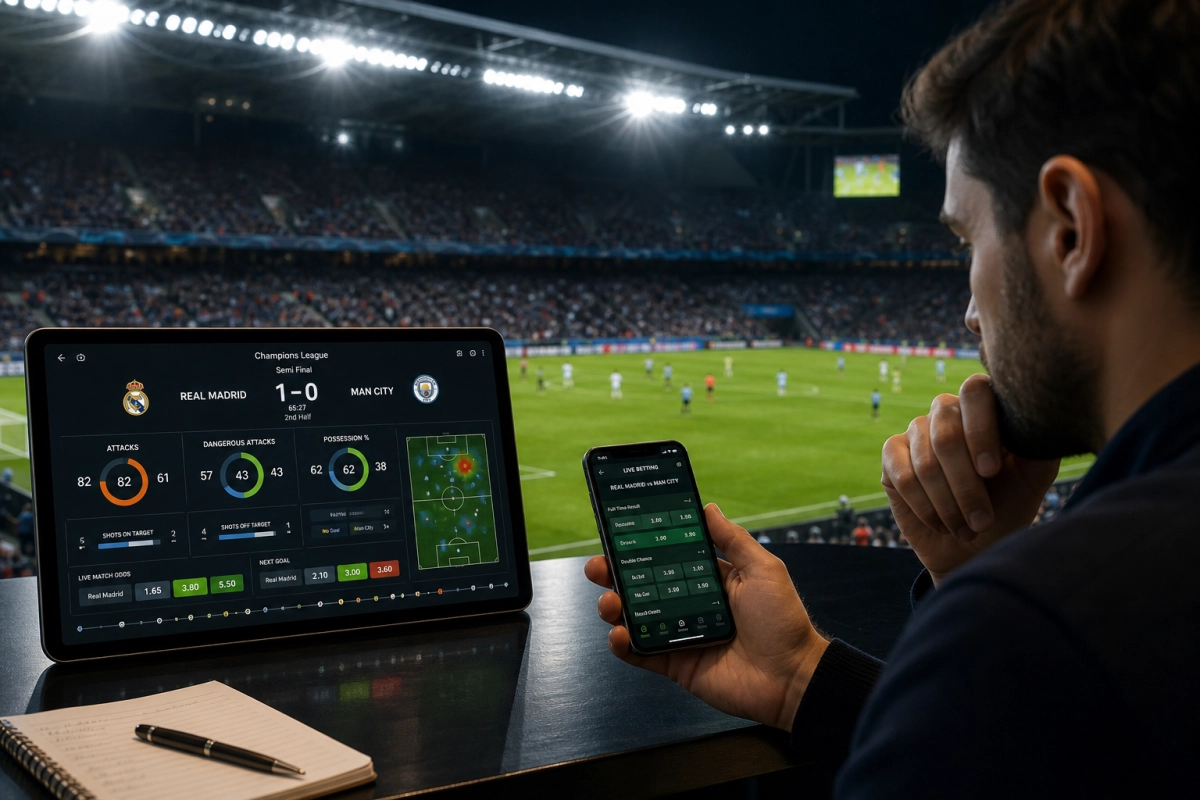
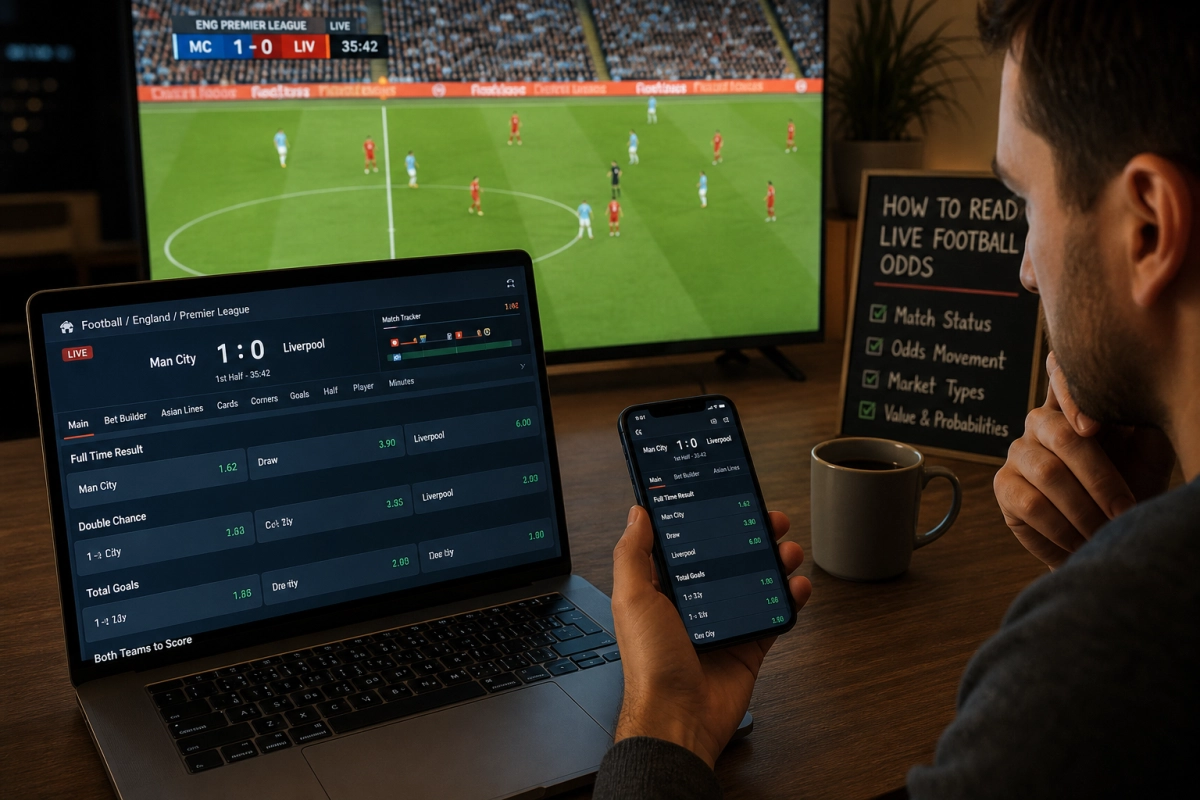
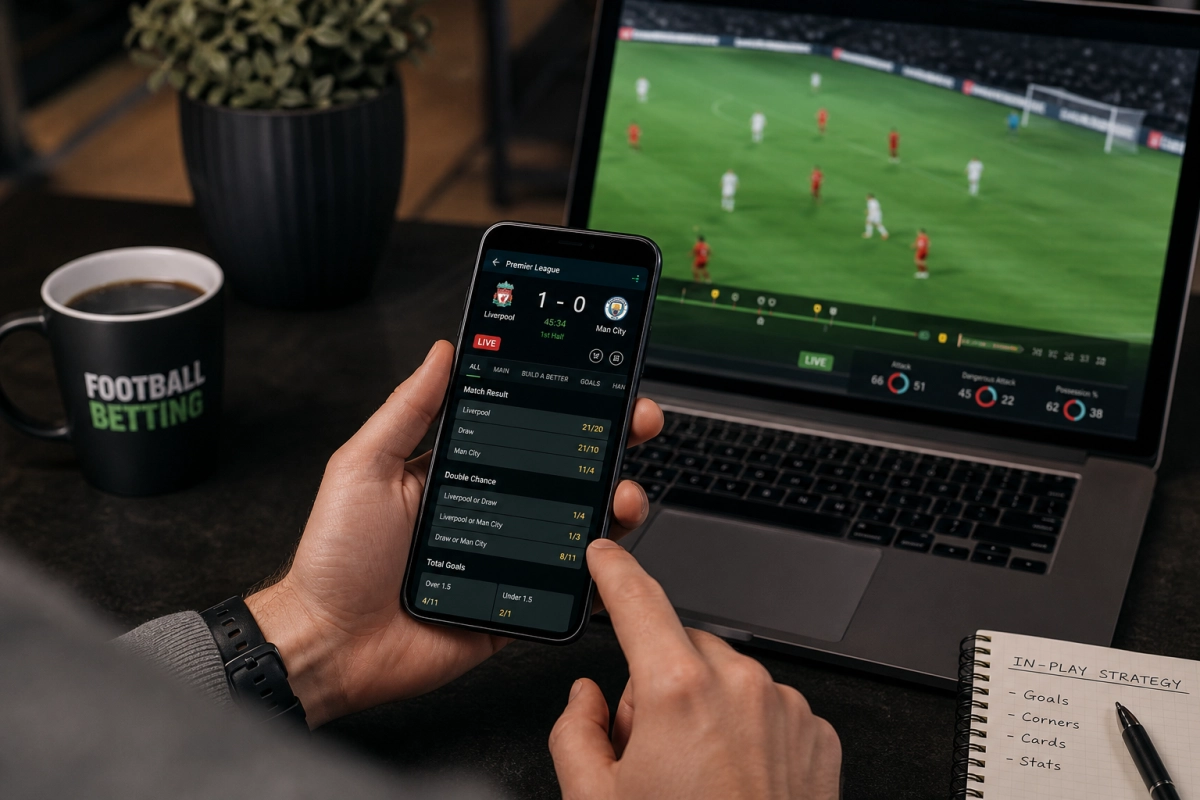
Unlike pre-match prices, in-play odds are recalculated continuously using automated models that factor in the current score, time elapsed, possession, shot counts and dangerous attack frequency. A strong favourite can see its odds lengthen sharply after conceding early or losing a key player. A lower-ranked team holding a one-goal lead in the 70th minute may be priced considerably shorter than the pre-match favourite purely because the live picture favours them.
The clear principle for bettors: evaluate the match in front of you, not the reputation of the teams going into it. Pre-match expectations are a useful starting point, but live betting decisions should be grounded in what is actually happening on the pitch.
The Role of Match Tempo and Pressure
Two of the most telling live indicators are match tempo and sustained pressure. A team creating multiple shots on target, winning corners repeatedly and forcing saves is generating momentum that live odds will often reflect — but not always instantly. Recognising the gap between the actual match picture and the current price is where informed live betting decisions originate.
Conversely, a team winning but sitting deep, inviting pressure and conceding territory may be more vulnerable than the scoreline suggests. That context matters differently depending on which market is being considered.
Next Goal and Match Result Markets: Reading the Live Picture
The next goal market is one of the most reactive in-play options available. It prices which team — or neither — will score next, resetting entirely after each goal. Because it resets, it offers repeated opportunities throughout a match, which suits bettors tracking the game closely rather than placing a bet and stepping away.
The key is assessing current attacking momentum rather than cumulative statistics. A team dominating possession for thirty minutes may have created little genuine danger. A side that has just shifted to a counter-attacking shape may be threatening far more effectively than the expected goals figures yet reflect. What matters is the live picture: who is getting into dangerous positions, where defensive vulnerabilities are appearing, and whether either goalkeeper is being genuinely tested.
The match result market is a slower-burn position. A team trailing by one goal in the 60th minute may still offer workable value if they have shown the attacking intent to suggest an equaliser is plausible. The challenge is distinguishing a team capable of turning the match from one simply enjoying possession without creating real danger. Sustained pressure near the opposition area, set piece opportunities and a high defensive line from the leading team often signal that a comeback is more than statistically possible.
When Substitutions Change Everything
Substitutions are among the most significant live events a bettor can track. A well-timed change — introducing a physical striker, an additional creative midfielder or a specialist wide threat — can shift a match’s dynamic within five minutes. Premier League managers rarely make changes for cosmetic reasons; a substitution in the 60th minute signals clear tactical intent, and understanding that intent should directly inform which markets look more or less attractive.
When a trailing team introduces a target man or an extra forward, the next goal and match result markets both deserve reappraisal. The game is likely to become more direct, and the over/under totals market can also be affected — a more open, direct game typically carries a higher likelihood of additional goals.
A defensive substitution from the leading side tells a different story. Introducing a holding midfielder or withdrawing an attacker for a wide defender signals intent to close the game down. In those moments, the under option in the totals market and the current match result price for the leading team both warrant serious attention.
Over/Under Totals and Asian Handicap: The Markets That Reward Context
The over/under totals market — most commonly at 2.5 goals — is one of the most versatile in-play options available because it responds to match context as much as individual events. A red card, a penalty or a tactical shift can transform a cagey match into an open one almost instantly, moving totals odds significantly in the process.
Live totals betting rewards probabilistic thinking rather than reactive decisions. If a match has produced one goal approaching the 65th minute with both sides pushing, the over 2.5 price may still represent genuine value depending on how freely the game is flowing. Two teams combining for twelve shots in the first hour of a one-goal game are heading somewhere more eventful than two teams that have combined for three.
Asian handicap markets reward the same quality of live observation. Rather than backing a team to win outright, the handicap adjusts the margin, effectively eliminating the draw and offering more granular pricing. In-play, this market becomes particularly useful when one team is applying consistent pressure on a narrow lead. Backing the trailing team on an Asian handicap — at a half-goal or full-goal line — can reflect genuine match value in a way that the straight result market does not, especially when outright win odds have already compressed significantly.
Red Cards, Tactical Shifts and the Art of Staying Calm
A red card produces the most dramatic and immediate repricing across every market. Bookmakers adjust odds almost instantly, but speed of repricing does not guarantee accuracy. The nature of the dismissal, the time it occurs, the score at that moment and the quality of the remaining ten-man side all influence how significant the numerical disadvantage actually is.
A red card in the 85th minute for the team protecting a two-goal lead is a very different event from the same dismissal in the 40th minute for a side chasing the game. In the former, the trailing team may simply lack enough time to convert the advantage. The temptation to react purely to the drama is understandable, but the better instinct is to pause, assess what has actually changed and decide whether the market has overreacted.
Tactical shifts without personnel changes deserve equal attention. A manager switching from a back four to a back three mid-match, or pushing fullbacks into higher positions, creates new vulnerabilities and new threats simultaneously. Those structural changes are visible in real time through each side’s shape, and they often precede a momentum shift before the odds have moved. Bettors watching closely rather than monitoring a score feed have a material advantage in identifying those moments.
The broader lesson is composure. Live betting can feel urgent because the match is fast-moving and prices are constantly changing. That urgency is exactly the condition in which poor decisions are made — chasing a price that has gone, reacting to a goal without considering remaining time, or doubling down simply because the match has not gone the expected way. Patience and selectivity remain the most underrated skills in in-play betting.
Betting with the Match, Not Against the Moment
The bettors who use in-play Premier League markets most effectively treat each match as a live, evolving situation rather than a binary outcome waiting to be confirmed. They watch, they reassess, and they act when the evidence genuinely justifies it.
That means being willing to pass on a match entirely if nothing compelling presents itself. It means recognising that a substitution, red card or tactical change may shift value in one market while removing it from another. And it means understanding that next goal, match result, over/under totals and Asian handicap each respond to live events differently, and should be approached with that distinction in mind.
Premier League football provides exceptional raw material for live bettors. The quality of play is high, the tactical complexity is real, and matches regularly produce the kind of mid-game shifts that create genuine pricing discrepancies. Capturing those discrepancies consistently requires preparation, concentration and the discipline to act on clear evidence rather than instinct or emotion. None of that is complicated in principle. In practice, it is what separates bettors who find sustained value in live markets from those who simply find them exciting.