Over this guide I dissect live football bet types to explain how in-play markets work, the mechanics of odds, and how situational factors move lines; I emphasize rapid odds swings and liquidity risks as the most dangerous aspects while highlighting edge opportunities from spotting momentum shifts and the positive role of disciplined bankroll management in converting knowledge into consistent results.
Types of Live Football Bets
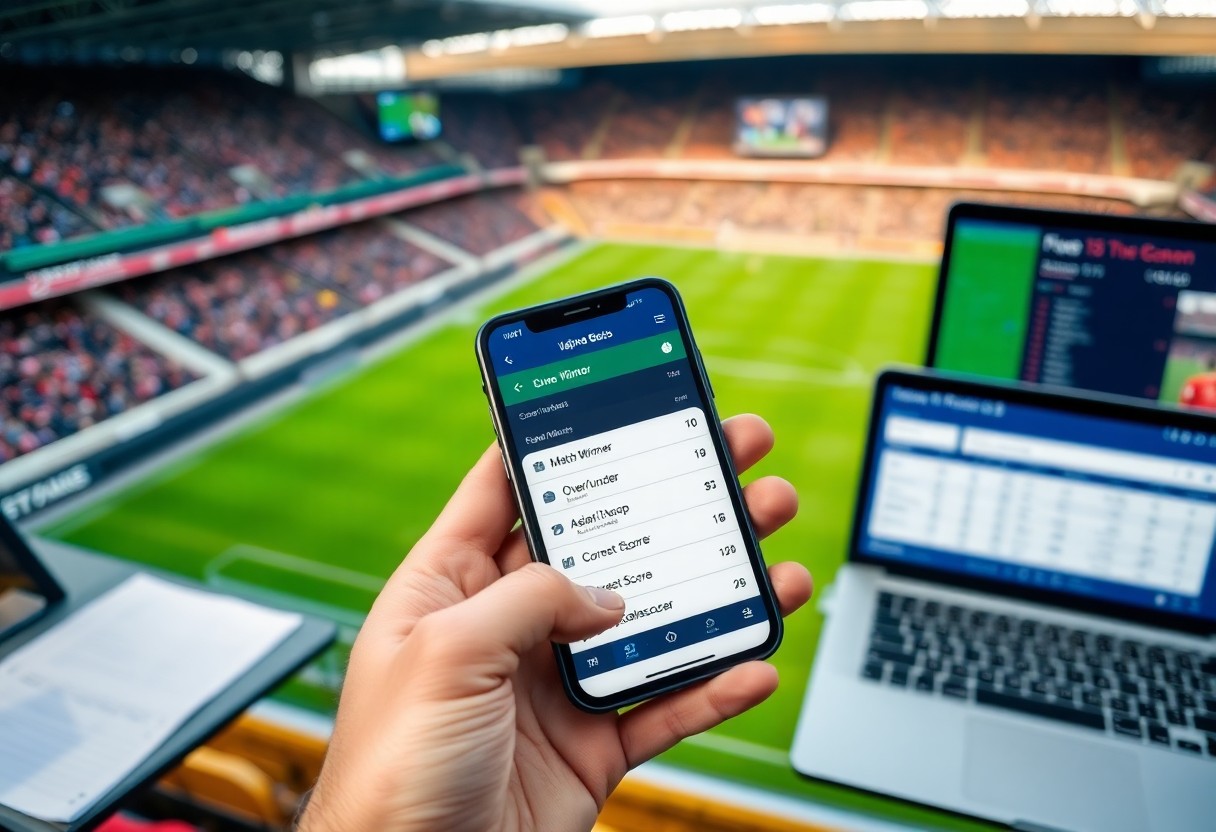
In-play markets fragment into focused options that let you react to momentum swings-examples include a team pressing late after a red card or settling into defensive subs at 70′. Bookmakers move lines fast, so spotting value on odds drift or exploiting a dropped total can be very profitable; conversely, chasing short-term noise is dangerous. Below are the main variants and how they behave in-play.
- Match Result – win/draw/win with shifting odds as the game state changes.
- Over/Under – total goals markets like 2.5 that move with scoring chances.
- Asian Handicap – removes the draw and balances mismatches with quarter-line nuances.
- Both Teams to Score (BTTS) – binary yes/no market tied to attacking metrics.
- Assume that Correct Score markets spike in odds after each goal and are sensitive to late-match dynamics.
| Match Result | Simple 1X2 in-play market; odds reflect current possession, shots, and game time. |
| Over/Under | Total goals lines (e.g., 2.5); live updates follow big chances and cards. |
| Asian Handicap | Handicap lines (-1, -0.75, +0.5) split risk and often offer better value in mismatches. |
| Both Teams to Score | Yes/No market driven by xG, defensive changes, and late tactical shifts. |
| Correct Score | High variance market; odds jump after goals and are useful for long-shot hedges. |
Match Result Bets
In-play Match Result bets react to scoreline and momentum-when an underdog leads at 60′, the pre-match favorite can move from 1.8 to 3.5; scalpers exploit these swings by backing value on post-goal market resets. Tracking live possession, shots on target, and substitutions gives a statistical edge, while betting blind after a panic event is dangerous.
Over/Under Bets
Over/Under markets, often set at 2.5, adjust quickly after clear chances or a red card; a single man-down can shift the line and create value for either side. Bookmakers price expected remaining goals using in-play xG models, so timing bets around high-xG sequences tends to be profitable.
More detail: live models weight time, current xG, shots on target and set-piece frequency-if a match shows 1.2 in-play xG after 60′, the implied remaining goals suggest whether backing Over 2.5 or Under is smart. Use minute-by-minute xG and shot location data: a sequence of three big chances in 5 minutes often pushes the market faster than a single scramble. Hedging on reduced lines (e.g., switching from Over 2.5 to Over 3.5) can lock profit, but frequent switching increases transaction risk and is dangerous without a staking plan.
Asian Handicap Bets
Asian Handicap removes the draw and uses quarter goals (±0.25, ±0.75) to split stakes and reduce variance; a -0.75 line loses half on a one-goal loss and wins full on two-goal wins. Live AH is ideal for exploiting teams that switch to defensive tactics after scoring, as the handicap often drifts.
More detail: understand splits-betting -0.25 is effectively half bet on 0 and half on -0.5; on a 1-0 score this returns a half push/half loss scenario. In-play market makers adjust AH based on goal expectancy and substitution patterns; for example, a favored team minus 1.0 pre-match might compress to -0.25 at 1-0 if they park the bus. Use AH to manage downside: backing -0.5 instead of 1.0 protects you from a single counterattack, while aggressive -1.25 buys extra value but is more risky.
Both Teams to Score
Both Teams to Score (BTTS) is a binary market influenced by attacking intent and defensive setup; games averaging 2.6 goals per match show higher BTTS probabilities. In-play BTTS value emerges after one team dominates possession without converting or when a late tactical switch opens space.
More detail: monitor shots on target ratio and expected goals conceded-if a team concedes high-quality chances but scores little, BTTS Yes often holds value even when odds shorten. Late-match substitutions, a team chasing the game, or fatigue-related defensive lapses increase BTTS probability; conversely, a team that switches to low-block with two defenders dropped drastically reduces BTTS chance. Using conditional probabilities (e.g., historical BTTS after a red card) can identify edges, while betting TS without data is dangerous.
Understanding How Live Betting Works
Key Features of Live Betting
Markets update continuously during matches, with many operators refreshing prices every 1-3 seconds using real-time data feeds and automated algorithms; typical in-play markets include next-goal, match winner, corners and cards. Traders often use cash-out or hedging to lock profits, while public volatility can move prices by 0.1-0.5 decimal points after single events like a shot or a substitution.
- In-play markets: broad selection (next goal, correct score, handicaps) that appear or disappear based on game state.
- Price movement: odds adjust instantly after events; micro-moves of 0.1-0.5 are common per incident.
- Latency: delays of 0.5-3 seconds between live action and displayed prices can create execution risk.
- Data feeds: proprietary provider quality affects accuracy of stats like possession, shots, and xG used by traders.
- Risk control: bookmakers apply dynamic vig (3-8% in-play) and exposure limits to protect books.
- Recognizing how latency and sudden price movement interact is crucial for sizing stakes and choosing markets.
Live Betting Odds
Bookmakers set in-play odds through algorithms that convert changing event probabilities into prices; for example, a team at pre-match 2.50 might drop to 1.80 after conceding an early goal, reflecting a large shift in implied probability. Operators typically widen the margin during volatile moments, with in-play vig often between 3-8%, so odds quality varies by provider and market liquidity.
More advanced traders calculate implied probability from decimal odds and compare it to live metrics like xG, shots on target, and possession to spot mispricings; a simple hedge example: back Team A at 3.20, then lay at 1.60 after a momentum swing to lock a profit. Using short timeframes and strict stake management reduces exposure to rapid reversals.
Step-by-Step Guide to Placing Live Bets
Live Bet Steps
| Step | What to check |
| 1. Choose platform | Regulation (UKGC/MGA), low latency, streaming availability |
| 2. Fund account | Deposit options, min deposit (often $10), welcome promos |
| 3. Pick market | Match winner, next goal, totals, corners, cards; liquidity matters |
| 4. Set stake | Use staking plan (e.g., 1-2% bankroll), check min/max bets |
| 5. Place bet | Confirm odds, watch for odds slippage and latency |
| 6. Manage | Use cash-out or hedge; monitor live stats and match events |
Selecting a Betting Platform
Prioritize licensed operators (UKGC, MGA) that publish in-play markets and offer fast streaming or sub-300ms market refresh; major sportsbooks list hundreds of in-play markets per high-profile match, while exchanges like Betfair can deliver better prices but require matched liquidity and expose you to counterparty risk if volume is low.
Navigating Live Betting Markets
Odds can update every 1-5 seconds after a key event; focus on markets with depth-match winner, next goal, totals, corners-and watch how a red card or substitution can move implied probability by 15-40% within a minute, which creates both opportunity and risk from latency or delayed feeds.
Read momentum using live stats: expected goals (xG), shot ratio, and possession trends; for example, a team with 0.8 xG in the last 10 minutes often sees next-goal odds shorten by 20-30%. Use this to identify value, hedge with opposite small stakes, and apply time-based strategies (next-goal bets gain value as 75+ minutes approach for trailing teams).
Making Your First Bet
Start small: stake 0.5-1% of your bankroll on a straightforward market like next goal or match winner; confirm the displayed odds, check min/max limits (many books accept bets from $0.10), and click to place-be aware that price can change between click and acceptance on volatile markets.
Typical flow: select event → open live market → click desired price → enter stake → view potential return → confirm. On exchanges you may need to wait for a match; on sportsbooks a price-change popup can require reconfirmation. If your bankroll is $1,000, a 1% stake equals $10; adjust based on volatility and always factor in potential slippage or cancellation delays.
Key Factors Influencing Live Betting Decisions
Sharp live bettors watch variables like team form, injuries, weather, referee decisions and rapid odds swings; pairing live stats-possession, shots on target, xG-with substitution timing exposes short windows of value. Thou, weigh pre-match analytics against immediate match signals before placing stakes.
- Team form
- Current scoreline
- Injuries & suspensions
- Weather & pitch
- Substitutions & tactics
- Odds movement
Team Form and Performance
Recent form-last five matches, goals scored/conceded, and xG trends-directly alters live value; for example, a side averaging 2.0 xG but conceding 1.6 suggests both scoring and vulnerability, favoring over/BTTS markets when momentum builds late. Coaches’ pattern of pressing or sitting deep changes expected in-play outcomes.
Weather Conditions
Rain, wind, and temperature shift match dynamics: heavy rain often reduces pass accuracy and speeds up physical errors, while gusts over 20 km/h disrupt long balls and crosses; favor bets on set-pieces, defensive totals or fewer goals when conditions deteriorate.
Historical trends show low-scoring fixtures rise when drainage fails and turf becomes heavy; teams built on quick transitions or wide play suffer most, and minute-by-minute radar can reveal a short window (often 10-20 minutes) where style-of-play and market value change-use live weather feeds to trim stake size or switch to insurance-friendly markets.
Injuries and Suspensions
An early injury to a top creator or a red card reshapes expectancy: losing a player responsible for 30% of chances can reduce team xG significantly and spike odds on the opponent; market reactions often lag live, creating value for quick-reacting bettors.
Evaluate bench depth and the likelihood of like-for-like replacements-if an attacker is replaced by a defensive substitute, expect immediate drops in shot volume and a shift toward conservative play; track substitution patterns and minutes-rested to model the tempo change and target markets (next-goal, correct score) before bookmakers fully adjust.
Tips for Successful Live Betting
Adopt tight rules for live betting: specialise in one or two markets, watch odds movement across bookmakers and focus on matches where you can access live stats (xG, shots, corners). Top traders risk 1-3% of their bankroll per stake and use cash-out or hedge only when the math shows value. After confirming stake limits, log each bet for post-event analysis.
- Track in-play metrics (xG, shots on target, possession).
- Use multiple price feeds to spot odds drift and overlays.
- Set unit sizes tied to your bankroll (1 unit = 1-3%).
- Have clear exit rules: cash-out thresholds or hedging triggers.
- Limit markets per match to reduce noise and execution errors.
Research and Preparation
Study team tactical trends and set-piece vulnerability: teams conceding ≥0.8 xG from corners signal late-match corner markets to target. Check confirmed lineups 15-30 minutes before kick-off and referee cards per game (some refs average 3.1 yellow cards). Use head-to-head stats and recent form (last 5 matches) to anticipate momentum swings that drive in-play price moves.
Managing Your Bankroll
Use fixed-percentage staking: risk 1-3% of your bankroll per live bet and define a daily loss cap (commonly 5% of bankroll). Break your bankroll into units, avoid increasing unit size after wins or losses, and record every stake and outcome to measure edge over 100+ bets.
With a £1,000 bankroll, a 1% unit equals £10; limit single-match exposure to 2-3 units and stop after five consecutive unit losses to reassess. Adjust unit size only after a documented growth or drawdown of 20% and keep a visible log of unit history to prevent emotional sizing.
Staying Emotionally Detached
Apply pre-defined rules to prevent tilt: ban betting on teams you support, set a 10-minute cooling-off before placing a reactive bet, and auto-block markets after specific triggers (e.g., own goal). Consistent discipline reduces impulsive chasing when live volatility spikes and preserves long-term edge.
Use objective signals: if a bet violates your stake or value rules, discard it immediately. Keep a short checklist (unit size, value edge ≥5%, exit criteria) and enforce a 24-hour review for any discretionary bets; this creates institutional control over emotional deviations and improves decision quality.
Pros and Cons of Live Football Betting
In-play markets create fast opportunities: prices can update every 1-5 seconds, and events like a red card often swing win probability by 20-40%. That speed enables hedges, cash-outs and value grabs, but also raises risks from latency, inflated operator margins and impulsive staking. Successful in-play strategies balance rapid decision-making with strict bankroll rules and pre-set exit points to avoid costly, emotion-driven mistakes.
| Pros | Cons |
|---|---|
| Exploit momentum shifts (e.g., post-red card odds collapse) | Odds change rapidly; bets can be matched at worse prices |
| Hedging & cash-out options to lock profit or limit loss | Latency between stream and bet servers can cause missed edges |
| More market variety: corners, next-goal, goal timing | Operator in-play margins often higher (commonly 6-12%) |
| Smaller, flexible stake options for micro-management | Impulse betting and emotional tilt increase loss risk |
| Ability to use live stats (xG, possession) for informed bets | Data overload; misreading xG or small-sample signals is common |
| Profit from specialist knowledge (tactical subs, set-piece strength) | Requires constant attention-fatigue leads to mistakes |
| Opportunities across many competitions, 24/7 | Liquidity can be poor in lower leagues, causing slippage |
| Can turn a small edge into quick returns with correct timing | Quick losses compound; bankroll volatility is higher |
Advantages of Live Betting
Traders can capture short-term value from specific events: for example, backing an underdog immediately after an opponent’s injury when odds move from 3.5 to 1.8. Using live xG and set-piece metrics often reveals mispriced next-goal or corner markets. Professional approaches combine pre-match models with live indicators to size stakes and exploit transient inefficiencies before bookmakers adjust.
Potential Risks and Disadvantages
Live betting exposes bettors to higher operator margins (commonly 6-12%), latency between broadcast and betting feeds, and rapid odds swings that punish slow reactions. Emotional decisions-chasing losses or doubling down after a bad call-are frequent, and liquidity gaps in smaller markets cause slippage and rejected bets.
Mitigation requires strict rules: set maximum in-play stake percentages (e.g., no more than 1-2% of bankroll per live bet), use platforms with low-latency feeds, and predefine exit strategies. Case studies of disciplined live bettors show that limiting frequency and focusing on 2-3 market types reduces variance while preserving edge.
Final Words
To wrap up, mastering live football bet types requires clear knowledge of market mechanics, fast interpretation of in-play statistics, and disciplined stake management; applying sound value assessment and adapting to momentum shifts improves decision-making and long-term results, while disciplined bankroll control and selective wagering reduce exposure to volatility in dynamic match conditions.
FAQ
Q: What are the main live football bet types and how do they work?
A: Common live bet types include Match Result (1X2) where you back home win, draw or away win with odds constantly updated; Over/Under goals where you bet on total goals crossing a threshold (e.g., Over 2.5) and prices move as the match evolves; Asian Handicap which offsets a goal margin to balance favorites and underdogs and is often offered in quarter-goal increments that split stakes between adjacent lines; Correct Score, a high-risk market payable only if the final score matches your selection; Both Teams to Score (BTTS) which simply checks if both sides score at any point; Next Goal and First/Last/Anytime Goalscorer which settle on the next scorer or if a named player scores; Corners and Cards markets that pay on counts or events in the remainder of the match; Half-Time/Full-Time and Double Chance options combining outcomes across periods. Live markets update odds in real time based on events, injuries, momentum, possession and bookmaker exposure. Some bets settle on final result, others on whether an event occurs before the final whistle or within a specified period; partial voids can occur for suspended matches or abandoned games depending on rules.
Q: How do live odds change and what is cash-out when betting in-play?
A: Live odds reflect shifting implied probability as the match unfolds: scoring events, red cards, substitutions, and statistical dominance cause bookmakers and trading algorithms to reprice markets. Higher perceived probability reduces odds; lower perceived probability raises them. Latency matters-stream or data delay can make posted odds lag real play, creating opportunities or risk. Cash-out lets you lock profit or cut loss by settling a bet early at the bookmaker’s offered price, which is computed from current live prices and your original stake; partial cash-outs permit closing a portion of the stake while leaving the rest active. Cash-out offers are typically lower than theoretical market value because they include a margin and risk management buffer. On betting exchanges you can lay to hedge rather than cash-out, which may produce better value but requires sufficient market liquidity.
Q: Which live-betting strategies and risk controls are effective for football matches?
A: Effective practices include: specialize in a few market types (for example, Asian Handicap or Corners) so you can read in-play dynamics quickly; use strict stake sizing (flat percentage of bankroll or Kelly-derived fractions) and set stop-loss and profit-target rules for each match; pre-match research on team styles, substitution patterns and referee tendencies to anticipate likely in-play scenarios; favor markets with deep liquidity to avoid large price slippage; hedge selectively (lay on exchanges or use cash-out) to lock gains or limit downside; avoid chasing losses after a bad run and limit exposure late in matches when outcomes can swing quickly from a single event; monitor bookmaker limits and line movement across bookmakers to exploit soft lines; consider using in-play data feeds or live video to reduce latency; test strategies with small stakes or paper trading and track edge and ROI over a statistically meaningful sample before scaling up.