Why Momentum Matters More Than the Scoreline in Live Betting on Premier League Matches
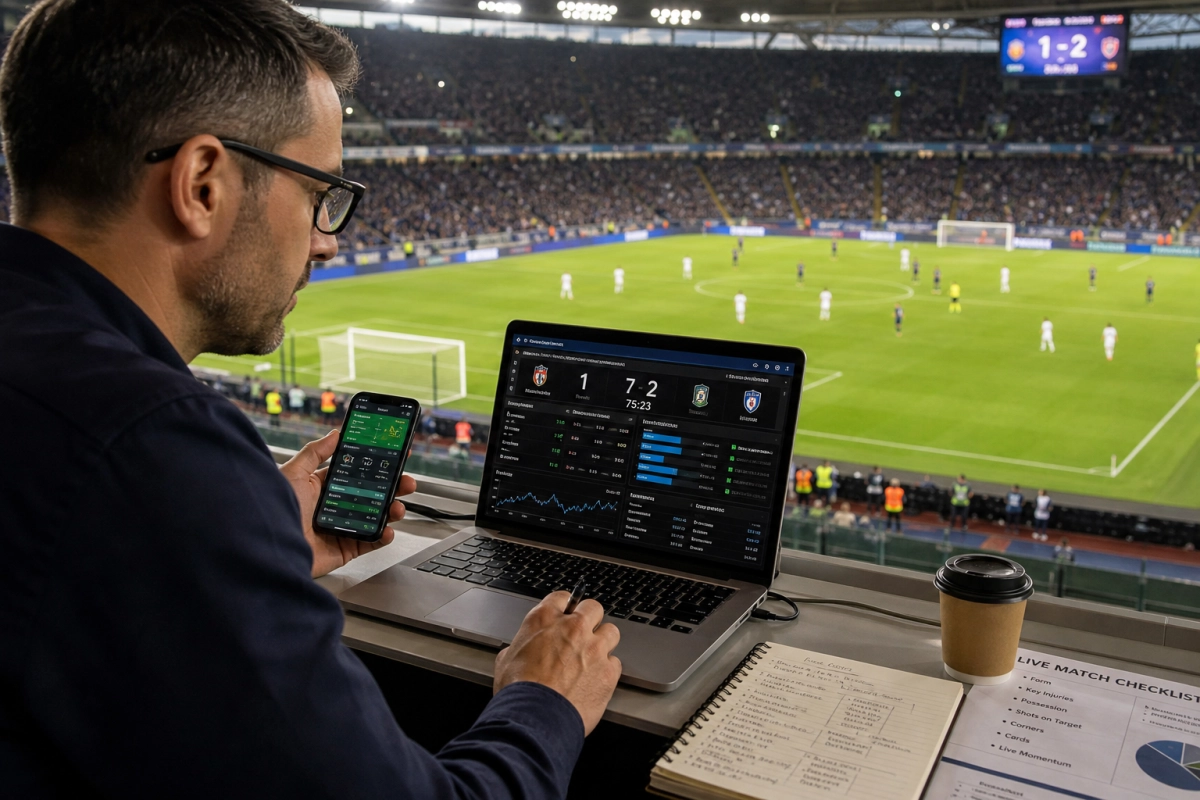
The scoreline tells you what has happened. Momentum tells you what is happening. For anyone serious about live betting on Premier League games, understanding the difference is fundamental to reading in-play markets with real clarity.
A team can be losing 1–0 and still be the dominant force on the pitch. Conversely, a side sitting on a two-goal lead can look disorganised, pinned back and increasingly vulnerable. Bookmakers adjust live odds continuously based on score, elapsed time and market activity — but they cannot always capture the full picture of what is unfolding tactically. That gap between what the odds suggest and what the match is actually showing is where informed observation becomes genuinely useful.
Observable Signals That Indicate a Momentum Shift Is Underway
Momentum in football is not abstract. It manifests through specific, visible events that accumulate over a short period. Learning to read those events — rather than waiting for the next goal to confirm them — gives a live bettor a more accurate picture of where the match is heading.
Possession patterns are a reasonable starting point, but location matters more than volume. How consistently one side establishes itself in the final third, and whether that pressure converts into shots on target, corners and dangerous attacks, carries far greater weight than raw possession figures.
Key momentum indicators in a Premier League match include:
- Shot volume and location — A sudden increase in shots from inside the penalty area suggests a team is finding space and breaking down defensive structure
- Set-piece frequency — A rising number of corners and free kicks in advanced positions signals sustained territorial pressure
- Pressing intensity — Winning the ball higher up the pitch and forcing errors reflects a shift in tactical control
- Goalkeeper involvement — A keeper who has been untroubled suddenly facing two or three stops in quick succession is a concrete signal of changing pressure
- Substitution timing and intent — An attacking substitution before the sixty-minute mark frequently signals a manager has identified vulnerability and is pushing for a goal
No signal should be read in isolation. A pattern of sustained pressure building across five to ten minutes is far more meaningful than any single event — and that kind of pattern can diverge sharply from what live odds are currently pricing in.
How Live Odds React to Match Events — and Where They Lag
Live odds update rapidly, but they are largely driven by scoreline, time elapsed and betting volume. A goal or red card triggers immediate repricing. What algorithms respond to more slowly are the gradual tactical shifts that precede those events. A team that has made a double substitution, switched to a more direct style and begun delivering balls into the box is building toward something measurable — but until a goal arrives, the live market may not yet reflect that change in trajectory.
This is not a flaw that guarantees profit. Markets are efficient enough that obvious value disappears quickly. The point is simply that live odds are reactive by design. A bettor tracking pressing patterns and noticing a tactical switch is working with context that purely score-based pricing does not immediately capture.
Which In-Play Markets Are Most Sensitive to Momentum Changes
Not all live markets respond to momentum in the same way. The next goal market is among the more responsive options. When one side is dominating territorially and generating repeated attempts, its next goal price may still carry the weight of its deficit rather than the momentum it is showing. That asymmetry can be meaningful.
Corners markets operate on similar logic. Bookmakers typically price next corner or corner handicap lines using historical averages and current match state, but sustained pressure — particularly from wide overloads — can create short windows where the line has not yet adjusted to the intensity of territorial dominance one side is establishing. These windows are brief, which underlines the importance of watching continuously.
The match result market is more resistant to momentum-based value. It prices in so many variables simultaneously — time remaining, current score, historical comeback rates — that a purely momentum-driven reading competes against considerable algorithmic efficiency. The edge available there is narrower and requires a higher level of confidence in the signals observed.
Reading the Match Environment Beyond the Statistics
In-play statistics — possession, shots, corners — are useful but capture only part of what is happening. Some of the most telling momentum signals are environmental and contextual, visible to anyone watching attentively but absent from a data summary.
Body language and defensive organisation reward close attention. A team that is conceding but continuing to press high is signalling belief. One that has dropped into a deeper shape after an equaliser is signalling something altogether different about managerial intent — and that shows up in footage well before it appears in any odds movement.
Additional factors worth monitoring include:
- Defensive line height — A high line signals attacking intent; sitting deep indicates a shift to containment regardless of the score
- Pace of restarts — Quick goal kicks and throw-ins sustain tempo; deliberate slowing typically signals game management
- Shape after possession loss — Immediate pressing reflects tactical instruction; retreating suggests a different brief from the dugout
- Injury and stoppage clustering — Frequent minor stoppages during opposition pressure can disrupt rhythm and signal a team struggling physically
The Role of Tactical Adjustments in Shifting Momentum
Managers make changes that can fundamentally alter a match’s trajectory within minutes. A double substitution at half-time is often a direct response to something specific. If those substitutions introduce pace in wide areas or a physical presence in the box, it changes the team’s threat profile in concrete ways. The first five to ten minutes after the restart often carry the highest momentum potential — fresh legs running at a defensive shape that has been playing for forty-five minutes, before the opposition has adjusted.
Formation shifts mid-match are equally telling. A manager moving from a back four to a back three, or pushing a midfielder into a more advanced role, is making a calculated decision based on match demands. The new shape becomes apparent within a few phases of play, and it can represent a meaningful shift in what the next fifteen minutes will look like.
The key question at each of these moments is whether the live odds have been updated to reflect the change or remain anchored in the pre-substitution state of the match. In less liquid markets, or in the brief window before any action confirms the shift, the gap between observable reality and market pricing tends to be at its widest.
Turning Observation Into Judgement Without Overcomplicating the Process
Everything discussed here points toward a single practical discipline: watching the match carefully, interpreting what you see honestly, and asking whether the current live price reflects that reality or lags behind it. In practice, this requires resisting two instincts that consistently undermine clear-headed assessment.
The first is confirmation bias. Once a narrative has formed — a comeback feels inevitable — it becomes easy to ignore signals that contradict it. A goalkeeper making two sharp saves is compelling. A defensive midfielder quietly nullifying the attacking threat is equally significant and considerably easier to miss when you have already committed to an interpretation.
The second is overreaction to recency. A single dangerous attack after ten minutes of sustained pressure does not represent a momentum shift. It represents one moment. The temptation to reframe the entire picture based on a single event — particularly when it coincides with an odds movement — leads to chasing prices that have already moved for reasons unrelated to anything meaningful on the pitch.
A more disciplined approach treats momentum assessment as a running evaluation rather than a series of discrete decisions. The question is not simply whether a team looks dangerous right now, but whether the underlying conditions — territory, structure, pressing intensity, tactical shape — have been sustained consistently enough to persist across the next phase of play.
There is also a strong case for simplicity. Watching shot locations, noting the intent behind substitutions, tracking restart tempo and observing whether defensive lines are holding high or retreating — these four things alone, applied consistently across ninety minutes, generate a more coherent picture than attempting to process every available data point simultaneously.
Live betting on Premier League matches rewards attentiveness, pattern recognition and a willingness to trust observable evidence over instinct or narrative. The scoreline remains the most powerful single input in any live market — but it is not the only input, and it is frequently the last thing to reflect what a match has already started to become. Developing the habit of reading what is building before it arrives is, in the end, what separates reactive live betting from something more considered and more consistently grounded in what the game is actually showing you.