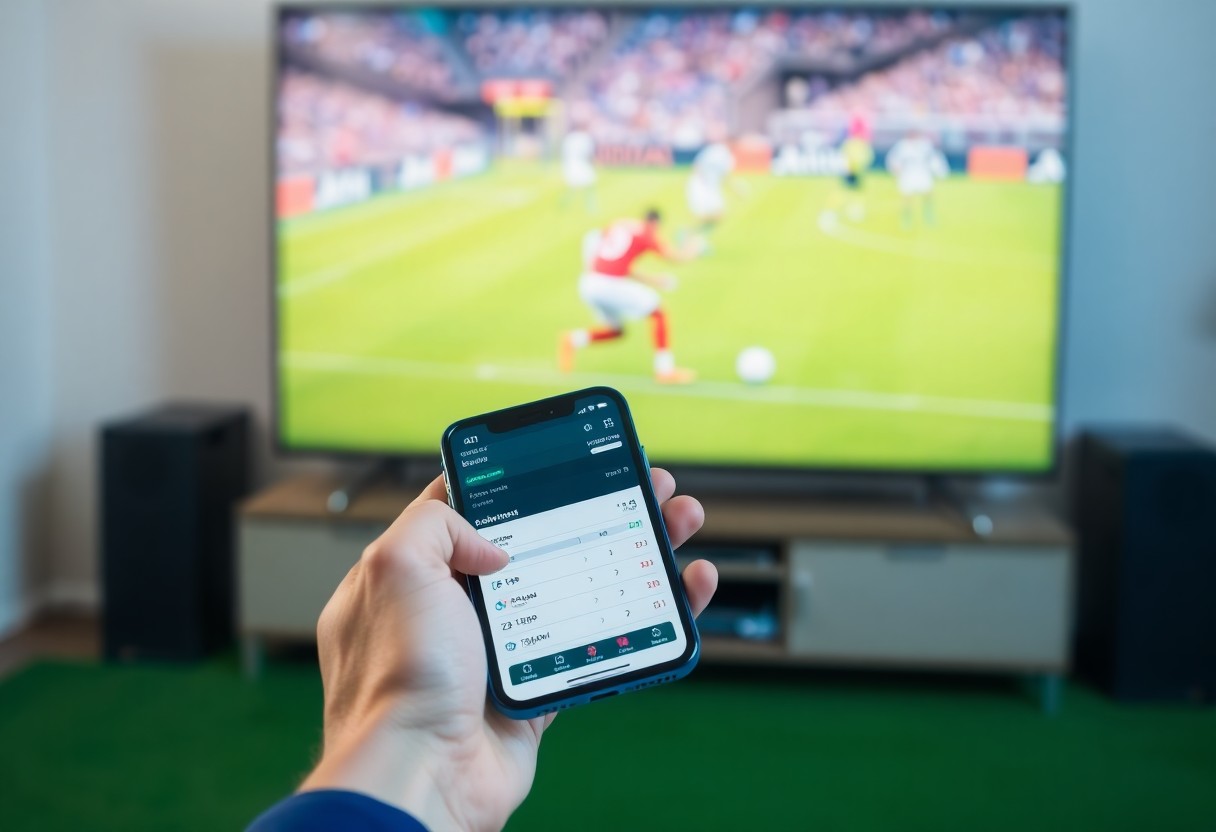
Most bettors know that in-play wagering demands rapid analysis, strict discipline, and a clear plan; this guide breaks down ten vetted strategies to help you identify value, manage risk, and capitalize on momentum shifts without chasing losses, which is one of the most dangerous mistakes. You’ll learn how to use live stats, timing, and bankroll rules to gain a consistent edge and protect profits.
Types of Live Betting Strategies
Several approaches drive profitable live betting decisions: model-first plays, momentum reads, hedges, and micro-market punts. Use rapid statistical analysis (live xG, shots on target, possession spikes) alongside pattern recognition-substitution impact, red cards, pressing shifts-to exploit transient odds. Apply strict bankroll management and set stop-loss rules; aggressive chasing after short-term losses is dangerous.
- Statistical Analysis
- Trend-Based Betting
- Momentum / Timed Bets
- Micro/Prop Markets
| Statistical Analysis | Live xG, shot maps, and conversion probabilities; treat xG as a direct probability (0.35 xG ≈ 35% chance). |
| Trend-Based Betting | Exploit recurring patterns (corners, pressing bursts, late-game scoring rates) but size stakes conservatively. |
| Momentum / Timed Bets | Back teams after sustained attacks (3+ corners or 5+ shots in 10 minutes); fast-response needed, hedge if odds crash. |
| Hedging & Cashout | Lock profits or cut losses when odds shift; use partial hedges to protect a positive expected-value position. |
| Micro/Prop Markets | Target next-goal, next-card, or corner markets where bookmakers lag on micro momentum; small stakes, high frequency. |
Statistical Analysis
Use live models: monitor xG changes, shots-on-target per 10 minutes, and expected assists. An in-play xG jump from 0.05 to 0.40 implies a meaningful shift in scoring probability (≈5% to ≈40%). Combine historical conversion rates and immediate event context-a substitution adding a striker after 60′ often raises attacking xG-and size bets against modeled edge while preserving bankroll.
Trend-Based Betting
Track short sequences: consecutive corners, sustained possession, or repeated defensive errors. For example, a team earning 3+ corners and 6+ final-third entries in 12 minutes signals heightened goal probability; back overs or next-goal markets with small stakes. Beware sample-size noise-persistent trends across several matches are a stronger signal than single-game blips, and volatility can be dangerous.
Thou should quantify trend strength before committing: require thresholds (e.g., 3+ corners and 4+ shots inside the box within 15 minutes) and confirm with live xG increases; use case-based sizing-smaller stakes for single-game trends, larger when patterns repeat across matches-and always plan an exit since tactical changes can quickly erase an observed edge, while consistent pressing patterns offer a clear positive advantage.
Essential Tips for Live Football Betting
Fast recognition of momentum shifts, line-ups, and live stats separates winners from losers in live football betting. Watch key triggers: red cards (win-probability swing ~20-35%), substitutions, and booking accumulation; act on odds movement and xG spikes within 60-120 seconds for the best edge. Thou should lock stakes to a fixed percentage of bankroll, avoid chasing losses, and prioritise markets where you can react fastest.
- Use a fixed-percentage staking plan: bankroll management
- Focus on 1-2 markets (e.g., Over/Under, Match Result)
- Monitor live xG and shot maps for value
- Exploit odds drift and shortening within 30-120s of events
- Account for broadcast and bookmaker latency with low-latency feeds
Bankroll Management
Adopt a percentage staking model: typically 0.5-3% per live bet depending on volatility; for volatile markets use 0.5-1%. Example: a $1,000 bank at 1% equals $10 stakes. Set a max daily loss (e.g., 10-15%) and never increase stake size after losses-failure to follow bankroll management risks rapid ruin.
Timing Your Bets
Target windows: immediately after a red card, within 2-5 minutes of a tactical substitution, or during measurable momentum shifts; these often move odds by 15-40% and create value for those who act quickly. Use live feeds and odds-alerts to optimise timing your bets and prefer markets with rapid liquidity.
Case study: in a Premier League match, a red card at 26′ saw the favoured side’s pre-event odds drop from 3.2 to 1.9 within 90 seconds as win probability rose ~28%; traders who bet within the first 60-120s captured >20% expected value. Also factor in feed delay-if your stream lags 5-8s behind bookmakers, your practical window shrinks, so use low-latency services and pre-set stake sizes to execute timing your bets reliably.
Step-by-Step Guide to Placing Live Bets
Execute live bets with a compact checklist: confirm lineup changes, monitor live xG and shots on target for the first 10-15 minutes, then choose the market (next-goal, handicap, total) where the odds diverge from your in-play read. Use fixed stake sizing-typically 1-3% of bankroll-and set pre-defined exit rules to lock profit or limit loss.
Quick Live-Bet Steps
| Step | Action / Example |
|---|---|
| 1. Pre-check | Confirm injuries, starting XI, weather; avoid betting if GK changed last minute. |
| 2. First 10-15 mins | Track xG, shots on target, and possession; a team with 0.8+ xG early is creating chances. |
| 3. Market selection | Prefer next-goal or handicap where odds moved >20% from opening lines. |
| 4. Stake sizing | Bet 1-3% of bankroll; increase only after a 3-5 unit verified edge streak. |
| 5. Exit plan | Set cash-out or hedge rules: take half profit at +50% return, exit fully at pre-set loss. |
Researching Teams and Players
Focus on last 5 matches, head-to-head trends, and availability: if a side has lost its starting goalkeeper or two full-backs, in-play defensive vulnerability rises. Check pressing metrics and set-piece frequency-teams averaging >6 corners per match present higher late-game scoring chances. Prioritize reliable sources for lineup updates and mark players with recent form spikes or fatigue from midweek fixtures as high-risk.
Evaluating In-Game Events
Monitor how events alter probabilities: a red card or key substitution can swing win probability by ~15-30 percentage points, while sustained xG superiority (e.g., 1.0 vs 0.2 over 20 minutes) signals tangible value on next-goal markets. Watch bookmakers’ odds shifts-rapid shortening often reflects informed market moves or objective momentum shifts; use that to validate your read.
Dig deeper by combining microstats: consecutive shots on target, dangerous entries per 15 minutes, and player touches in the final third. For example, if Team A posts 5 shots (3 on target) and 0.9 xG in the last 20 minutes while trailing, backing them for a next-goal at +120 can be justified-stake modestly (1-2%) and plan to hedge after a goal or if a key attacker is substituted, since substitutions and fatigue are common danger points.
Factors Influencing Live Betting Outcomes
Several in-match variables can swing odds within minutes: substitutions, tactical shifts, and unexpected events alter probabilities far faster than pregame analysis. A red card in the first half can change win probability by roughly 20-40 percentage points; a tactical switch to a 5-3-2 often reduces conceding risk immediately. Monitor lineups, momentum and real-time odds movement. After adjusting stake size and market choice based on these signals.
- Weather and pitch state
- Team Form (last 5 matches)
- Injuries to starters
- Referee temperament and cards
- Substitutions and tactical changes
- Match context (cup vs. league)
- Live stats (xG, possession, shots)
Weather Conditions
Wind, rain and temperature directly affect tempo and set-piece value: heavy rain makes through-balls and dribbling riskier, while strong crosswinds (>20 km/h) reduce aerial accuracy. On soggy pitches teams that rely on quick passing often see their xG drop and shots from distance rise, so markets like under 2.5 goals or both teams to score – no can become more attractive during severe conditions.
Team Form and Injuries
Form over the last five games (e.g., 3W-1D-1L) signals momentum; losing a starter who averages 0.4 goals/90 typically reduces attacking threat materially. Track fitness reports at halftime and substitution patterns-a team missing a full-back and a defensive midfielder often concedes more space down the flanks, making counter markets and over/under adjustments profitable.
Dig deeper into squad depth: if a club has only one natural striker and that player is injured, expect a measurable drop in expected goals and shot volume. Monitor injury types-hamstring strains commonly sideline players 2-6 weeks while ACL tears are long-term-and check bench quality: teams with versatile substitutes limit negative impact, whereas thin squads often suffer tactical inflexibility and late-game collapses.
Pros and Cons of Live Betting
Live betting offers rapid value opportunities when odds lag real events, but it also brings faster variance and emotional pressure; lines can move within seconds after a red card, substitution, or a streak of six corners, and successful in-play bettors rely on data feeds, latency management, and strict staking to convert those short windows into profit.
| Pros | Cons |
|---|---|
| Capture mispriced lines after immediate events | Odds shift in seconds-requires fast decisions |
| More hedging and cash-out options | Higher emotional tilt and impulse bets |
| Exploit lineup/news gaps before bookmakers adjust | Latency and feed delays hurt retail bettors |
| Smaller stake flexibility across many micro-markets | Increased bookmaker margins on some in-play markets |
| Turn pregame losses into managed positions | Rapid variance leads to bankroll volatility |
| Use statistical models on live metrics (xG, shots) | Requires tools, subscriptions, or advanced tracking |
| Frequent micro-opportunities during set pieces | Markets become efficient around popular events |
| Can profit from situational strategies (red card, subs) | Account limits or restrictions from sharp activity |
Advantages of Live Betting
Sharp live bettors exploit short windows of inefficiency-for example, backing an under after 20 minutes when both teams register <0.5 xG and few shots, or hedging a losing pregame wager at halftime to lock in a partial profit; these tactical plays let disciplined bettors convert situational insights into measurable advantage.
Disadvantages to Consider
Fast-paced action raises the risk of impulsive staking and rapid drawdowns; delayed data, slow bet acceptance, or chasing losses can turn a single wrong decision into a 5-10% bankroll hit, so managing latency, pre-set limits, and strict unit sizing is non-negotiable for sustainability.
More detail: account restrictions are common when patterns show consistent in-play wins, bookmakers may widen spreads or limit stakes, and emotional fatigue after consecutive live bets increases mistake rates-implementing automation, fixed staking rules, and periodic breaks reduces these operational and psychological risks.
Common Mistakes to Avoid in Live Betting
Avoid these habitual errors that silently drain bankrolls: chasing losses, abandoning pre-match research, and reacting to noisy halftime stats like possession without context. For example, raising a bet from 1% to 3% after three losing bets transforms variance into long-term decline; similarly, ignoring a missing starter or a team’s set-piece strength can cost multiple wagers. Implement process checks and log each decision to stop repeatable leaks.
Chasing Losses
Doubling stakes after a loss (Martingale) is one of the fastest ways to bust; three consecutive doublings means risking 7× your base unit to recover losses. Live markets amplify variance – odds swing sharply after a goal or red card – so emotional reactions push bettors to oversized stakes. Use a fixed-percentage staking plan (0.5-2% typical) and strict loss limits to keep short-term swings from becoming permanent bankroll damage.
Ignoring Pre-Match Analysis
Wagering live without a pre-match baseline discards important data like xG, tactical setup, and confirmed lineups; that omission makes you chase surface stats. For instance, if a team’s top striker accounts for 30-40% of goals and is absent, live xG will understate their true threat. Build a pre-match probability model so in-play adjustments reflect real context rather than noise.
Convert pre-match insight into live rules: verify the starting XI within 5 minutes, compare pre-match xG to opponent conceded-xG, and watch live xG momentum. If in-play xG diverges by more than 0.15 per 10 minutes from the pre-match expectation, pause and reassess before sizing bets. Example: a side with 1.9 pre-match xG vs a 1.2 conceded-xG defense still merits value after an early setback unless sustained live metrics contradict it.
To wrap up
Presently, these ten proven live football betting strategies equip bettors with systematic risk management, in-play value identification, momentum reading, staking plans, and disciplined record-keeping to improve long-term outcomes. Applying statistical analysis, clear bankroll rules, selective markets and emotional control will raise consistency; practice, review, and adaptation to evolving match dynamics are crucial to turning knowledge into measurable edge.
FAQ
Q: How should I combine multiple strategies from “10 Proven Live Football Betting Strategies Every Bettor Should Know” during a match?
A: Start with pre-match preparation: know team form, key injuries, tactical setups and likely in-play market behavior. Choose 2-3 complementary strategies (for example: momentum trading, value spotting with xG, and Asian handicap layering) and set clear entry criteria for each – e.g., back a team on the Asian handicap only if they register >2.5x the opponent’s shots in the first 20 minutes and the market drifts by at least -0.10 implied probability. Use the first 15-25 minutes to confirm patterns (possession pressure, shots on target, substitutions) before sizing stakes. When odds move in your favor, scale in; if the market moves against you and your original signal is gone, scale out or hedge on an exchange to lock profit or limit loss. Log every trade/ bet with the reason and outcome so you can see which strategy combinations produce consistent edge and which interfere with each other.
Q: What bankroll and staking rules work best for live football betting?
A: Use a percentage-based staking plan to protect capital: typical live-staking ranges are 0.5-2% of bankroll per single live position, with a maximum correlated exposure of 3-5% across simultaneous positions. Consider a fractional Kelly approach (e.g., 10-25% of full Kelly) for those who calculate edge; otherwise stick to fixed-percentage stakes for simplicity. Set strict session limits: a maximum daily loss (e.g., 3-5% of bankroll) and a stop-after-n-losses rule to prevent tilt. Reduce stakes in volatile or low-liquidity markets and increase only after documented positive variance over several sessions. Always track ROI and drawdowns so you can adjust stake percentage when bankroll changes significantly.
Q: What common live-betting mistakes should I avoid and how can I mitigate them?
A: Avoid chasing losses, betting on impulse, and wagering without watching the match context – these account for most poor outcomes. Mitigations: enforce pre-defined entry/exit criteria, use a session loss cap, and require live visual confirmation of tactical signals before betting. Don’t overtrade thinly traded markets where odds jump erratically; stick to higher-liquidity lines (major leagues, popular markets). Reduce latency by using fast data feeds and a reliable bookmaker or exchange; if your feed lags, avoid scalping strategies that require millisecond precision. Keep a betting journal with rationale and outcome to identify repeating errors, and regularly review which strategies yield positive expectancy versus those that produce net losses.