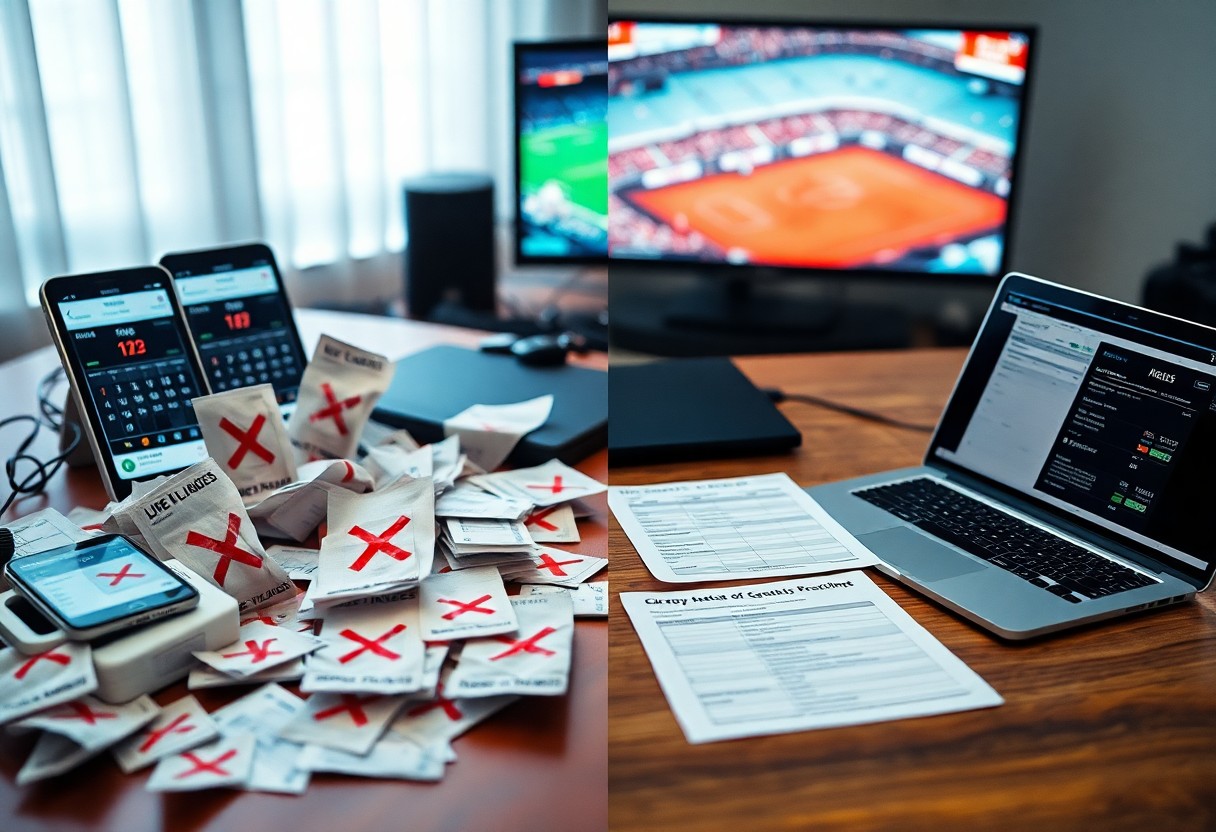
This guide identifies the most dangerous errors in live football betting-like chasing losses, ignoring match context and poor bankroll management-and gives practical fixes, including setting strict limits, value-based staking and using real-time data to spot momentum shifts; follow these methods to protect funds, reduce impulsive bets and improve long-term returns with disciplined, evidence-based strategies.
Understanding the Types of Live Football Betting
Markets shift from broad pre-match lines to granular in-play options like next-goal, corners, and player props; traders exploit momentum, substitutions and xG swings to find value. Match-winner and totals remain the backbone, while micro-markets let you hedge or scalp across minutes. Bookmakers adjust prices within seconds, so spotting a live betting misprice-even a 0.2 decimal error-can turn into a profitable trade within 10-20 minutes.
- Live betting
- In-play
- Pre-match
- Single bet
- Accumulator
| Match-winner | Back a team to win; odds swing after events like red cards or injuries-use win probability shifts to trade. |
| Totals (Over/Under) | Bet goals markets; late-game Over 0.5 or Next Goal markets offer high volatility after a 0-0 half. |
| Asian Handicap | Level variance when favorites dominate; +0.5 or -1.0 lines change value rapidly after goals. |
| Player/Prop markets | Next scorer, cards, corners-use lineup and role changes to anticipate price moves before others react. |
| Multiples / Accumulators | Combine selections for bigger payouts; three legs at 1.8×2.0×1.5 produce 5.4× the stake but multiply risk. |
Pre-Match vs. In-Play Betting
Pre-match markets offer deeper liquidity and time to model edges using form and xG over days, while in-play pricing reacts to real-time events and emotional swings; for example, a team hitting the bar at 55′ can see odds compress in under a minute, creating short windows for scalping or hedging that aren’t available pre-match.
Single Bets vs. Accumulators
Single bets isolate risk: a 5% edge on one market compounds predictably, whereas accumulators multiply odds and probability risk-three 75% selections result in a 0.75^3 ≈ 42% chance to win, so a 5× payout comes with much lower win expectancy despite higher nominal returns.
After weighing volatility and payout math, prefer single bets to build steady ROI and use accumulators sparingly: size accumulator stakes to 0.5-2% of bankroll, limit to entertainment or when every leg has a clear edge, and apply cash-out/hedge rules to lock profit or cut losses.
Key Factors Influencing Live Betting Outcomes
Shifts in possession, tactical tweaks and quick substitutions swing in-play value faster than pre-match lines; professional traders watch micro-metrics. Any successful live bettor prioritizes team form, injuries, momentum, weather and venue to avoid being caught by sudden market moves.
- Team Form and Injuries
- Momentum & Scoreline
- Substitutions & Tactical Changes
- Referee Decisions
- Weather Conditions and Venue
- In-match Statistics (xG, shots, possession)
Team Form and Injuries
Recent runs (last five matches), rotation over congested schedules and missing starters change expected output: losing two regular defenders usually forces full-backs into isolation and increases conceded chances, while an absent top scorer drops finishing probability. Use live line shifts when a lineup change is confirmed and weight injuries and short-term form more than reputation.
Weather Conditions and Venue
Wind over 20-30 km/h disrupts long passes and crosses, heavy rain reduces pace and passing accuracy, and high altitude-like La Paz at ~3,637m-lowers visiting teams’ stamina; these factors alter shot volume and set-piece frequency. Adjust live expectations for weather and venue quickly, especially in early and late phases.
More detail: pitch quality dictates ball bounce and injury risk, so expect more stoppages on worn surfaces and favor teams used to that ground; coaches often switch to direct play in wet conditions, increasing corners by 20-40% in some matches. Prioritize smaller stakes or hedges when altitude, strong crosswinds, or a poor pitch create unpredictable outcomes.
Common Mistakes to Avoid in Live Betting
Impulse reactions like increasing stakes after a loss, backing teams without checking momentum, and failing to track live stats are frequent errors. Set rules-use units of 1-3% of bankroll, a session stop-loss of 5-10%, and avoid stakes beyond 3× your usual unit to prevent emotional ruin and bankroll volatility.
Chasing Losses
Doubling down after losses or using martingale-style increases is a fast way to lose the session. Instead, implement a pre-defined stop-loss (5-10% session limit), keep live stakes to your standard unit, and use small hedges (≤50% of unit) when situations clearly change; this preserves bankroll and discipline.
Ignoring Game Momentum
Failing to read momentum-sudden spikes in shots, xG created, or possession pressure-means betting against unfolding reality. Watch indicators like shots on target, xG trends, and final-third pass volume in 10-15 minute windows; reactive market moves often follow these measurable shifts.
Track substitutions, cards, and fitness: an attacking sub at 60′ or a red card alters momentum immediately. Use live providers (Opta, StatsBomb) or bookmaker tickers to quantify swings-e.g., a jump of +3 shots or +0.2 xG in 10 minutes typically signals sustained pressure. When metrics align, prefer aligned live bets or sit out if markets haven’t adjusted.
Tips for Successful Live Betting
Exploit short windows of value by tracking possession, shot volume, and substitutions to identify mispriced in-play odds and avoid impulse reactions; use tight staking and predefined exit rules to manage variance. Prioritize markets you can read-next-goal, corners, and cards often react fastest-and avoid long-shot coups. This disciplined approach protects your bankroll and turns repeated small edges into sustainable returns.
- Bankroll management: set unit size (1-3% typical) and daily loss caps.
- In-play odds: monitor live lines for quick value after events.
- Real-time data: use feeds showing xG, shots, and possession.
- Hedging: lock partial profits after swings like red cards.
- Focus: specialize in 1-2 leagues to exploit pattern familiarity.
Setting a Budget and Sticking to It
Allocate a dedicated bankroll, define a clear unit size (commonly 1-3% per live bet), and set a firm daily loss limit (e.g., 5% of bankroll) to prevent tilt; log every bet and review weekly win rate and ROI. If performance falls below a preset threshold, pause and analyze sample bets rather than increasing stake size on emotion.
Utilizing Real-Time Data and Statistics
Integrate real-time data sources-live xG, shot attempts, and pressure metrics-to quantify momentum shifts: spikes in xG and shot volume within a 10-minute window often precede odds tightening, enabling early value bets. Use feeds with latency under a few seconds and compare market moves across bookmakers to spot arbitrage or slow-reacting lines.
For example, when a team raises expected goals from 0.05 to 0.45 over ten minutes and registers three shots on target, bookmakers frequently shorten odds by 30-60% within a minute; reacting with a small, calculated stake and planning a hedge if the market moves lets you capture value while limiting downside.
Step-by-Step Guide to Placing Live Bets
| Step | Action |
|---|---|
| 1. Pre-game setup | Fund bankroll, set max stake (suggested 1-2% per live bet), pre-select markets to avoid hesitation. |
| 2. Monitor feed & stats | Use live video and stats (possession, xG, shots); watch for momentum shifts and bookmaker latency. |
| 3. Trigger rules | Predefine entry/exit rules (red card, sustained pressure, substitution patterns) to act fast under pressure. |
| 4. Stake & place | Apply stake plan, use limits/cash-out, confirm odds quickly-odds can swing 20-50% after a major event. |
| 5. Manage outcome | Hedge or cash out when value evaporates; log trade and update models for next bets. |
Choosing the Right Betting Platform
Pick a regulated operator (eg. UKGC or MGA) with low odds-latency (~150 ms), live-streams, deep in-play markets (50+ market types), and transparent limits; platforms charging high hold margins (~5-10%) or lacking partial cash-out often cost you edge, while those offering real-time stats and quick deposits improve execution and bankroll efficiency.
Analyzing the Game Progression
Track concrete metrics: xG, shots on target, possession over rolling 10-15 minute windows and substitutions; a red card or sustained 5+ shots in 10 minutes typically shifts win probability by 20-40%, so act on quantified momentum rather than gut feeling to find value when bookmakers lag.
Use triggers such as “team concedes 3+ shots in 10’ with xG rising >0.25” or “opponent makes attacking sub while home team fatigues” to automate decisions; back this with case data-one or two well-documented live turns per week can swing ROI, so log each bet, measure reaction time, and refine thresholds based on observed latency and market response.
Pros and Cons of Live Football Betting
| Pros | Cons |
|---|---|
| Access to many in-play markets (corner, next-goal, player props). | Odds move fast; delays can turn value into loss within seconds. |
| Ability to hedge or cash out after pre-match mistakes. | Higher volatility increases short-term bankroll swings. |
| Use of live stats (xG, possession, shots) to find edges. | Data latency and feed inconsistencies between providers. |
| Profit from observing momentum shifts and tactical changes. | Bookmakers often reduce limits or restrict accounts for winners. |
| Opportunities for arbitrage when bookmakers lag. | Emotional, impulse-driven staking is common and costly. |
| Smaller, more frequent stakes let you scale positions quickly. | Higher vig/juice on some in-play markets erodes ROI. |
| Improved entertainment value and engagement. | Addictive behaviour risk; betting frequency can climb rapidly. |
| Fast cashouts for bankroll management or locking profit. | Cashout values can be heavily skewed by bookmaker margin. |
Advantages of Real-Time Betting
Traders can extract immediate value by reacting to events-goals, substitutions or red cards often shift win probabilities dramatically within minutes, letting smart bettors hedge or exploit mispriced lines; using a disciplined stake plan (suggested 1-2% of bankroll per live bet) and live metrics like xG or shot ratio improves edge and reduces variance compared with impulsive staking.
Risks and Disadvantages to Consider
Live betting exposes you to rapid losses from latency, emotional decisions, and aggressive bookmaker limits; for example, a late red card can flip market sentiment in under 30 seconds, causing rushed stakes and quick drawdowns, while heavy in-play juice can cut expected returns significantly.
Mitigate those risks by using fast, reliable feeds, predefining stop-loss and max-stake rules, and avoiding laddering stakes after losses; many successful in-play bettors log reaction times, cap exposure to no more than 2%-3% of bankroll per event, and rotate accounts across multiple bookmakers to reduce restriction risk.
Conclusion
So avoiding common live-betting mistakes requires disciplined bankroll management, pre-match research, and real-time adjustments: resist chasing losses or emotional wagers, focus on value instead of volume, shop for better odds, set clear stakes and stop-loss limits, and log results to learn patterns. Practicing selective betting and using in-play statistics and video will turn impulsive bets into informed choices and improve long-term results.
FAQ
Q: What psychological mistakes do bettors make during live football matches and how can they fix them?
A: Common errors include chasing losses (increasing stake after a loss), overreacting to a single event (red card, early goal), and letting emotion drive decisions. Fixes: set a fixed live-staking percentage (commonly 0.5-2% of bankroll), impose a daily loss limit (e.g., 3-5% of bankroll), and predefine entry rules for each market (specific triggers such as x shots on target or opponent substitution). Use a short cool-down period after a loss and log every live bet to review patterns and remove emotional impulses.
Q: How does misusing in-play data and timing cause losses, and what practical steps improve decision-making?
A: Mistakes include relying on delayed streams or commentary, reacting to single visible events without context, and betting immediately after a sharp line move. Fixes: use reputable live-stat providers (expected goals, shots, dangerous attacks), watch low-latency feeds when speed matters, wait for market stabilization (often 2-10 minutes after a major event), and combine multiple metrics before acting (possession trend, shots on target, pressure in final third). Track odds movement across bookmakers to detect value or sharp action before placing stakes.
Q: Which operational errors (bankroll, market choice, staking) cost the most in live betting and how should they be corrected?
A: Frequent errors are betting too many markets, risking large portions of bankroll, and ignoring bookmaker margins. Fixes: specialize in a small set of in-play markets you understand well (e.g., next team to score, total goals), apply a clear staking plan (percentage of bankroll per bet, unit sizing), and limit simultaneous live bets. Use multiple bookmakers to shop for the best price, set automated alerts for predefined odds thresholds, and implement regular account reconciliation and performance review to cut out unprofitable strategies.