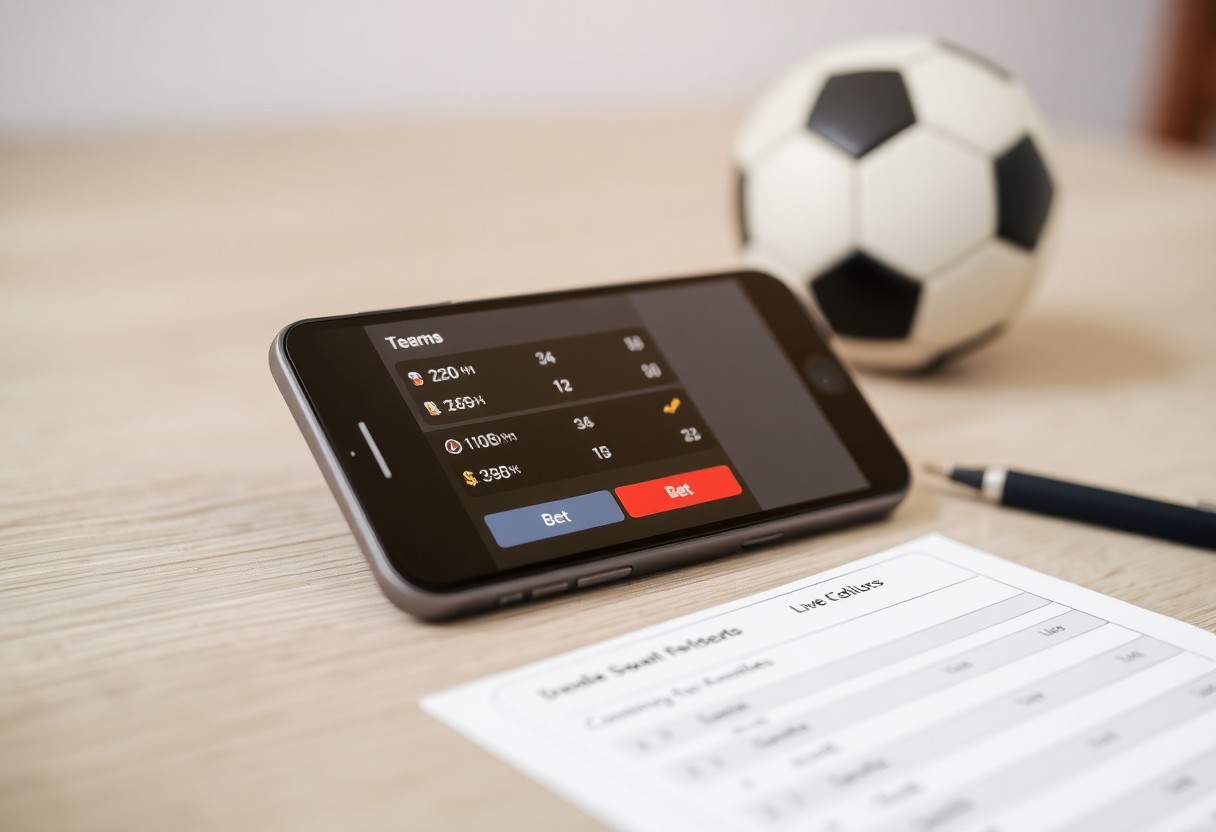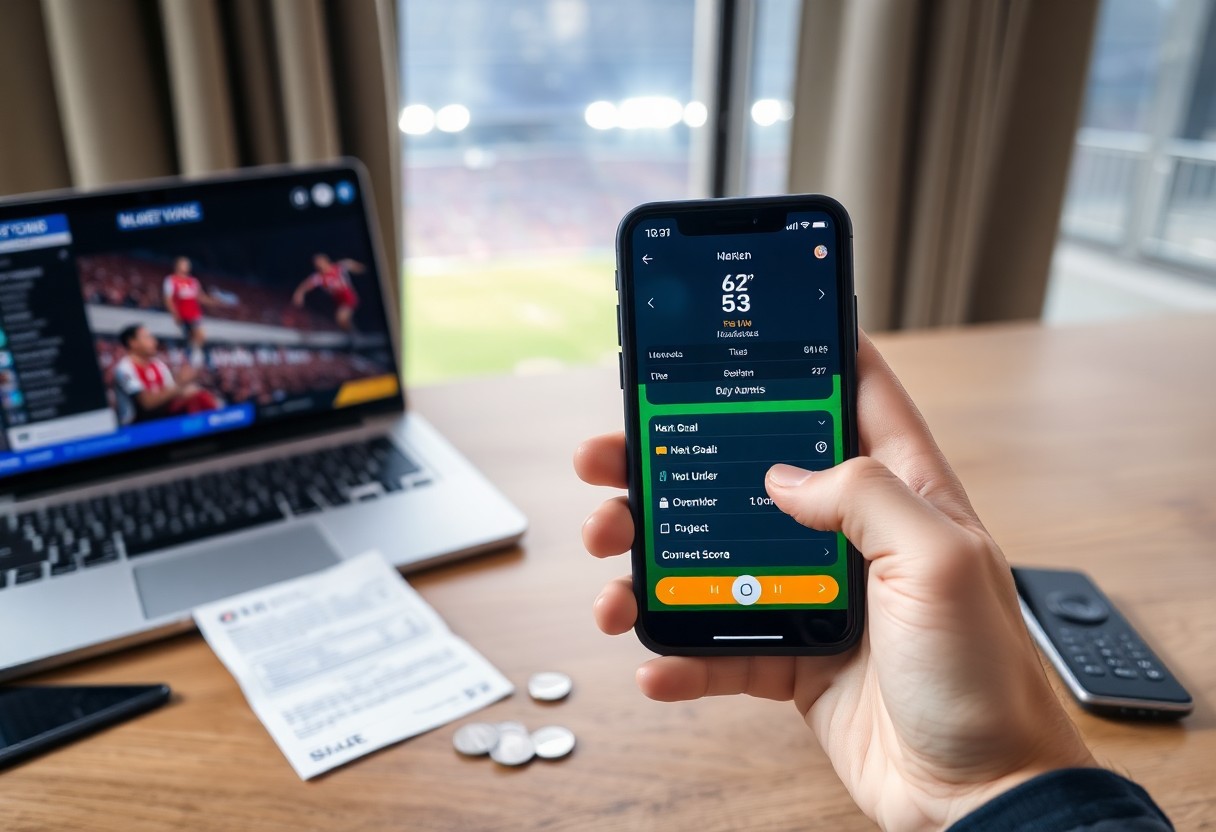
Over the course of a match, savvy bettors use a range of in-play markets to manage risk and exploit live momentum: match outcome and next-goal bets for quick value, fast odds swings and sudden red cards as the most dangerous factors to watch, and cash-out tools with live xG and possession data to lock in profit or limit loss; this guide explains each market, when to act, and how to combine stakes for disciplined, informed betting.
Understanding In-Play Football Betting
In-play betting transforms a static pre-match view into a dynamic market where momentum, substitutions and incidents drive odds in real time; markets can swing dramatically within seconds after a goal or red card. Successful punters combine live stats, match context and strict bankroll rules to exploit short windows of value. Be aware that latency, emotional overreaction and thin market liquidity are the biggest threats to consistent profit.
What is In-Play Betting?
In-play betting means placing wagers while the match is ongoing across markets like match result, next scorer, corners or correct score, with odds continuously updated to reflect events. Traders often use live feeds (possession, shots on target, xG) to anticipate price moves; for example, sustained pressure with 70% possession and multiple shots in 15 minutes will shrink the favourite’s odds quickly. Rapid response and data access define the difference between profit and loss.
Advantages of In-Play Betting
In-play allows punters to find value that wasn’t visible pre-match, hedge losing pre-game bets, and exploit situational events-red cards, tactical switches or fatigue-when odds misprice risk. Professional bettors frequently use small, frequent trades to capture 2-5% gains per market, and skilled scalpers profit from short-term volatility while sportsbooks adjust prices. The approach rewards discipline, speed and superior situational reading.
Further advantages include access to granular live statistics (xG, shot maps, pass networks) enabling model-driven decisions and automated strategies. Some bettors layer positions-staking for a winner, then trading out during a favourable swing-to lock profits; in one case study, a trader turned a pre-match £50 losing position into a no-lose outcome by trading out after a second-half tactical change. Effective execution, low latency and strict staking plans are imperative to realize these benefits.
Essential Types of In-Play Football Bets
Focus on the five markets traders use most often and how momentum, substitutions, or a red card alter value. Watch live odds move after key events: a 1-0 lead at 70′ shifts probabilities dramatically; a team with >60% possession and two big chances will see Next Goal and Total Goals odds react. Use in-match handicap swings and corner accumulation patterns to find edges.
- Match Outcome – classic 1X2 live market reacting to score and cards.
- Total Goals – Over/Under (most common: 2.5) shifts with xG and shot volume.
- Next Goal – high-variance market driven by momentum and substitutions.
- Asian Handicap – offers finer value when one side dominates without scoring.
- After Corners/Bookings – props reflecting tactical changes and time-wasting tendencies.
| Match Outcome | 1X2 odds change fast after goals or red cards; favourites shorten when leading late. |
| Total Goals | Over/Under 2.5 is standard; use live xG and shot maps to gauge value. |
| Next Goal | Short-term market; momentum and set-piece frequency are decisive. |
| Asian Handicap | Neutralises scoreline noise-useful when implied win prob is distorted by red cards. |
| Corners/Bookings | Track tactical shifts: attacking subs increase corner rates; time-wasting raises bookings late. |
Match Outcome Bets
These 1X2 wagers are simplest but react fastest to live events; a red card at 60′ can flip implied win probability by 20-40 percentage points depending on the teams. Bookmakers adjust in seconds, so successful punters watch substitutions and expected goals trends: a trailing side that replaces its lone striker for a target man often increases corner and long-throw frequency, improving late comeback odds-identify when the market lags these signals.
Total Goals Bets
Over/Under markets (especially 2.5) rely on live indicators like shot quality, xG, and pace; leagues average roughly 2.6 goals per game, so a 0-0 at 60′ lowers Over value unless both teams already created >1.0 xG. Traders profit by comparing market odds to live xG and shot-on-target sequences, exploiting slow market reactions to rapid attacking surges.
Dig deeper by modeling implied finishing probabilities from combined team goal rates: if Team A averages 1.1 goals/match and Team B 1.2, combined expectation is ~2.3, tilting value toward Under markets. Conversely, when both teams have >1.6 expected goals on the day (combined >3.2), backing Over becomes defensible; track minutes since last substitution and cumulative xG to time entries and exits.
Step-by-Step Guide to Placing In-Play Bets
| Step | Action |
|---|---|
| 1. Pre-match setup | Check form, injuries, and market depth; enable live stream where available; save pre-match bets as templates for fast execution. |
| 2. Platform & latency | Use providers with low-latency feeds (ideally <2s) and deep markets (often 120-200 markets for major fixtures). |
| 3. Live-data monitoring | Track xG, shots-on-target, corners and possession in rolling 5-15 minute windows to detect momentum shifts. |
| 4. Stake control | Apply fixed-percentage staking (commonly 1-3% of bankroll), set max exposure and predefine hedge/cash-out thresholds. |
| 5. Execution & verification | Place bets within 10-30 seconds of decision, screenshot confirmations, and log odds to audit performance. |
Choosing the Right Platform
Compare exchanges (e.g., Betfair) and sportsbooks for market depth and matched volume; prefer operators licensed by major authorities (UKGC, MGA) with live streaming and fast mobile apps. Expect minimum stakes from about £0.10-£1 on big sites and look for platforms offering cash-out, in-play limits, and clear latency figures-latency over 3 seconds can turn a +EV strategy into a loss in fast markets.
Analyzing Live Data
Rely on rolling metrics: watch 5-15 minute xG, shots-on-target per 10 minutes, and final-third possession to spot sustained pressure; services like Opta or StatsBomb power reliable xG numbers. When a team posts >0.25 xG in the last 15 minutes with multiple shots on target, the probability of an imminent goal rises significantly-use that signal to target next-goal or short-term over markets, keeping stake sizes conservative.
Dig deeper by combining data sources: match event feeds for timestamps, live video to validate build-up, and exchange matched volume to gauge market consensus. For example, if xG and expected assists climb while matched volume spikes on an exchange, odds will usually shorten within 5-20 seconds-prepare pre-sized stakes and hotkeys to act. Log every trade against the live-data snapshot to refine thresholds and reduce false positives over time.
Key Factors to Consider for Smart Betting
Focus on measurable indicators: recent form, head-to-head trends, injuries and suspensions, substitutions, referee card averages (usually 2-4 per match) and environmental factors like weather or pitch type. Check last 5 matches for goals per game, compare xG and pressing metrics, and note if a key player averages 0.6 goals per 90 or more. After prioritise which edges are actionable within the live market.
- Team Form
- Player Statistics
- Injuries/Substitutions
- Home Advantage
- Referee Tendencies
- Weather & Pitch
- In-Play Momentum
- Expected Goals (xG)
Team Form and Player Statistics
Analyze the last 5-10 matches: a side averaging 2.1 goals per game against an opponent conceding 1.8 suggests offensive edge, especially if the striker posts 0.5-0.8 goals per 90. Factor substitutions, minutes played, yellow/red card susceptibility and recent xG trends-for example, a team overperforming vs xG may regress, while undervalued xG indicates sustainable scoring chances.
Match Conditions and External Influences
Scrutinize weather, surface and travel: heavy rain or a wet pitch often lowers shot volume and favors direct teams, while artificial turf speeds play. Short rest (≤3 days) increases rotation risk; referee profiles that average higher cards raise the chance of early sendings. Adjust in-play stakes when these factors change suddenly.
More deeply, altitude, kickoff time and crowd size materially affect outcomes: many leagues show a home advantage of roughly 45-50% wins, but that shrinks with empty stadia or long-haul travel. Use concrete triggers-key starter absent, surface change, or referee with >3 cards/game-to alter live models and hedge fast when the market lags.
Tips for Successful In-Play Betting
- In-play
- Live betting
- Cash out
- Value betting
- Hedging
- Over/under
- Momentum
- Bankroll management
- Match stats
Staying Disciplined and Informed
Use live metrics-xG, shots on target and possession-to make objective choices; data feeds delayed by 10-30 seconds allow rapid reaction without panic. Limit single in-play stakes to 1-3% of bankroll, predefine triggers (red card, sustained xG pressure, substitution patterns) and stick to them. When odds shorten more than 0.2 in five minutes, treat it as market information, not an impulse. Avoid chasing losses and maintain a decision log to refine what works.
Importance of Bankroll Management
Set a unit size-many pros use 1% of bankroll or 0.5-1% for conservative play-and prefer flat stakes or a fractional Kelly (for example 1/4 Kelly) to control variance. Reduce unit after a drawdown beyond 20% and never increase stake to recoup losses; swapping to smaller units preserves longevity. Record every bet, review weekly, and adjust stakes based on empirical win rate and ROI.
If your bankroll is $1,000 a 1% unit is $10; after a 20% drawdown to $800 cut the unit to $8 to protect capital. Apply a daily stop-loss of 5-10% during volatile fixtures and keep a reserve of several staking cycles to ride variance. Track ROI, hit rate and average odds in a simple spreadsheet-for example a 5% ROI at mean odds 2.2 requires roughly a 30% hit rate-and use these metrics to validate strategy. This discipline preserves capital and lets statistical edges compound.
Pros and Cons of In-Play Betting
| Pros | Cons |
|---|---|
| Real-time odds let you exploit immediate events (goals, red cards) and find value. | Markets move quickly after events, demanding fast decisions and creating slippage. |
| Ability to hedge or use cash-out to lock partial profits or cut losses. | Cash-out offers often favour the bookie, reducing expected returns versus ideal exit prices. |
| Extra markets (corners, cards, next-goal) expand opportunities to trade momentum. | Higher volatility increases variance; short-term streaks can wipe small bankrolls fast. |
| Line shifts commonly occur in 0.5-goal increments after big events, creating arb possibilities. | Latency between feed and execution (stream/API delays) can cause missed odds or execution at worse prices. |
| Good for disciplined bettors: use stats, live xG and substitutions to gain an edge. | Emotional, impulse bets rise under pressure; tilt leads to lower long-term ROI. |
| Short-term outcomes give faster resolution-useful for bankroll rotation and testing models. | Bookmakers may apply dynamic limits or stake reductions to winning punters. |
| Exchanges enable lay/back strategies and true-market prices for sharp traders. | Liquidity can evaporate for niche markets, forcing poor fills or cancelled bets. |
Benefits for Punters
For disciplined players, in-play betting provides immediate edges: exploiting a substitution, a red card, or a tactical switch can produce higher expected value than pre-match lines. Traders often use live xG and match momentum to enter positions after a key event, enabling hedges or quick cash-outs that preserve capital and convert short-term advantage into measurable profit.
Risks and Challenges
Rapid odds movement, streaming and API delays, and bookmakers’ behavioural responses create the main risks; latency can turn a winning signal into a loss, while dynamic stake limits and emotional overbetting erode edge. Managing these factors is imperative to avoid large drawdowns.
Additional risk detail: streaming delays typically range from a few seconds to over 20 seconds across providers, so a goal may be priced in your interface before it’s actionable. Operators also use pattern-detection to auto-limit or suspend accounts after repeated sharp wins; combining that with the high variance of live markets means strict staking plans, fast tools, and disciplined exit rules are required to preserve both bankroll and access to markets.
To wrap up
Presently, smart punters should master a core set of in-play markets – match result and next-goal bets, over/under and total-goals lines, Asian handicaps, both-teams-to-score and player props – while using live cash-out and hedging to control exposure. Focus on momentum, tactical changes and odds movement, apply disciplined staking and swift situational analysis to identify and exploit value as matches unfold.
FAQ
Q: What are the crucial in-play bet types smart punters should master?
A: Core in-play markets to know are: next goal (high volatility, short-term value when one side dominates), match result/1X2 (useful when momentum shifts), Asian handicap (reduces variance and compensates for quality gaps), over/under totals (reacts to game tempo and xG), both teams to score (BTTS, good for open games), corners and cards (micro-markets that reflect tactical changes), player props (first scorer, anytime scorer) and exchanges/cash-out options (for hedging). Use next-goal and player props when attacking pressure is clear; use Asian handicap or 1X2 when one team controls possession but odds still give value to the underdog; use corners/cards when tactical or referee signals make set-piece or disciplinary events more likely.
Q: How do Asian handicap and over/under bets perform best during a live match?
A: Asian handicap works well to exploit momentum and in-game imbalances because it removes the draw and offers half/quarter lines that split risk (e.g., -0.5 wins only, -1 halves your stake on a one-goal loss). Back an in-form favorite on a -0.5 or -0.75 if they dominate shots and territory but haven’t scored. Over/under requires real-time evidence: sustained shot volume, clear chances, and attacking substitutions increase the value of overs; defensive parking, heavy weather, or a red card that favors a lead push value toward unders. Use live stats (shots on target, xG timeline, corners) and the match clock – an Over 1.5 at 55 minutes needs less probability than an Over 2.5 at the same point. Adjust stakes to the shrinking time horizon and signal strength.
Q: How should smart punters manage risk with cash-out, hedging and micro markets like corners or cards?
A: Define a unit stake and maximum in-play exposure before betting. Use cash-out to lock profit when movement produces a clear edge or to limit losses after an adverse event, but compare the offered cash-out to potential hedges on the exchange. Hedging is effective when initial odds move significantly-place a lay to guarantee a return or reduce variance. For volatile micro markets (corners, cards), size stakes smaller, rely on referee patterns and team tactics, and avoid chasing odds drift. Always factor market liquidity and latency: thin markets can misprice and make execution costly, so prioritize markets with depth when using hedges or large stakes.