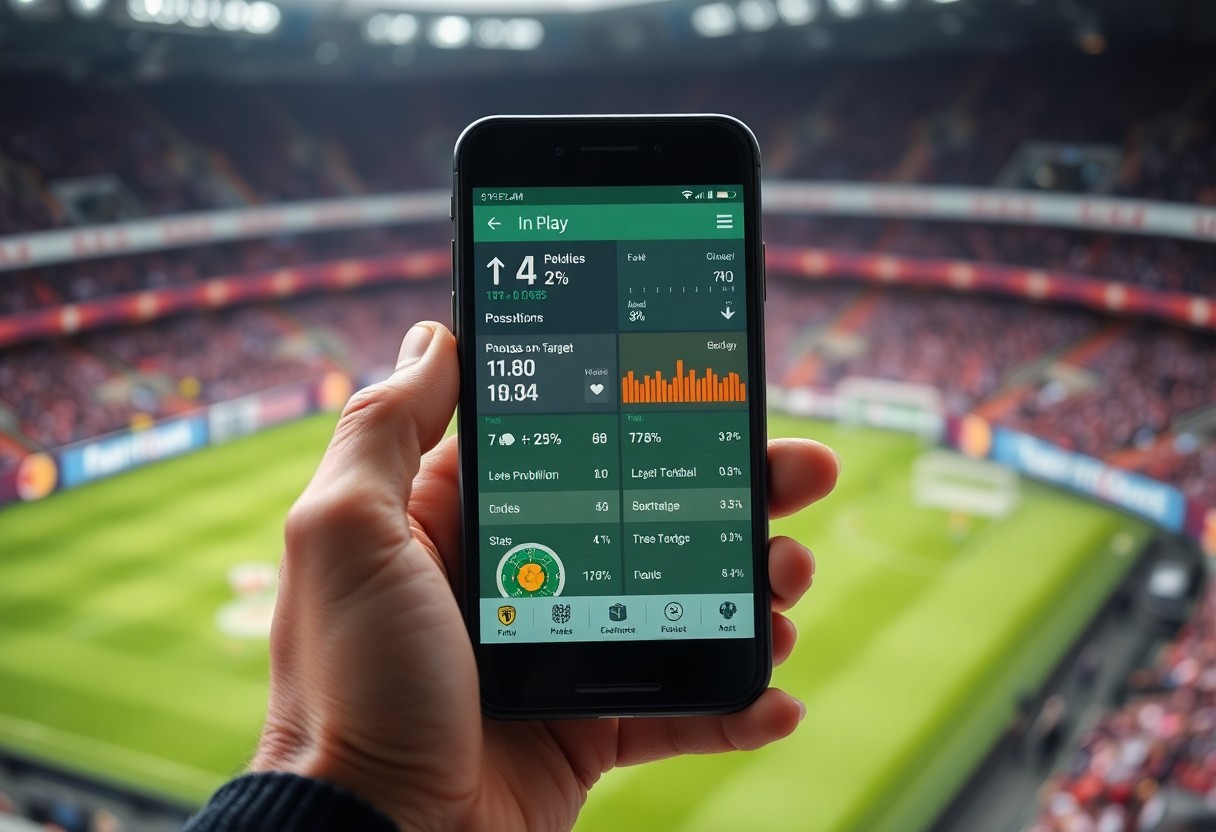
You will learn the importants of in-play markets, from goal-line and Asian handicap bets to cash-out mechanics, with emphasis on understanding odds and market shifts, practical staking strategies, and reading momentum. The guide warns about chasing losses and impulsive stakes as major hazards while highlighting the benefits of using in-play statistics and disciplined bankroll management to turn live opportunities into consistent, informed plays.
Types of Live Football Betting Options
- In-Play Betting
- Next Goal
- Over/Under
- Asian Handicap
- Cash-Out
| In-Play Betting | Wagers placed after kick-off; markets update every 2-10 seconds on major books and react to events like shots, corners, and substitutions; high volatility requires fast decisions. |
| Next Goal | Simple binary or multi-way market; odds can swing >50% inside 10 minutes after a red card or big chance; good for short-term strategies. |
| Over/Under | Live totals adapt to match tempo; bookmakers use metrics like xG and shots in box to shift lines; lines often move by 0.25-0.5 goals. |
| Asian Handicap | Removes draw outcome, common live hedging tool; spreads can change from -0.5 to -1.0 within 15 minutes after a goal, offering entry/exit opportunities. |
| Cash-Out | Instant settlement option reflecting current implied probability minus book margin (typically 3-8%); useful for risk control but can lock in reduced value. |
In-Play Betting
During matches you can back everything from the next goal to total corners; major operators offer markets that react to live stats-possession, shots on target, and xG. Typical latency is 1-5 seconds on streaming sites, while odds update every 2-10 seconds across exchanges. Professional traders use small stakes, quick hedges, and statistical models to exploit temporary mispricings, but the environment is highly volatile and demands strict bankroll rules.
Live Odds and Markets
Bookmakers adjust in-play odds using data feeds (xG, set-piece frequency) and automated algorithms; margins usually sit between 3-8% on popular markets. For example, a team conceding at 60′ might see its win probability drop from 35% to 18% within five minutes, producing sharp price movements and short windows for value. Market depth varies by competition-Premier League markets are deeper than lower-tier fixtures.
More detailed dynamics include algorithmic pricing, human trader overlays, and liquidity differences across books and exchanges; exchanges like Betfair show matched volume that can signal market direction-daily Premier League matches often see tens of thousands of pounds matched, while lower leagues may have only hundreds. Fast roster changes (substitutions at 60′-75′) and red cards cause the largest intra-match shifts; latency between feed and UI can create price slippage and arbitrage opportunities rarely exceeding 1-2% after fees. After aligning staking to observed volatility, limit exposure per market and use pre-set exit rules.
Step-by-Step Guide to Placing Live Bets
Confirm stake sizing (typically 1-3% of bankroll), verify the match feed and stats, pick an in-play market (next goal, handicap, corners), check odds and matched liquidity, place the bet and monitor for a cash-out or hedge within minutes; odds can update every 1-2 seconds, so act quickly when events like a red card or substitution swing prices.
Live Bet Steps
| Step | Action / Tip |
| 1. Bankroll | Set unit size (1-3%); use separate live bankroll |
| 2. Watch | Use low-latency stream; follow xG and possession |
| 3. Market | Choose next-goal, HT/FT, or handicap with high liquidity |
| 4. Odds | Compare feeds; prefer platforms with low latency |
| 5. Execute | Use quick-bet or hotkeys; set max stake and cash-out limits |
Choosing the Right Betting Platform
Pick a platform licensed by authorities like the UK Gambling Commission or MGA, offering live streams and >50 in-play markets on major matches; check latency (<200ms preferred), visible matched volumes, and realistic limits-Bet365, Betfair and Unibet typically show extensive in-play markets and deep liquidity, while newer apps may offer higher bonuses but lower liquidity and slower feeds.
Navigating Live Betting Interfaces
Identify key UI elements: match tile, odds ladder or price column, animated timeline, live stats (xG, shots on target), bet slip with timer and a visible cash-out button; exchanges show order books, sportsbooks show fixed odds-beware of price slippage and bet confirmation delays when markets move fast.
Customize the layout: pin the live stream, enable auto-refresh (1-2s), use market filters to show high-liquidity markets (>€10,000 matched), and set quick-bet hotkeys or one-click stakes to reduce execution time; practicing on small stakes reveals how platform latency and UI delays impact fills and potential slippage.
Key Factors to Consider When Betting Live
When assessing live markets, prioritize the current scoreline & time, visible match stats like shots on target and expected goals (xG), and any immediate game changers such as a red card or a key substitution. Watch for bookmakers’ odds drift – sudden shifts often signal information edges. Assume that a late tactical switch or dismissal can flip probabilities and should prompt stake adjustment.
- Scoreline & Time – immediate impact on risk/reward
- Team Form – last 5 matches, goals per game
- Injuries – absences of key players or suspensions
- Game Situation – chasing vs defending with minutes left
- Momentum – shots, dangerous attacks, xG trends
- Bookmaker Odds – drift, limit changes, cash-out lines
- Red Cards & Subs – immediate tactical and numerical changes
- Venue & Weather – pitch, travel fatigue, wind/rain effects
Team Form and Injuries
Analyze the last five fixtures: a side averaging 1.8 goals over its previous five games is likelier to score than one averaging 0.6, and losing a top scorer or playmaker drops expected output notably. Cross-check official injury updates and matchday lineups; if a starting striker is out, markets often underprice the reduction in attacking threat during the first 30 minutes.
Game Situation and Momentum
Pay attention to momentum swings: a team that generates 5+ shots and consecutive corners within a 10-minute spell raises its immediate goal expectancy, and odds don’t always adjust fast enough. Track attacking substitutions and formation tweaks – an offensive change around 60-70′ frequently correlates with an uptick in shot volume and value on next-goal or over markets.
Delve deeper by comparing xG per 10 minutes before and after key events; for example, a side trailing by one with 15 minutes left typically commits more players forward, increasing corners and counter risks. Use live possession in the final third, shot quality, and substitution patterns to quantify momentum shifts and size stakes when the metrics show a sustained directional change.
Tips for Successful Live Betting
Use data-driven decisions in live betting: track possession, shots on target and substitutions, because odds can swing 20-50% within minutes after a red card or tactical change; aim to stake only 1-3% of your bankroll per play and focus on markets you follow closely, like over/under or next-goal where information asymmetry is greatest. Recognizing common traps-chasing losses, overreacting to single events-and sticking to a plan preserves capital and long-term edge.
- Monitor live stats: use in-play xG and possession to spot value within 1-5 minutes of a big event.
- Limit exposure: max 3 simultaneous live betting positions and cap stakes at 1-3% of bankroll.
- Exploit momentum: enter within 30-90 seconds after a clear momentum shift, but avoid bets in the 2 minutes immediately following a red card due to volatility.
- Keep records: log at least 100 live bets to identify market edges and behavioral leaks.
Timing Your Bets
Bet timing matters: in live betting, target windows like 55-75 minutes when tactical changes and fatigue raise scoring probability; substitution-heavy periods can boost goal chances by roughly 10-15%. Use live heatmaps and event feeds to enter within 30-90 seconds after a clear momentum shift, and keep stakes conservative until patterns confirm value.
Understanding Betting Psychology
Emotions skew judgment in in-play markets; set a predetermined staking plan of 1-2% of bankroll per live bet and predefine stop-loss limits to prevent tilt after consecutive losses. Traders who journal bets and review 50-100 samples improve edge by identifying systematic biases, such as overvaluing recent events or chasing short-term recovery.
Practical steps include tracking metrics-hit rate, return on stake (RoS), and average odds-over batches of 50-200 live bets to reveal cognitive errors; for example, if RoS falls below 95% across 100 bets, reassess market selection or staking rules. Enforce rules like max 3 live bets per match and a mandatory 24-hour cooling-off after a losing streak to convert insights into consistent discipline.
Pros and Cons of Live Football Betting
| Pros | Cons |
|---|---|
| Immediate value capture – odds can jump 10-40% after a red card or key substitution. | Rapid odds movement increases impulse bets and quick losses. |
| Ability to hedge pre-match positions and lock in profit via cash-out. | Bookmakers widen margins in-play, raising the house edge. |
| Use of live stats (xG per minute, possession) to make data-driven bets. | Limited time for research raises the chance of poor decisions. |
| Multiple micro-betting opportunities allow diversified staking strategies. | Higher variance – short-term swings can wipe out bankrolls quickly. |
| Faster settlement – many markets resolve within minutes, improving cashflow. | Latency (stream delay) of 1-3 seconds can cost value on market-moving events. |
| Ability to react to visible factors (weather, injuries, momentum). | Emotional reactions to in-play events lead to chasing and tilt. |
| Opportunities for professional scalpers to exploit tiny edges repeatedly. | Liquidity can dry up late in matches, limiting stake size and options. |
| Strategic use of arbitrage or matched betting during volatile moments. | Account restrictions or limits may be applied to winning in-play bettors. |
Advantages of Live Betting
Experienced bettors can exploit short-term inefficiencies-odds frequently swing 10-40% after events like red cards or tactical changes, creating exploitable edges. Traders hedge pre-match exposure, use cash-out to lock profits, and leverage live metrics (xG, possession trends) to refine bets; professional scalpers place dozens of micro-bets per match to compound small advantages into consistent returns.
Risks and Disadvantages
High-speed markets amplify variance and emotional decisions: a single impulsive live bet can negate multiple pre-match wins. Bookmakers often increase margins in-play and apply limits; even a 1-3 second streaming delay can cost access to favorable odds. Recreational players typically see poorer ROI due to rushed choices and reduced analytic time.
Behavioral and market factors compound losses: chasing after a conceded goal, reacting to crowd noise, or overtrading increases stake size and frequency. Typical in-play margins commonly run between 5-8%, higher than many pre-match markets, and liquidity often falls late in games, causing odd spikes and stake restrictions that can prevent recovery or force suboptimal exits.
Conclusion
Ultimately, live football betting combines fast-moving markets, shifting odds, and in-play statistics that reward knowledge, discipline, and sound bankroll management; mastering market types, assessing momentum, reacting quickly without chasing losses, and using trusted platforms will help beginners trade excitement for consistent, informed decisions while continuing to study game dynamics and refine strategies.
FAQ
Q: What are the main types of live football bets and how do they work?
A: Common live markets include Match Result (1X2) where odds update continuously for home win, draw or away win; Next Team/Player to Score which pays out if the selected side or player scores next; Over/Under goals which settles on total goals scored by a set cutoff (often whole-game or remaining time); Handicaps and Asian Handicaps that adjust goal margins to create balanced odds; Corners and Booking markets that bet on counts of set-pieces or cards; Correct Score and Half-Time/Full-Time for more specific outcomes; and Player Props such as shots, assists or tackles. Each market is settled according to the event timeline and bookmaker rules: some bets are voided or settled when play is stopped for long periods, while others use the ball-in-play rule. Payouts follow the live odds at the moment the wager is accepted, so timing of placement is important.
Q: How do in-play odds change and what should I watch to interpret those movements?
A: Live odds react to real-time match events and underlying probabilities: goals, shots on target, possession swings, substitutions, injuries, referee decisions, and red/yellow cards all shift expected outcomes. Bookmakers also adjust for market exposure and incoming bets, meaning heavy money on one selection can move prices independently of game action. To interpret movements, convert odds to implied probability (1/odds) to see how bookmakers view chances, track momentum indicators like xG (expected goals), shot quality, and pressure in the attacking third, and watch timing-late-game odds will reflect time pressure. Latency matters: streaming or data delays can leave bookmakers ahead of bettors, so use low-latency feeds and accept that odds volatility can signal both opportunity and increased risk.
Q: What practical strategies and risk-management rules should a beginner use for live betting?
A: Manage a dedicated live bankroll and stake only a small, fixed percentage per bet to limit variance; avoid increasing stakes after losses. Focus on a few markets you understand well (e.g., next goal, corners) and build a checklist of indicators to watch-team form, starting lineups, in-game momentum, substitutions, and live xG. Use pre-positioning when appropriate: place small pre-match hedges and larger in-play bets when clear signals appear. Use cash-out or hedging to lock profits or reduce losses, but weigh the offered value versus holding the position. Shop across multiple bookmakers and exchanges to get the best available odds and consider slow-play risk from streaming latency. Finally, set time and loss limits, and treat live betting as fast-paced trading rather than casual entertainment to keep decisions disciplined.