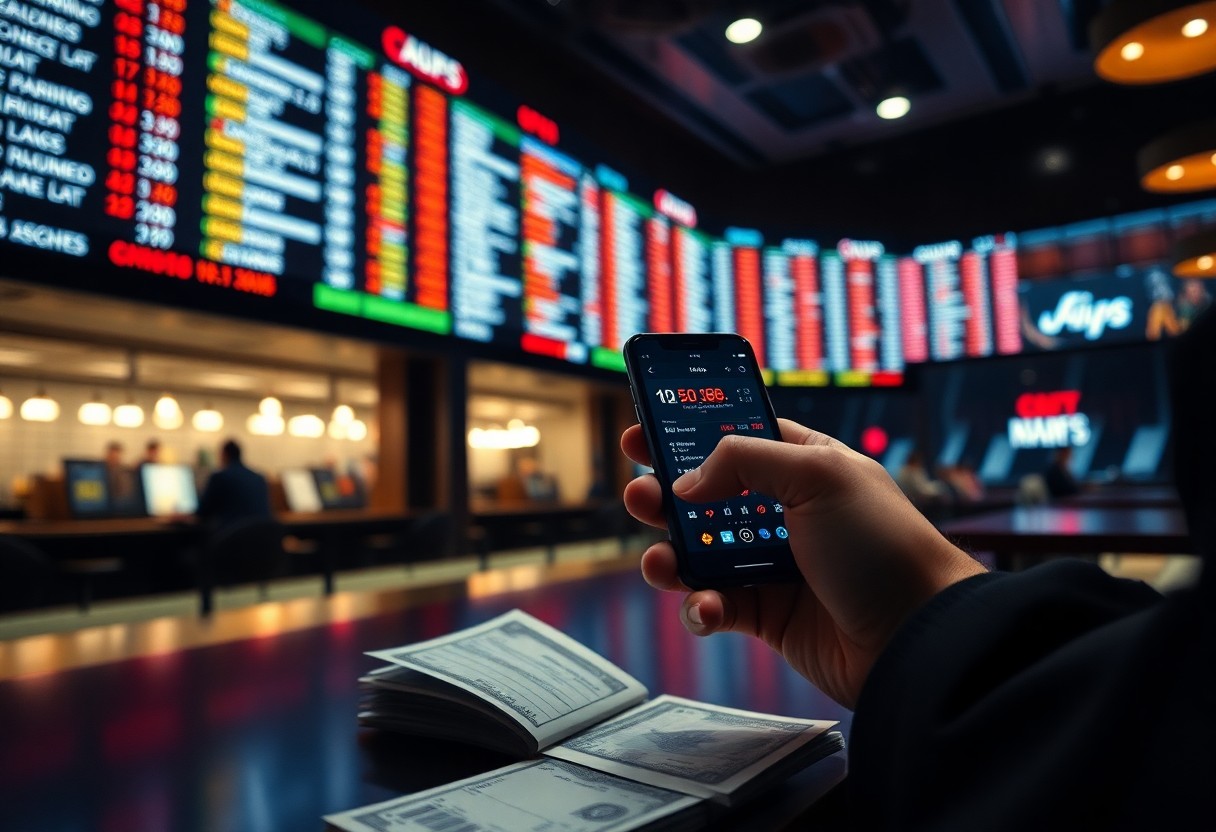
Just focus on reading momentum and line movement to identify live value, combining disciplined staking, bankroll management, and fast execution; use real-time data and market depth to exploit short-term mispricings while being aware of the risk of chasing losses and emotional bias.
Types of Live Football Betting Odds
Different live football betting odds reflect market mechanics and event impact: common categories include match result, Asian handicap, totals, props and correct score; odds can swing rapidly-often by 20-40% after a goal or red card-so identifying which market you trade matters for edge and bankroll control.
- Match result (Moneyline)
- Asian handicap
- Over/Under (Totals)
- Correct score
- In-play props
| Market Type | Live behavior / Example |
| Match result | Win probability shifts quickly after goals; a 1-0 lead at 60′ can raise the leader’s implied win chance from ~40% to ~70%. |
| Asian handicap | Handicap lines adjust by 0.25/0.5 increments; a red card often moves a -0.5 line to -0.25 or evens the market. |
| Over/Under | Totals move with attacking intent metrics-shots on target or added time increase Over odds; example: 2.0 line shifts to 2.25 after sustained pressure. |
| Correct score | Highly volatile and low-liquidity; odds shorten dramatically for low-probability scores after late goals (e.g., 0-0 to 1-0). |
| In-play props | Player-specific events (next scorer, corner count) react to substitutions and tactics; expect rapid 10-50% moves on key events. |
Pre-Match vs. In-Play Odds
Pre-match lines are model-driven using season metrics like xG, head-to-head and form, often set hours or days before kickoff; in contrast, in-play odds update every few seconds based on live events, with sharp moves after goals, red cards or a surge in shots-for example, a 75th-minute goal can flip implied win probabilities by 30-50 percentage points depending on context.
Fixed Odds vs. Variable Odds
Fixed odds lock your payout at acceptance-placing a bet at 2.50 guarantees that return even if the market shortens; variable odds (or exchange-style) change up until matching, meaning your stake may be matched at a different price and requires active slipping or cashout strategies.
More detail: operators offer both formats-traditional bookmakers provide fixed prices and clear liability, while betting exchanges and some in-play providers expose you to variable fills and partial matches; sharp traders use exchanges to lay risk or scale into positions, and quantitative models often prefer fixed fills for backtesting because they remove execution slippage. This approach determines how you hedge, stack positions and manage exposure.
Key Factors Influencing Live Betting Odds
- live betting
- odds movement
- in-game statistics
- team form
- injuries
- market liquidity
Momentum swings, time remaining and the current scoreline drive most in-play adjustments; a goal in the 70th minute can flip implied probabilities by 20-40 percentage points depending on context. Bookmakers factor live metrics like xG, shots on target and turnover rate, while bettor volume and sharp action compress or expand lines. Assume that bookmakers often reprice within seconds after a red card or major substitution.
Team Performance and Form
Recent results – typically the last five matches – plus home/away splits and head-to-head trends change live expectations: a team averaging 2.1 xG and winning four of five will see smaller in-play underdog adjustments. Coaches shifting tactics (e.g., from 4-3-3 to 3-5-2) can also alter pressing stats and expected goals within a single half, and traders weight these short-term trends heavily when setting minute-by-minute prices.
Injuries and Player Availability
Late injuries, suspensions and fitness doubts move lines immediately; losing a key striker responsible for 30-40% of team goals typically reduces win probability noticeably. Bookmakers update probables based on the confirmed starting XI, and prop markets often widen faster than match odds when a starter is ruled out, creating short windows of inefficiency.
Delving deeper, models show that the absence of a player who averages 0.4-0.6 goals per 90 often reduces a team’s expected goals by roughly 0.2-0.4, shifting implied odds by 5-15% depending on opponent strength. Traders monitor training reports, medical updates and historical replacement performance; for example, a late withdrawal in the 24 hours before kick-off tends to trigger larger bookmaker adjustments than a multi-day recovery report, so spotting late withdrawals or notable return from injury scenarios can reveal value.
Tips for Successful Live Betting
Scan pre-match models and track in-play odds shifts in the first 10 minutes, focusing on volume spikes and line moves >5%; combine expected goals (xG) and possession metrics to size bets rapidly. Use bankroll sizing of 1-3% per stake and set a 2-5 minute re-evaluation window after goals or red cards. Monitor latency and trade only when feed delay <1s to avoid mispricing. Thou prioritize liquidity and avoid markets with under €10,000 matched to minimize adverse selection.
- Watch matched volume: sudden 20-30% jumps often precede major line moves.
- Prefer markets with >€20,000 liquidity and spreads under 2 ticks.
- Use alerts for +0.15 xG within 5 minutes to act on momentum.
- Hedge partial exposure after adverse events to protect bankroll and lock small profits.
Monitoring Real-Time Data
Cross-verify bookmaker APIs with Opta/StatsPerform feeds and an exchange ladder; ideal update frequency is ≤1s and latency <500ms so scalps react within 3-7 seconds. Track matched volume, market depth, and consecutive ticks-three rapid ticks against you usually signal a fair price shift. Implement automated alerts for >20% money matched jumps or sudden xG increases of +0.10-0.20 in 5 minutes to avoid being late on a momentum swing.
Evaluating Betting Markets
Compare implied probabilities across 3-5 bookmakers and exchanges: a 3-4 percentage-point gap on a 1.50 favorite signals potential value. Prioritize markets with consistent liquidity (>€20,000) and narrow spreads; avoid markets where lines regularly widen after late injury reports. Use historical head-to-head filters-if favorites lost only 18% in 200 similar in-play situations, treat that as actionable context rather than noise.
For example, simulate a scenario where a favorite’s odds tighten from 1.85 to 1.50 after a 20-minute tactical shift while exchange liquidity remains €50k-this can create a 2-3 tick arb or a short-term scalp opportunity. Quantify edge by tracking conversion rates: if your model identifies 30 such events and yields +4% ROI after fees, scale stakes gradually and log outcomes to refine thresholds.
Step-by-Step Guide to Placing Bets Live
| Choosing a Betting Platform |
Prioritize licensed operators (UKGC, MGA), check live-feed latency under 200ms, and confirm available markets-top sportsbooks offer 100+ in-play markets per top-league match. Compare odds across at least 3 bookmakers and verify max single-bet limits (many apps allow £5,000+). Avoid unlicensed sites that show wider spreads and slower cash-outs. |
| Executing the Bet |
Pre-select the market, enable one-click staking, and set a stake size of 1-3% of bankroll to manage risk. Execution should target <2 seconds; manual confirms (3-8s) often cause odds to move 5-20%. Use exchanges (Betfair) for unmatched limit orders or quick lays to hedge sudden swings. |
Choosing a Betting Platform
Scan for a platform with live latency below 200ms, an in-play margin (overround) near 105% or lower, and fast cash-out (typically 10-30s). Look for robust mobile apps with one-click betting, clear max-limits (≥£5,000), and API or streaming odds if you plan automation; comparing lines across 3 bookmakers is a consistent edge strategy.
Executing the Bet
Set bookmarks for target markets, pre-enter stake, and use one-click to execute in under 2 seconds; if latency or manual confirmation slows you, expect 5-20% odds slippage after goals or cards. Keep stakes at 1-3% of bankroll, and use exchanges to place limit lays if you need to hedge instantly.
For example, back a side at 2.40 with $100; if a red card halves perceived value and odds shorten to 1.60 within 12s, use an exchange lay or cash-out to lock profit or limit loss-practice this on small stakes and track execution times (aim for ≤200ms) to reliably capture live value.
Pros and Cons of Live Football Betting
Pros vs Cons of Live Betting
| Pros | Cons |
|---|---|
| Exploit real-time value when odds lag after events | Rapid odds swings can reverse value within seconds |
| Opportunity to hedge and lock profit mid-game | Bookmakers often apply higher margins in-play (typically 3-7% more) |
| Access to niche markets (corners, cards) for edge | Short reaction windows-traders and algorithms move in ~5-20 seconds |
| Ability to use live data feeds and models for advantage | Sharp accounts may be limited or restricted after wins |
| Scalping small edges repeatedly increases ROI over time | Higher volatility-goals or red cards often shift probabilities 20-50% |
| Cash-out and trading options increase flexibility | Cash-outs usually favor the bookie with reduced payout vs. true market value |
| Can capitalize on slow bookmaker reactions in lower leagues | Lower-liquidity matches carry price inefficiencies and sudden slippage |
| Immediate feedback accelerates strategy refinement | Emotional, fast decisions raise risk of bankroll depletion |
Advantages of Live Betting
Live betting lets skilled bettors convert situational reads into profit: for example, exploiting a favoured team’s injury in minute 60 can move the market by 20-40%, creating short windows to lock value. Many sportsbooks report that in-play markets make up roughly 40-60% of turnover, which means greater liquidity on major matches and repeated opportunities to scalp small edges with disciplined staking and fast, data-driven decisions.
Disadvantages and Risks
In-play markets carry elevated risk: odds update quickly, margins are often higher, and a single incident-like a red card-can swing probabilities by 20-50% within seconds. Traders face latency, account limitations, and the psychological pressure of split-second choices, which together increase variance and can erode expected value if bankroll and execution aren’t tightly managed.
Further, operational factors compound risk: many bookmakers deploy automated risk management that adjusts limits or cancels suspicious wins, while live models require sub-second pricing accuracy to be profitable. Practical examples include reduced post-event limits and rapid market compression after goals; without strict staking rules, bettors can see a short winning streak wiped out by one high-volatility event, so risk controls and execution speed are important to preserve any edge.
Advanced Strategies for Maximizing Value
Target live inefficiencies by combining fast line-shopping, market-depth reads and scaling rules: capitalize when a red card or tactical sub shifts win probability by 15-30 percentage points, use exchanges to trade out at tighter spreads, and apply fractional Kelly to size bets so bankroll drawdowns stay controlled while chasing +EV edges.
- Latency & Line‑Shopping
What Compare decimal odds across 3+ firms and an exchange; a move from 1.90 to 1.70 changes implied probability from 52.6% to 58.8% - Market‑Depth Signals
What Track stake distribution and rapid price compression-heavy stakes on one side often indicate sharp information, not public bias
What Exploit next‑goal or corner markets for asymmetric value; hedge on exchanges post-goal to lock profit or cut losses - Scaling & Risk Control
What Use fractional Kelly and position limits (e.g., 1-2% bankroll per live wager) to manage variance during streaks
Understanding Odds Movement
Monitor both bookmaker and exchange lines in real time: when pre-match odds tighten by >5% implied probability after team news or bylines shift 10-20 ticks post-red card, that often signals informed money. Combine this with volume-large bets on exchanges or sudden liquidity withdrawal usually precede persistent price changes, so act quickly when you spot a dislocation between public sentiment and market pricing.
Leveraging Statistical Analysis
Apply models like Poisson for goal distributions, xG for chance quality and ELO for form; a well-calibrated xG model detecting a team’s 0.4 xG advantage over the market can justify staking if historical backtests show positive ROI. Integrate live inputs-shots on target, expected assists-and update probabilities every 10-15 seconds for improved in-play forecasts.
Backtest on at least 1,000 matches or 500+ live-market samples, use cross‑validation to avoid overfitting, and simulate betting curves to estimate drawdown and Sharpe. Implement feature selection (xG, big chances, distance covered) and penalized regression or gradient boosting for stability; then convert model probabilities to stakes via Kelly or a capped fraction and re-evaluate monthly to catch model drift.
Conclusion
As a reminder, apply disciplined bankroll management, focus on selective markets with high liquidity, use real-time data and models to spot shifting value, track line movements and injuries, act decisively on confirmations, and employ hedging when necessary to lock profits or limit loss. Prioritize long-term edge over short-term wins and consistently review performance to refine strategies.
FAQ
Q: How can I identify and exploit value in live football odds?
A: Value in live odds comes from finding mismatches between a bookmaker’s implied probability and the actual probability of an event. Convert odds to implied probability, compare across multiple books to spot divergence, and use live metrics (xG, shots on target, possession, dangerous attacks) to adjust your own probability estimate. Watch for overreactions after single events (a goal, a red card, or an early substitution) when prices move faster than the underlying match state changes. Use small probe bets to test line movement, prioritize markets with deeper liquidity (match-winner, total goals, next-goal) and avoid markets where latency or limited liquidity creates erratic prices. Maintain a quick EV threshold-only stake when your estimated probability exceeds the market-implied probability by a margin that covers vig and variance.
Q: Which in-play indicators and data streams provide the best edge for live betting?
A: The highest-value indicators are objective and update rapidly: live xG and xGChain, shots and shots on target, expected threat, corner frequency, transition attacks, pressing intensity, and time since key events (subs, cards, injuries). Contextual signals like team tactics (high press vs. low block), visible fatigue, bench strength and substitution patterns also matter. Track momentum shifts-sustained possession in the attacking third, repeated corners or set-piece pressure often precede goals more reliably than single shots. Use low-latency feeds or suppliers that align with your bookies to reduce latency arbitrage risk. Combine these signals into quick heuristics (e.g., sustained xG advantage + increased corners → higher next-goal probability) to take positions before markets fully price them.
Q: What money-management and discipline rules maximize long-term returns when live betting?
A: Apply a strict staking plan and exposure limits: use a percentage-based model (fixed-percentage or fractional Kelly) and cap the fraction for volatile live markets. Predefine a maximum exposure per match and a stop-loss for losing streaks. Avoid increasing stakes after wins or chasing losses; instead use predefined stake adjustments tied only to bankroll changes. Limit the number of simultaneous live bets and avoid highly correlated positions across markets. Use small exploratory bets to probe new markets, and require a minimum EV margin before committing larger stakes. Keep a detailed trading log (stakes, odds, outcome, reasoning, data used) and review it weekly to identify systematic edges or leaks. When offered cash-out or hedging opportunities, calculate the guaranteed EV versus expected value of holding and choose the option that optimizes long-term ROI rather than short-term variance reduction.