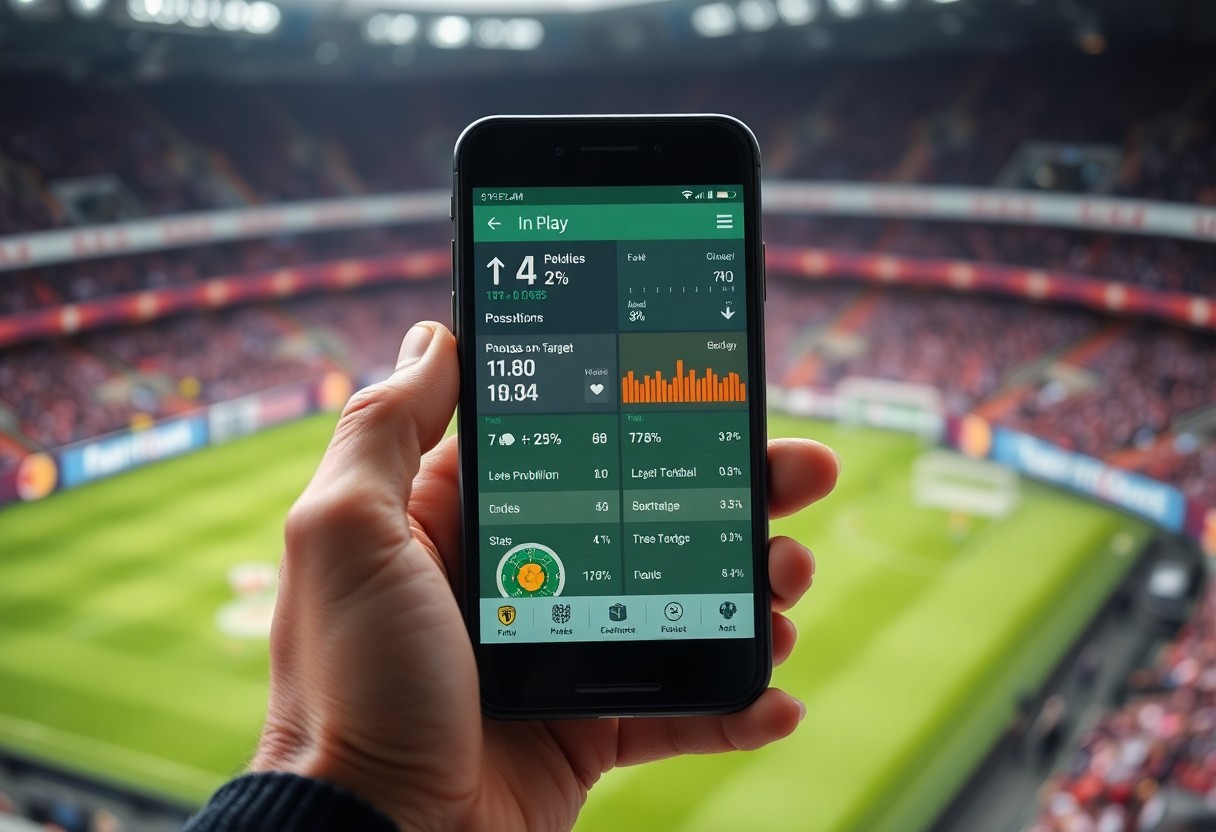
Arbitrage on the move: why mobile arbing changes how you find value
If you already understand traditional arbitrage betting, you know it depends on speed, access to multiple bookmakers, and accurate odds. Mobile arbing shifts that workflow to your pocket: you can spot and act on discrepancies the moment they appear. That immediacy can turn fleeting opportunities into profitable stakes, but it also raises new challenges — from connectivity and security to app performance and bookmaker interfaces.
When you use mobile tools for arbitrage, you should think of your phone as a mini trading desk. You’ll need fast odds feeds, reliable notifications, and the ability to place bets quickly across several accounts. Done well, mobile arbing lets you react to market moves while commuting, at events, or when odds update unexpectedly. Done poorly, you risk missed arb windows, manual errors, or account flags from bookmakers.
What makes a mobile arbing app or site worth using
Not all mobile platforms are created equal. When you evaluate apps or mobile websites for arbitrage, focus on functionality that supports rapid discovery and execution. Below are the core capabilities you should prioritize and why they matter for on-the-go arbing.
-
Real-time odds scanning:
You need odds that refresh quickly and accurately. Delayed feeds can cause false positives — arbs that evaporate before you can place them. Look for apps that explicitly advertise low-latency updates or live odds synchronization with major bookmakers.
-
Smart arb detection and filters:
Good tools highlight true arbitrage opportunities and let you filter by sport, stake size, or minimum profit percentage. Filters help you avoid small, risky arbs and focus on those that fit your bankroll and tolerance for bookmaker exposure.
-
Built-in calculators and stake suggestions:
A reliable calculator will automatically compute optimal stakes for each leg of the arb based on your desired return or liability limits. On mobile, having this integrated saves time and reduces calculation errors.
-
Fast navigation and bet placement links:
Apps that open bookmaker pages or pre-fill amounts speed up execution. Some platforms provide direct deep links to the market within a bookmaker’s app or mobile site — that convenience can be the difference between securing an arb and losing it.
-
Cross-bookie account management:
You’ll manage multiple bookmaker logins. Tools that safely store credentials, support quick switching between accounts, or integrate with password managers reduce friction. Prioritize solutions that emphasize security and encryption.
-
Push notifications and alerts:
Customizable alerts for newly detected arbs, odds movement, or matches to your preferred conditions let you stay informed without monitoring the app constantly. Ensure alerts are reliable and not delayed by battery-optimization settings on your device.
-
Market breadth and supported sports:
Some apps focus on a handful of markets; others scan hundreds of bookmakers and dozens of sports. Select a platform that covers the markets you intend to target — niche markets sometimes yield the best arbs.
-
Account transparency and reporting:
Good tools keep logs of detected arbs and your actions, including success rates and ROI. Mobile-friendly reporting helps you analyze performance and refine your strategy over time.
Practical steps to set up a secure, efficient mobile arbing workflow
Getting started on mobile is part technical setup and part habit-building. Follow these practical steps so you can act quickly without exposing your funds or accounts to unnecessary risk.
-
Open and verify multiple bookmaker accounts early:
Create accounts with a range of reputable bookmakers and complete KYC checks in advance. Verification avoids last-minute delays when you need to place a bet immediately.
-
Install and configure apps thoughtfully:
Download official bookmaker apps and your chosen arbing tools. Enable push notifications, but check your phone’s battery and data settings to prevent the OS from throttling background updates.
-
Secure your device and logins:
Use strong, unique passwords and a password manager. Enable two-factor authentication where possible and set a device lock. If you use a VPN, pick one with low latency to avoid slowing odds updates.
-
Start small and document each trade:
Begin with low stakes while you get used to timing and execution. Keep notes about successful and failed arbs so you can identify bottlenecks in your mobile process.
-
Have a cash-management plan:
Spread funds sensibly across accounts so you can place all legs of an arb without needing instant transfers. Consider minimum balances and withdrawal times when allocating bankroll.
With these basics in place — an understanding of what features matter, and a secure, practiced workflow — you’ll be ready to evaluate specific apps and sites that suit your style of mobile arbing. In the next section, you’ll get a breakdown of the top mobile platforms, how they compare on the features above, and step-by-step setup tips for each one.

Top mobile platforms for arbitrage: strengths and trade-offs
Rather than one-size-fits-all, mobile arbing tools fall into a few clear categories. Below are the kinds of platforms you’ll encounter, what they’re best for, and the trade-offs to weigh when deciding which to carry on your phone.
-
Paid dedicated arb scanners (examples: RebelBetting, BetBurger, OddsJam):
These services are built for speed and accuracy. They typically offer near real-time scanning across many bookmakers, robust filtering, integrated calculators, and mobile-friendly interfaces or apps. Use them if you want a high hit-rate of legitimate arbs and can afford subscription fees. Trade-offs: cost, occasional false positives (if feeds lag), and a learning curve to tune filters so you don’t get inundated with low-value opportunities.
-
Free aggregators and odds-comparison sites (examples: OddsPortal, BetExplorer):
Useful for research and spotting longer-lived discrepancies across niche markets. These sites are great when you’re starting out or hunting less-competitive markets where paid scanners under-scan. Trade-offs: slower update cadence, manual calculations, and heavier reliance on your own execution speed.
-
Mobile-first arb apps and companion tools:
Some vendors focus specifically on mobile ergonomics — widgets, deep links to bookmaker apps, and optimized notification workflows. These are ideal if you plan to arb primarily from your phone: they minimize taps and switch quickly between bookmaker offers. Trade-offs: fewer bookmakers scanned than desktop services and occasional platform-specific bugs.
-
Bookmaker apps and mobile web (official apps + PWAs):
The final execution always happens at a bookmaker. Official apps are usually the fastest and most reliable way to place a bet on mobile because they support pre-filled markets and in-app navigation. Trade-offs: different UX across bookmakers, mandatory KYC, and potential app update cycles that can change interfaces.
-
Betting exchanges and trading apps (examples: Betfair, Matchbook):
Exchanges can provide liquidity and alternative ways to lay outcomes to complete an arb. Mobile exchange apps often have quick ladder interfaces for fast staking. Trade-offs: fees/commission structures differ and there may be less available matched liquidity at the precise size you need.
Step-by-step mobile setup and quick-execution recipes
Below are compact, repeatable setups depending on which platform category you pick. Each recipe focuses on shaving seconds off execution and reducing manual errors.
-
Paid scanner + bookmaker apps:
- Install the scanner app and all bookmaker apps you’ll use. Log into bookmakers and complete KYC beforehand.
- In the scanner, set filters for minimum profit %, sport, and max stake to reduce noise. Enable push notifications for high-priority arbs only.
- Enable deep-link opening so a scanner notification jumps directly into the exact market in the bookmaker app. If supported, allow the scanner to pre-fill stakes.
- Keep balances across accounts topped to a pre-set minimum so you can place both legs without fund transfers.
-
Free site + mobile browser + calculators:
- Use the browser’s “add to home screen” feature for the odds page you monitor often to make it feel app-like.
- Keep a calculator app or bookmark a stake-calculator page that accepts quick input. Copy odds from the site and paste into the calculator to get exact stakes.
- Use split-screen (Android) or quick app switching (iOS) to view both bookmaker and calculator simultaneously during execution.
-
Exchange + bookmaker combination:
- Pre-set your preferred commission and stake sizes in the exchange app. Identify typical liquidity limits so you know when to back off.
- If an arb requires laying on an exchange, place the exchange leg first where you can control partial fills, then immediately place the bookmaker leg.
- Monitor both apps’ in-play/market suspension notifications to avoid late voids or market closures.

Managing execution errors, cancellations, and account friction on the go
Mobile arbing means accepting that not every identified arb will be captured. The goal is to reduce friction and have a plan when things go wrong.
-
Partial fills and timing:
If a leg only fills partially (common on exchanges), immediately recalculate stakes for the remaining liability. Keep a quick-recalc tool handy and consider conservative stake sizing to reduce the chance of partial fills breaking your profit target.
-
Market or app failures:
If a bookmaker app crashes or a market is suspended, take a screenshot of the scanner and odds page as proof of the opportunity for your records. Don’t chase impossibly fast re-prices — cut losses and move on.
-
Account flags and betting limits:
Rotate which bookmakers you use for different sports and avoid repeated large arbitrage stakes on the same accounts. If a bookmaker imposes limits, shift your staking pattern or split bets across more accounts.
-
Keep a mobile log:
Maintain a simple note or spreadsheet on your phone logging attempted arbs, success/failure, time-to-execute, and reason for failure. Patterns here will reveal which bookmaker-app combinations are reliable for mobile execution and which to drop.
Staying adaptive on the move
Mobile arbitrage is as much about mindset and preparation as it is about apps. Keep expectations realistic: mobile execution favors speed and flexibility over trying to squeeze every possible edge. Prioritize safety (secure devices, unique passwords, and up-to-date apps), maintain modest, diversified balances across bookmakers, and treat early mobile sessions as practice runs to refine which bookmaker–scanner combinations work reliably for you.
- Keep one paid scanner or reliable aggregator as your primary feed and limit push notifications to high-value arbs.
- Pre-complete KYC on all bookmaker apps you plan to use and maintain minimum balances to avoid transfers under time pressure.
- Use a small, portable stake-sizing rule that reduces the chance of partial fills or account triggers while you learn mobile nuances.
- Regularly review your mobile log to spot recurring execution failures and drop problematic app combinations.
- If you want a proven paid scanner to start with, consider RebelBetting for its mobile-friendly workflow and strong alert system.
Frequently Asked Questions
Is arbitrage betting legal when done on mobile apps?
Arbitrage betting itself is generally legal in most jurisdictions where sports betting is permitted, regardless of device. Legal exposure depends on local gambling laws and bookmaker terms. Always confirm regional regulations and ensure you comply with bookmaker KYC and account rules.
Which mobile setup reduces execution errors the most?
A focused setup with one reliable paid scanner, the bookmaker apps you use most often, pre-funded accounts, and a stake calculator yields the fewest execution errors. The single biggest preventable issue is missing KYC or low balances when an arb appears, so complete those steps before you start.
How can I minimize the chance of account restrictions from bookmakers?
Rotate stakes across multiple bookmakers, avoid repetitive large arbs on a single account, vary sports and markets, and keep bet sizes within patterns that look like normal recreational play. If a bookmaker flags an account, reduce activity there and shift stakes elsewhere while you evaluate the cause.